

 Raul Delapena Setiawan

 Ammar Sabilarrohman
 Lina Irawan
 Suro Senen
 Rifan Muazin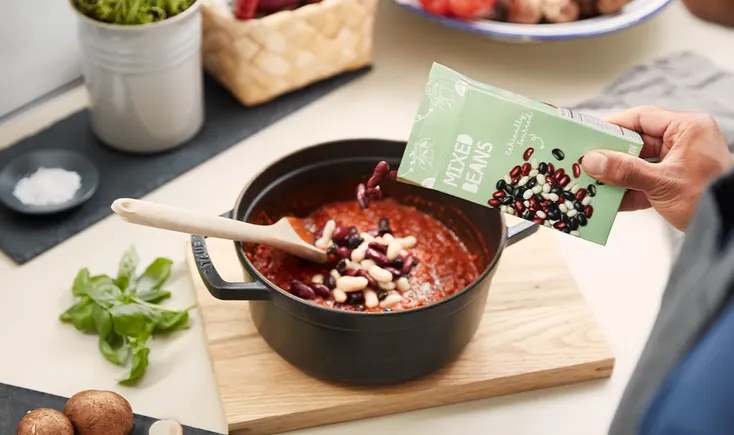
In the modern retail environment, food packaging serves a dual purpose: it acts as a silent guardian of product integrity and a primary touchpoint for consumer engagement. As global economic pressures—including inflationary trends and the rising cost of living—reshape household budgets, the criteria by which consumers select products are undergoing a profound transformation. Today’s shopper is more discerning than ever, juggling the immediate need for affordability with a growing, non-negotiable demand for environmental responsibility.
For food producers, this presents a significant challenge: how to reconcile the competing demands of price, quality, convenience, and sustainability while ensuring their products stand out on increasingly crowded supermarket shelves.
Main Facts: The Multi-Dimensional Consumer
The modern consumer’s purchasing decision is no longer a simple linear process. According to recent industry insights, while price and quality currently dominate the hierarchy of needs, the "sustainability factor" has graduated from a niche preference to a mainstream expectation.
Research indicates that 39% of consumers now rank environmental impact as either "extremely important" or "very important" when making grocery purchasing decisions. This shifts the focus for manufacturers from merely protecting food to doing so in a way that aligns with the values of the modern, eco-conscious household.
The industry is currently witnessing a transition away from legacy packaging formats—such as traditional steel cans and heavy glass jars—toward more agile, lighter, and resource-efficient alternatives. At the forefront of this shift is the Tetra Recart® system, a solution engineered specifically to address the tension between logistical efficiency and consumer experience.
Chronology of Packaging Evolution
The trajectory of food packaging has evolved in distinct phases, reflecting broader societal shifts:
- The Preservation Era (19th – Mid-20th Century): The rise of the steel tin and the glass jar provided a revolutionary way to extend food shelf life, enabling the global distribution of canned goods. However, these materials were heavy, energy-intensive to manufacture, and cumbersome to transport.
- The Convenience Shift (1970s – 2000s): As global urbanization accelerated, the demand for "on-the-go" food increased. Packaging began to prioritize portability, though environmental considerations remained secondary to functionality.
- The Sustainability Awakening (2010 – 2020): With the intensification of climate change discourse, consumers began to scrutinize the carbon footprint of the entire product lifecycle, including the packaging.
- The Integrated Solutions Era (2020 – Present): We are now in a period where manufacturers must provide "all-in-one" solutions. Modern packaging must be carbon-efficient, shelf-stable, easy to store, and aesthetically pleasing. The emergence of paper-based, high-barrier solutions like Tetra Recart marks the current state-of-the-art in this evolution.
Supporting Data: Quantifying the Impact
The argument for transitioning to modern packaging formats is supported by rigorous life-cycle assessments (LCAs). When evaluating the carbon footprint of packaging, the disparity between traditional and modern materials is stark.
Climate Impact and Material Composition
Data indicates that Tetra Recart offers a significantly lower carbon profile compared to traditional shelf-stable containers:
- Carbon Emissions: Tetra Recart packaging results in up to 85% lower carbon emissions than steel cans and 83% lower emissions than glass jars over their respective lifespans.
- Renewable Sourcing: Up to 71% of each package is composed of renewable materials, specifically paperboard sourced from FSC™-certified, responsibly managed forests. This commitment to certification ensures that the transition to paper-based packaging does not come at the expense of global forestry health.
The Consumer Willingness-to-Pay Index
Beyond technical specifications, the business case is bolstered by consumer behavior. Studies suggest that a significant segment of the population is willing to pay a premium for products that utilize sustainable packaging. Because consumers perceive paper and cardboard as inherently more "natural" and sustainable than metal or glass, the use of these materials can serve as a powerful branding differentiator, potentially driving brand loyalty and market share growth.
Official Responses and Industry Perspectives
Industry leaders and packaging technologists argue that the "business case for sustainability" is no longer a contradiction in terms. By optimizing the supply chain, companies are finding that environmental stewardship often leads to operational cost savings.
"The goal is to move toward a circular economy where packaging isn’t just waste, but a manageable material stream," says a spokesperson for the industry. "By reducing the weight and volume of packaging, we reduce the energy required for transport, which in turn reduces the total carbon footprint of the food product before it even reaches the store."
The optimization of the value chain is a key pillar for Tetra Pak. By moving from round, heavy containers to square, lightweight, paper-based ones, producers can achieve:
- Improved Logistic Efficiency: Square containers stack more effectively, meaning more product can be packed into a single shipping pallet. This reduces the number of trucks on the road, lowering distribution costs and fuel emissions.
- Storage Optimization: In the home, consumers prefer square packaging because it eliminates "dead space" in pantries and refrigerators.
Implications for the Future of Retail
As we look toward the future, the retail landscape will remain a volatile environment characterized by shifting consumer priorities. The winners in the consumer packaged goods (CPG) sector will be those who can provide a seamless experience that satisfies both the rational (price/convenience) and the emotional (environmental values) needs of the shopper.
The Premiumization of Convenience
Convenience is often misunderstood as simply being "easy to open." In the context of the modern kitchen, convenience also encompasses:
- Zero-Tool Access: Eliminating the need for manual can openers reduces safety risks and improves accessibility for all age groups.
- Resealability and Storage: The ability to open, pour, and store without transferring contents to a separate plastic container is a significant consumer-facing benefit.
- End-of-Life Management: The ability to flatten a package after use reduces waste volume, a feature that resonates deeply with consumers living in smaller urban apartments where trash management is a daily consideration.
Strategic Brand Positioning
The large, flat surfaces of Tetra Recart allow for high-impact graphic design. In a retail aisle where round, repetitive shapes often blur together, the silhouette of a modern, rectangular carton stands out. This provides a visual cue to the consumer that the product inside is modern, innovative, and likely more sustainable than its legacy counterparts.
Conclusion: Preparing for What Lies Ahead
The challenge for the next decade is not merely to "go green," but to do so while maintaining the high standards of food safety and affordability that the global market demands. The evidence suggests that the industry is at a turning point.
The transition to solutions like Tetra Recart represents more than just a change in material; it represents a strategic pivot toward a more resilient, efficient, and consumer-centric future. For food producers, the path forward is clear: integrate sustainability into the core of the product design, leverage data-backed logistics to control costs, and communicate the benefits clearly to a consumer base that is ready for a change.
By aligning with these evolving priorities, producers can ensure that their products not only survive the current inflationary climate but thrive in the competitive retail landscape of tomorrow.
References:
- McKinsey & Company: Sustainability in Packaging 2025
- LCA Report, 2020: European Market Comparison
- Carbon CO2 Calculator, certified by the Carbon Trust.
- FSC™ License Code: C014047. Tetra Pak FSC™ Certificate


 Reynand Wu
 Jia Lissa