Ali Ikhwan

 Iffa Jayyana

 Muslim

 Nana

 Dwi Wanna
 Suro Senen
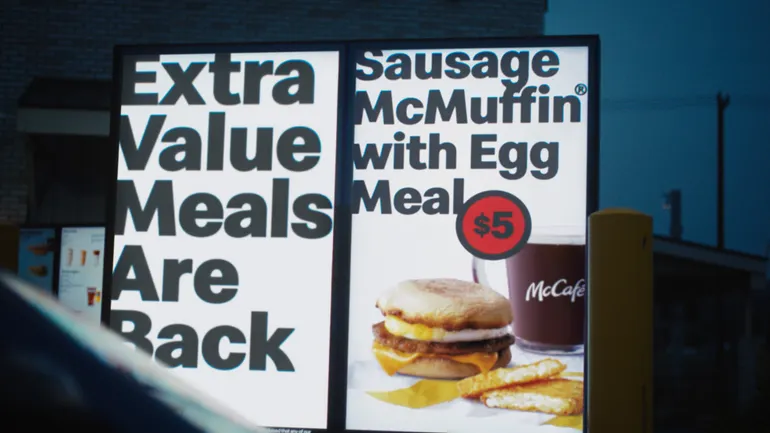
The landscape of the American quick-service restaurant (QSR) sector is undergoing a seismic shift. For much of 2024, the industry was locked in a brutal "value war," characterized by a race to the bottom in pricing, aggressive buy-one-get-one-free offers, and an obsession with $3 and $5 price points. However, as the industry moves through the final quarter of the year, that strategy is being dismantled. Major players, from McDonald’s to Wendy’s, are signaling a definitive retreat from deep-discounting, pivoting instead toward a focus on product quality, brand heritage, and premium innovation.
According to Peter Saleh, managing director and analyst at U.S. Bancorp | BTIG, the verdict on the value wars is in: "While we don’t expect any of the quick-service operators to abandon value, we think the deep value war is over, and all have lost."
The Genesis and Failure of the Discount Strategy
The 2024 value wars were born from a necessity to combat declining foot traffic as inflation squeezed the average consumer. Chains assumed that by lowering prices and introducing "value menus," they could lure cost-conscious diners back through their doors. The strategy was simple: sacrifice margin for volume.
However, the reality proved far more complex. Data from the third quarter suggests that the strategy failed to produce the desired results. Instead of driving significant traffic gains, the reliance on deep discounts merely eroded restaurant margins and contributed to lackluster stock performance for major operators. As Saleh noted, the strategy "degraded margins with little to no offsetting traffic gains," forcing leadership teams back to the drawing board.
Chronology of a Failed Campaign
The retreat from aggressive discounting did not happen overnight; it was a response to a series of operational and financial failures throughout the year.
- Early 2024: Fast food giants launch aggressive "value" initiatives, including combo deals and promotional price-cutting, aiming to gain market share from independent restaurants.
- Summer 2024: McDonald’s introduces its "$3 and Under" menu in an attempt to capture the value-seeking demographic. The rollout is plagued by execution issues, with nearly one-third of franchisees failing to implement the program as intended.
- August 2024: Wendy’s CEO Bob Wright openly labels the chain’s "Biggie Bag" strategy as "value diluting" and complex, signaling that the brand would move away from such aggressive promotional structures.
- Late Q3 2024: During investor presentations, major chains begin omitting references to "value" and "discounts," replacing them with buzzwords like "Gold Standard," "innovation," and "premium quality."
- October 2024: Analysts formally declare the "value war" as a net negative for the industry, noting that the market is shifting toward a focus on the customer experience rather than the price point.
The Shift Toward "Gold Standard" Quality
The most prominent example of this pivot is McDonald’s. After the botched rollout of its "$3 and Under" platform, the company’s corporate leadership terminated national advertising for the program. At their recent Investor Day, the narrative was drastically different. There was little mention of cheap price points; instead, the focus shifted to the "Gold Standard" of the menu. This includes long-term plans to upgrade burger builds, introduce hand-breaded chicken, and tailor menu items for the growing demographic of GLP-1 users.
Similarly, Burger King has found success by doubling down on its core product quality. By refining its signature Whopper and introducing updated, high-quality chicken nuggets, the chain achieved record-breaking comparable store sales in the second quarter—a trend that continued into the third quarter. By focusing on the product itself rather than a price tag, Burger King has outpaced its QSR burger cohorts, proving that consumers are willing to pay for quality if the experience justifies the cost.
Domino’s and the Nuance of Promotional Data
Domino’s Pizza provides a unique case study in the risks of the value war. While the company saw an increase in order counts, their average ticket size declined—a clear indicator that customers were opting for discounted items rather than full-priced menu selections.
However, Domino’s is taking a sophisticated approach to the transition. CEO Joe Jordan highlighted that while the company is currently engaged in value-based promotions, they are utilizing targeted, data-driven marketing to transition those trial customers into long-term, full-price repeat buyers. By using promotions to drive initial interest in items like "Stuffed Crust," the company successfully built brand trial, only to see customers return later at higher price points. Jordan remains optimistic that as competitive pressures subside, the industry will see a natural withdrawal from the current promotional frenzy.
The "Fast Casual" Exception: Why Cava and Shake Shack Thrive
While traditional QSRs struggled with the value-discounting model, certain fast-casual brands have maintained a different relationship with "value." For brands like Cava, the definition of value is not about the lowest price, but about the "value proposition"—a combination of health, customization, and quality.
Sharon Zackfia, an analyst at William Blair, notes that Cava has managed to keep its pricing below the rate of inflation since 2019. Because Cava offers a health-conscious, customizable menu, it has successfully captured both ends of the economic spectrum: consumers "trading up" from fast food and those "trading down" from casual dining.
Shake Shack, meanwhile, is using a hybrid strategy. While they do offer price-based promotions (such as $2 sodas or $4 fries), these are carefully balanced with premium "Limited Time Offers" (LTOs) and sophisticated data analytics. By using targeted, behavior-based communications, Shake Shack drives frequency without the brand-eroding effects of across-the-board, deep-discounting.
Implications for the Industry
The end of the value war carries profound implications for the future of the restaurant industry:
- Margin Recovery: As chains abandon "value at all costs," investors expect to see a stabilization—and eventual recovery—of operating margins. The era of sacrificing profitability to gain market share is being replaced by a focus on sustainable growth.
- Technological Personalization: The future of promotions will not be national, broad-based discounts. Instead, chains are investing heavily in apps and data analytics to offer "targeted promotions." By providing discounts to the customers who need them to trigger a visit, rather than to everyone, chains can maintain higher average checks.
- The Rise of the "Premium" QSR: The coming year will likely see a wave of "premiumization." Chains will attempt to justify higher price points by emphasizing ingredients, supply chain transparency, and culinary innovation. The "cheap burger" model is becoming a relic of the past, as brands realize that consumers prioritize quality and brand identity over a few cents of savings.
- Operational Simplicity: As Wendy’s and McDonald’s learned, complex discount programs are a burden on kitchen operations. The move away from these programs will likely lead to simplified menus and more streamlined kitchen workflows, which in turn improves service speed and accuracy.
Conclusion
The "value war" of 2024 will likely be remembered as a cautionary tale in the annals of the restaurant industry. It proved that in an era of heightened consumer awareness and operational complexity, price-cutting is a blunt instrument that often does more harm than good.
As we look toward 2025, the focus for the industry has shifted. The battle is no longer about who can offer the cheapest meal, but who can offer the best experience. For the brands that can successfully marry data-driven, targeted value with an unwavering commitment to product quality, the outlook remains bright. For those still clinging to the hope that deep discounting will drive their recovery, the message from analysts and the market is clear: the war is over, and it is time to pivot.

 Lina Irawan