

 Raul Delapena Setiawan
 Ammar Sabilarrohman
 Lina Irawan
 Suro Senen
 Nana Wu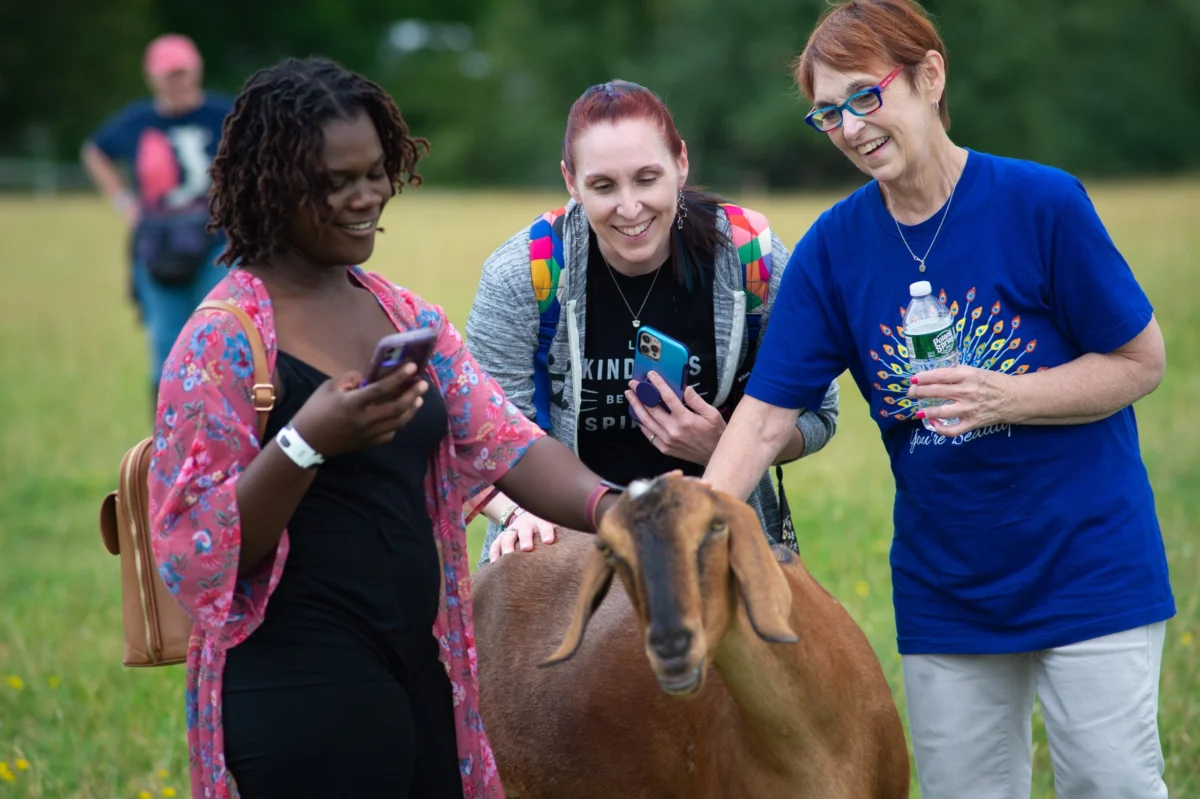
Date: May 15, 2026
Category: Sanctuary Questions Series
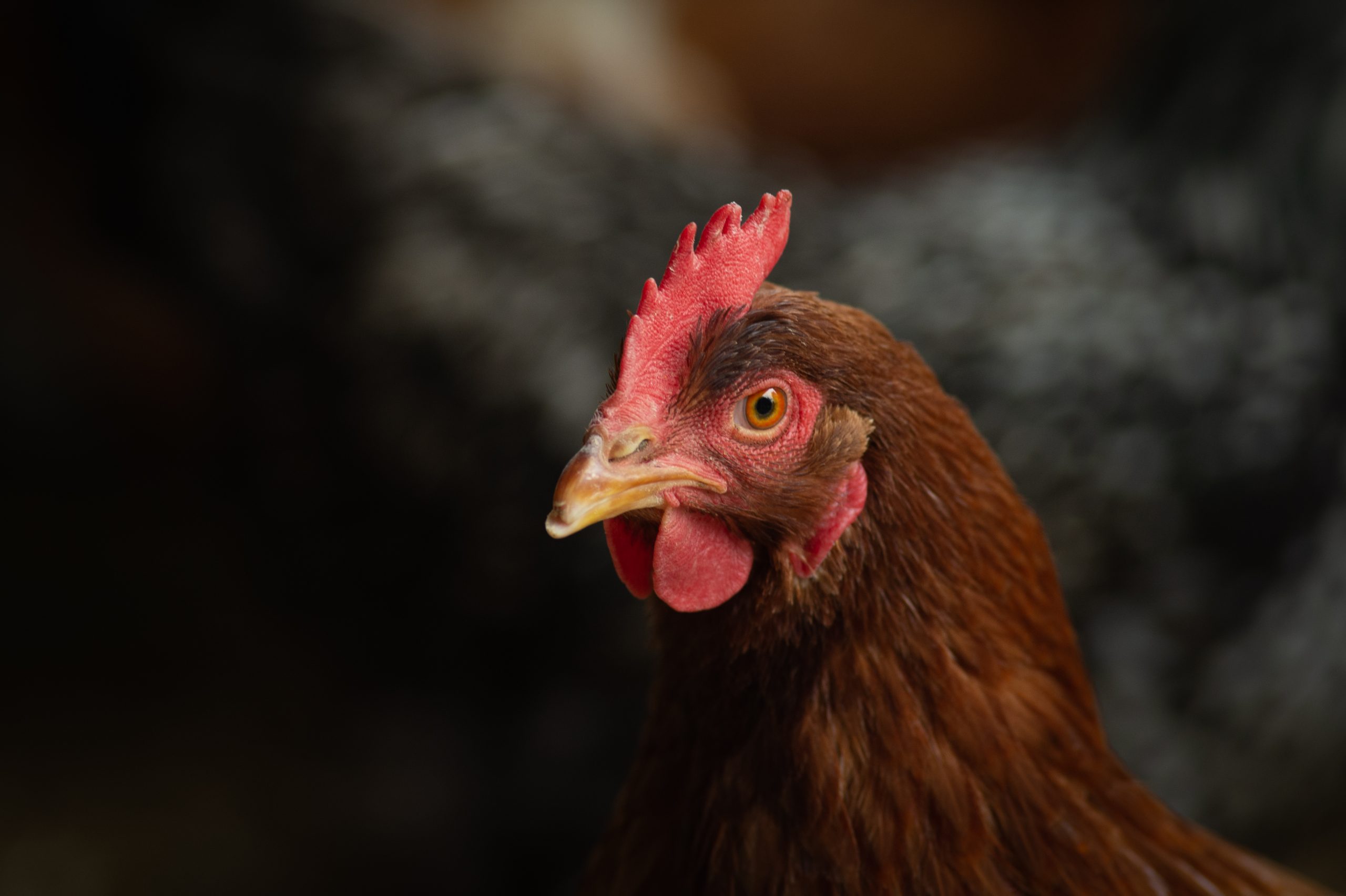
For many visitors touring Farm Sanctuary’s sprawling, sun-drenched pastures in New York and California, the sight of rescued hens dust-bathing, foraging, and perching provides a stark contrast to the common perception of how modern farm animals live. When staff share the harrowing histories of these survivors—many of whom were rescued from the industrial egg sector—a recurring question emerges from the public: "If these birds came from ‘cage-free’ farms, why are they in such poor health? Aren’t cage-free farms considered a humane alternative?"
The disconnect between marketing imagery and industrial reality is profound. While the shift away from restrictive battery cages represents a victory for public awareness, the term "cage-free" remains one of the most misunderstood labels in the food industry. Lacking a rigid, universal legal definition, the label often masks the same systemic cruelties that define factory farming, leaving consumers with a false sense of ethical peace.
The Evolution of Confinement: From Battery Cages to Crowded Sheds
To understand the current state of the egg industry, one must first look at the history of "battery cages." As recently as 2012, more than 90% of eggs produced in the United States originated from hens confined in these systems. These cages, characterized by their stacked, linear design, were engineered for maximum density. In these environments, hens were provided with so little space that they could not stand fully upright, spread their wings, or exhibit any natural behaviors. They lived on wire flooring that caused chronic foot lesions and suffered from extreme psychological distress.
Public outcry, fueled by advocacy efforts and legislative milestones like California’s Proposition 12, successfully pressured the industry to pivot. Today, nearly half of all U.S. eggs are marketed as "cage-free." However, this transition has not necessarily translated into a revolution of animal welfare; rather, it has shifted the nature of the confinement.
Defining "Cage-Free": A Regulatory Vacuum
The primary issue with the "cage-free" label is the lack of a standardized federal definition. In the United States, the term is functionally a marketing tool rather than a strictly regulated welfare designation. Consequently, the quality of life for a "cage-free" hen varies wildly depending on the producer and the auditing body.
- Industry Standards: Organizations like the United Egg Producers (UEP) often represent the interests of the egg industry itself. Their standards are notoriously permissive, sometimes allowing as little as 1.5 square feet of space per bird.
- USDA "Grade A" Standards: The USDA’s "Grade A" or "Grade AA" shield indicates that hens had "unlimited access to food and water" and "room to roam," but these terms are broad and often fail to account for the actual density of the facility or the presence of outdoor access.
- Certified Humane: As a nonprofit, Certified Humane offers some of the strictest standards, requiring access to perches, nest boxes, and designated dust-bathing areas to mitigate conflict.
Despite these distinctions, the baseline for "cage-free" remains a far cry from the life of a bird in a sanctuary setting. Crucially, the vast majority of "cage-free" operations are still indoor-centric. Even under the best labels, these hens are typically denied genuine access to the outdoors, sunshine, or fresh air.
The Systemic Cruelty: Beyond the Cages
The suffering of hens in the egg industry is not limited to the size of their enclosures. It is baked into the very infrastructure of industrial animal agriculture.
The Hatchery Reality
The cruelty begins before the hens ever reach the farm. Because male chicks cannot lay eggs, they are considered "byproducts" of the industry. Within hours of hatching, hundreds of millions of male chicks are discarded annually in the U.S. The standard industry practice involves dropping these day-old chicks into industrial macerators—high-speed grinders—where they are killed alive. This occurs regardless of whether the farm is "cage-free" or "caged."
Debeaking and Physical Modification
In environments where thousands of hens are packed into a single shed, social stress is inevitable. To prevent feather-pecking—a stress-induced behavior where birds attack one another—producers routinely perform "debeaking." This involves cutting or burning off the tip of the beak, often without the use of anesthesia. Since a chicken’s beak is highly sensitive and packed with nerve endings, this procedure inflicts immense, chronic pain, permanently altering the bird’s ability to eat and groom comfortably.
The Genetic Burden
Decades of selective breeding have transformed the modern hen into an biological engine of production. A wild jungle fowl might lay 10 to 15 eggs in a year; today’s industrial layers are bred to produce upwards of 320. This rate of overproduction is physically unsustainable for the birds. It leads to severe calcium depletion, which causes osteoporosis, frequent bone fractures, and a range of reproductive disorders, including internal laying and oviduct prolapse.
The Perils of Indoor Density
The "cage-free" label often conjures images of birds roaming through green fields. In reality, most cage-free hens live their entire lives in massive, windowless, climate-controlled sheds. These facilities house thousands of birds, creating an environment where individual monitoring is impossible.
This density is not only a psychological burden; it is a physical danger. In 2020, a tragic fire at an industrial facility killed over 300,000 hens. Such incidents are exacerbated by the massive, concentrated nature of these operations. Farm Sanctuary has provided a home to many survivors of such fires, birds who carry the scars of an industry that prioritizes production volume over the basic safety and dignity of the individual.
The Final Journey: The End of Production
The life of a hen in the egg industry is cut short when her production levels drop—usually when she is just a few years old. At this point, she is considered "spent." The journey to the slaughterhouse is an agonizing final chapter. Birds are often crated and transported over long distances without access to food, water, or protection from weather extremes.

Furthermore, once they arrive at the slaughterhouse, they are denied the most basic protections. In the United States, poultry is specifically excluded from the Humane Methods of Slaughter Act. Consequently, these birds are frequently shackled and slaughtered while fully conscious, a practice that would be legally prohibited if applied to cattle or pigs.
Implications for the Conscious Consumer
The reality of the egg industry presents a challenge to consumers who wish to align their purchasing habits with their ethical values. While it is easy to feel that "cage-free" is a step in the right direction, it is vital to acknowledge that it is a step within an inherently broken system.
Making Humane Choices
If "cage-free" does not guarantee humane treatment, what can the individual do?
- Embrace Plant-Based Alternatives: The most effective way to address the suffering of hens is to remove them from the supply chain entirely. The market for vegan alternatives has never been more robust.
- Baking: Substitutes like applesauce, mashed bananas, or commercial flax eggs work beautifully in cakes and muffins.
- Cooking: Tofu scrambles provide a high-protein, delicious alternative to traditional eggs, mimicking the texture and versatility needed for breakfast dishes.
- Support Systemic Change: Advocacy is not limited to the grocery store. Supporting legislative efforts to improve animal welfare standards and promoting the transition to a plant-forward food system are essential for long-term change.
- Education and Outreach: Share the truth about the labels. By helping others understand that "cage-free" does not mean "cruelty-free," we can push the conversation toward more meaningful improvements in animal treatment.
Visit the Sanctuary: Witness the Alternative
At Farm Sanctuary, our mission is to transform our food system by fostering a connection between humans and the animals they are conditioned to view as commodities. We invite the public to visit our sanctuaries in New York and California to witness the difference that compassion makes.
When you see a hen who has been given the space to grow her feathers back, who is allowed to sunbathe for the first time, and who can choose her own companions, the difference between "cage-free" and truly humane treatment becomes clear. These animals are not units of production; they are individuals with unique personalities, needs, and the right to a life free from exploitation.
We encourage you to visit our website to learn more about our public and private guided tours. Whether you choose to book a stay in one of our New York cabins or simply stop by for a day visit, we hope that meeting our residents will inspire you to join us in our commitment to a more compassionate world. Together, we can move beyond the labels and build a future where every animal is treated with the respect they deserve.

 Sagoh
Sagoh