Siti Muinah
 Asro
Asro
 Basiran
 Jia Lissa
 Lina Irawan
 Pevita Pearce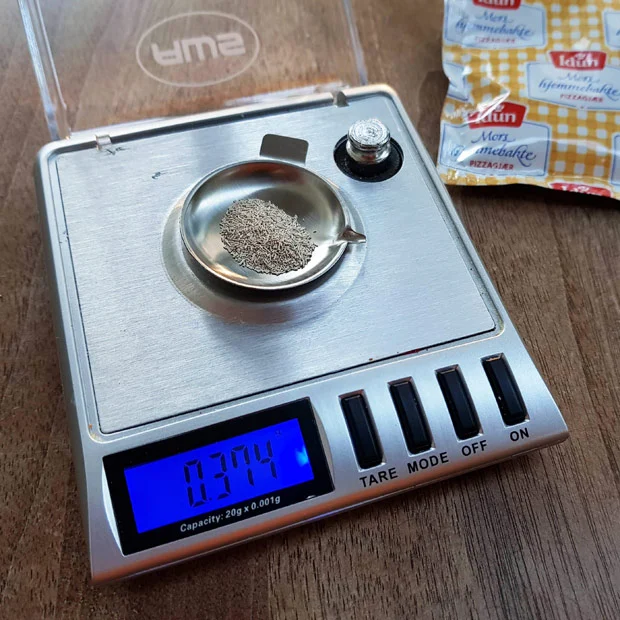
In the wake of global lockdowns, the kitchen became a sanctuary for millions. As grocery store shelves saw unprecedented shortages—particularly of basic staples like flour and yeast—a quiet, domestic revolution took hold. While the world struggled to comprehend the harrowing exponential growth of the SARS-CoV-2 virus, home bakers were inadvertently conducting a masterclass in the very same biological principle: the exponential proliferation of Saccharomyces cerevisiae, or common baker’s yeast.
Understanding the invisible mechanics of fermentation is not merely a culinary pursuit; it is a lesson in patience, precision, and the power of mathematics. By learning to harness the exponential nature of yeast, bakers can not only stretch their limited supplies but also achieve superior flavor profiles that far exceed the quality of standard, "quick-rise" bread.
Main Facts: The Science of the Single Cell
At its core, fermentation is a biological process fueled by exponential growth. Unlike linear growth, where a set amount is added over time, exponential growth is a geometric progression. A single yeast cell, when provided with optimal conditions—specifically moisture, nutrients (sugars), and appropriate temperatures—will undergo budding, a form of asexual reproduction.
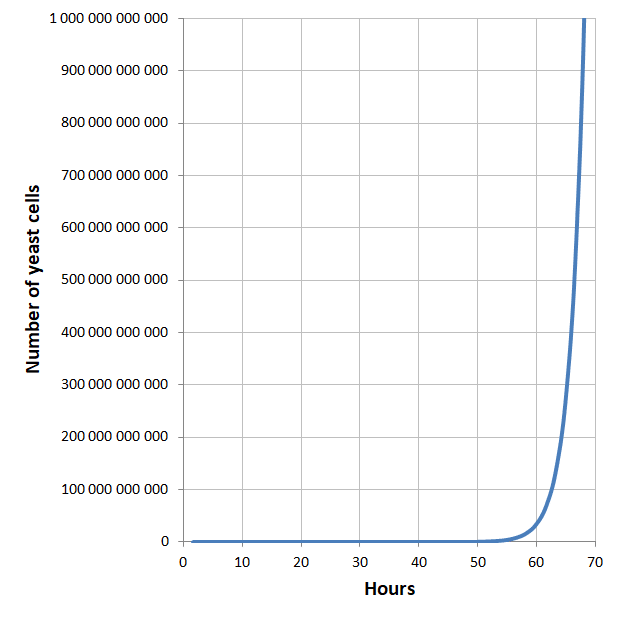
Under ideal conditions, a single yeast cell can replicate every 100 minutes. This creates a compounding effect: one becomes two, two become four, four become eight, and so on. In the initial hours, this activity is invisible to the naked eye. This "lag phase" is often misinterpreted by novice bakers as a failed batch, leading many to mistakenly add more yeast. However, the math dictates that after 24 hours, those original cells have multiplied into roughly 16,000. By the 48-hour mark, that number swells to over 268 million. Within 72 hours, a single cell can theoretically produce a colony of one trillion cells—the equivalent mass of a 50-gram block of compressed yeast.
In the domestic kitchen, the goal is not to reach a trillion cells, but to manage a population sufficient to aerate a loaf of bread. By utilizing precision scales and extended fermentation times, bakers can minimize the initial "inoculum" (the amount of yeast added) and allow the natural multiplication process to do the heavy lifting.
Chronology: From Scarcity to Skill
The narrative of home baking during the pandemic followed a distinct timeline:
- The Panic Phase (March – April 2020): As lockdowns were implemented worldwide, supply chains faltered. In many countries, including Norway, yeast disappeared from shelves for weeks. Consumers, forced to stay home, began panic-buying, which only exacerbated the shortages.
- The Adaptation Phase (May – June 2020): With commercial yeast unavailable, home cooks turned to sourdough starters—a traditional method of capturing wild yeast from the air and flour. During this period, the "sourdough craze" dominated social media, signaling a return to ancient baking techniques.
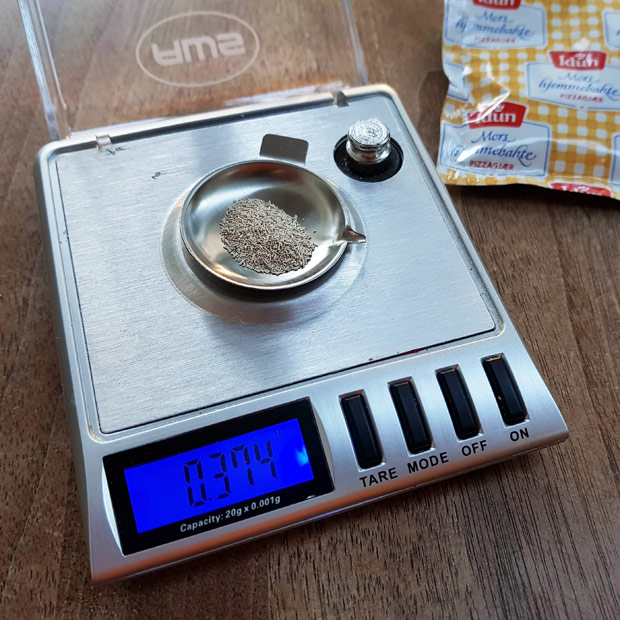
- The Precision Phase (July 2020 – Present): As supplies of instant dry yeast began to trickle back, a new demographic of "data-driven" bakers emerged. Leveraging mobile applications like PizzApp+, these bakers moved away from the "heaping teaspoon" mentality. They began treating baking as a chemical laboratory, using 0.001g-precision scales to calculate exact yeast ratios based on proofing time and ambient temperature.
Supporting Data: Calculating the Perfect Rise
The common misconception in home baking is that more yeast equals better bread. In reality, too much yeast often leads to a coarse crumb, an unpleasant "yeasty" aftertaste, and a dough that over-proofs before the flavor has time to develop.
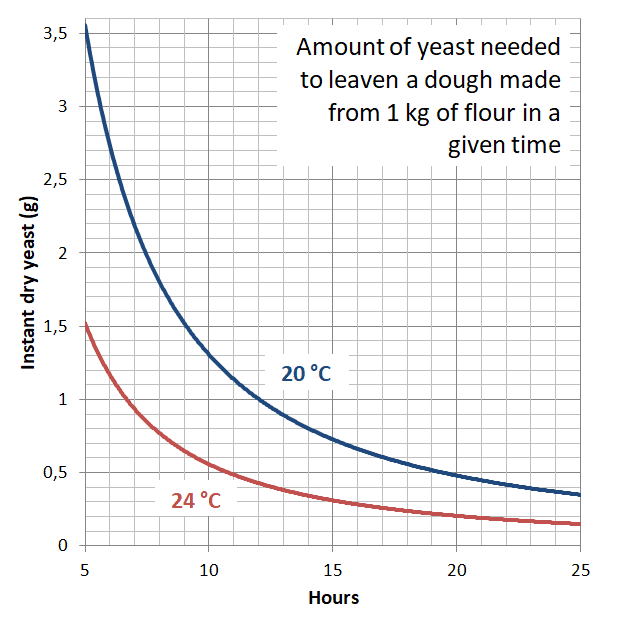
Using data derived from culinary software, we can map the relationship between yeast quantity, time, and temperature. For a standard 1kg loaf of wheat bread, the following variables illustrate the efficiency of low-yeast fermentation:
- Scenario A (Standard): 10g of yeast, 2-hour proofing time at 20°C. Result: Rapid expansion, minimal flavor development.
- Scenario B (Slow-Rise): 0.48g of yeast, 20-hour bulk fermentation at 20°C. Result: Significant development of lactic acid bacteria, enhanced crust color, complex flavor profiles, and highly digestible gluten structures.
This data demonstrates that the baker who understands the math of exponential growth is not only more efficient with their ingredients but also produces a demonstrably superior product. By decreasing the amount of yeast by 95%, the baker creates a "long-fermentation" environment. This duration allows enzymes to break down starches into sugars and proteins into amino acids, which in turn feed the yeast and contribute to the Maillard reaction—the browning of the crust—during baking.
Official Perspectives: The Professional Consensus
Professional bakers and food scientists have long advocated for "retarded fermentation"—the process of slowing down yeast activity to prioritize flavor.
According to fermentation experts, the commercial pressure to produce bread quickly has led to the "supermarket loaf" phenomenon, characterized by bland, fluffy, and nutritionally hollow products. Professional, artisan-grade bread relies on the very principle that home bakers discovered during the lockdown: that time is an ingredient.
The use of digital tools to manage this process is supported by modern food technology. Applications like PizzApp+ provide bakers with a reliable interface to adjust for different types of leavening agents—be it fresh, instant, or active dry yeast—and even incorporate the complexity of sourdough. By standardizing the variables of temperature and time, these tools have democratized high-end baking techniques, allowing amateur bakers to achieve results once reserved for master boulangers.
Implications: The Future of Home Baking
The shift toward precision baking has significant implications for both sustainability and culinary culture.
Economic and Environmental Impact
By using as little as 0.5 grams of yeast per kilogram of flour, a single 12-gram sachet of instant yeast can last for months. This reduction in waste is a direct result of understanding biological growth cycles. When households minimize their consumption of pre-packaged, mass-produced bread, they reduce their reliance on industrial supply chains and the plastic waste associated with supermarket packaging.
The Return of "Slow Food"
The most profound implication is the psychological shift in how we value our time. The "instant" nature of modern life—the desire for a loaf of bread in under two hours—is fundamentally at odds with the biological realities of grain fermentation. The lockdown, while tragic, forced a "slow down." It taught the home baker that the most satisfying products are those that are allowed to develop on their own terms, guided by the immutable laws of mathematics and biology.
A New Culinary Standard
As we move further away from the initial shock of the pandemic, the skills acquired during this time remain. The "pandemic baker" is no longer a novice; they are a practitioner of a craft that bridges the gap between science and art. Whether through the convenience of a small digital scale or the complex, living culture of a sourdough starter, the modern baker is now equipped to manipulate the exponential growth of yeast to create food that is not only sustaining but profoundly flavorful.
In conclusion, the simple act of baking bread has become a reflection of our ability to adapt to complex systems. By respecting the math behind the rise, we have gained not just a loaf of bread, but a deeper understanding of the natural world and the quiet, exponential power of the microscopic life that feeds us. The next time you set your dough to rise, remember: you are not just waiting; you are managing a living, breathing, and rapidly evolving population. That is the true science of the loaf.

 Layla Zulfa
 Lina Hope