Siti Muinah
 Asro
Asro
 Basiran
 Jia Lissa
 Lina Irawan
 Layla Zulfa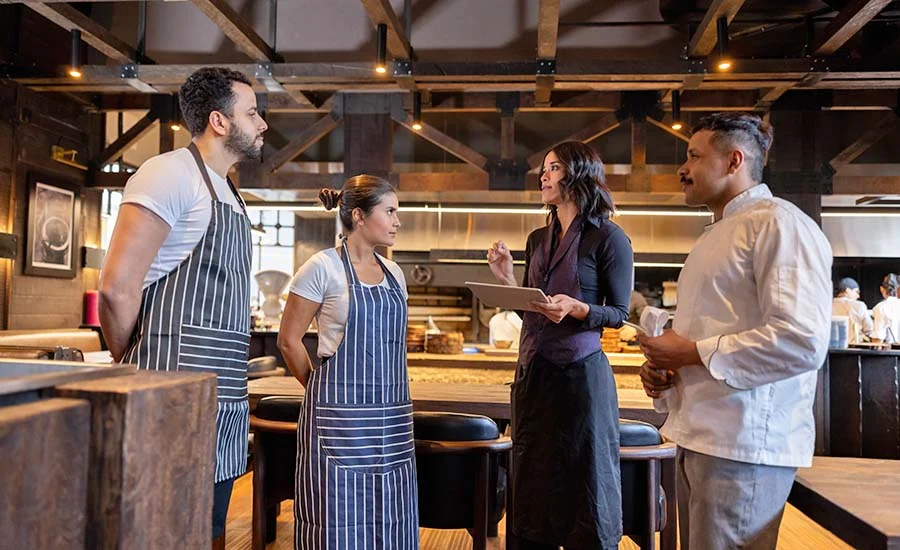
For decades, the global food industry has treated food safety training as a "check-the-box" compliance exercise. Governments, academic institutions, and corporate entities have poured billions into formal instructional programs—classroom lectures, e-learning modules, and certification exams—under the assumption that knowledge acquisition automatically translates to risk reduction. Yet, despite the ubiquity of these programs, foodborne illness remains a persistent public health crisis.
A critical evaluation of the industry’s approach reveals a startling disconnect: we have become experts at teaching food safety, but we are struggling to ensure it is actually practiced. The evidence suggests that while formal training provides the "what," it frequently fails to deliver the "how" and the "why" in the high-pressure, fast-paced environment of a commercial kitchen. To bridge this gap, industry leaders are increasingly looking toward a long-overlooked strategy: the integration of informal, on-the-job training.
The Evidence Gap: Why Traditional Metrics Fall Short
The scientific literature on food safety training is vast, yet it remains surprisingly inconclusive. Numerous studies report positive correlations between training and safety performance; however, a closer look at the methodologies behind these claims reveals significant structural flaws. Many studies rely on small, non-representative convenience samples, lack rigorous control groups, or suffer from inherent data collection biases.
Because we lack a substantial body of high-quality, longitudinal evidence, we are left with a fundamental question: Is our current training model ineffective, or are we simply measuring the wrong things?
The missing variable in most assessments is the role of informal training. Because workplace interactions—the whispered coaching during a busy lunch rush or the quick observation of a peer washing their hands—are rarely documented, they are almost never factored into the success equations of food safety interventions. It is time to consider that while formal training sets the stage, it is the informal, day-to-day culture that determines whether a kitchen is safe or a liability.
Bridging the Gap Between Knowledge and Practice
To understand the limitations of current training, we must distinguish between "foundational knowledge" and "behavioral competence." Formal instruction, whether through a digital interface or a traditional classroom, is undeniably vital for establishing a baseline understanding of pathogens, temperature regulations, and legal standards. However, adult learning theory suggests that information delivered in a vacuum is rarely retained or applied.
The Contextual Barrier
When training occurs outside the work environment, it lacks the nuances of the real world. A trainee may learn the theoretical importance of cross-contamination in a sterile classroom, but that knowledge often evaporates when they are tasked with managing three different proteins during a Friday night dinner shift. Without the "contextual bridge"—the ability to see how these rules apply to specific equipment, layouts, and workflows—employees often resort to shortcuts, inadvertently creating the very hazards they were taught to avoid.
The Power of Informal, On-the-Job Learning
Informal training is not an alternative to formal systems; it is the essential catalyst that makes them functional. Its primary advantage is immediacy. Unlike a certification course that occurs once every few years, informal training is continuous. It happens in real time, at the workstation, where the risks are present and the stakes are highest.
Real-Time Coaching and Immediate Feedback
When a supervisor observes a line cook preparing a sandwich, they have the opportunity to provide instantaneous, corrective feedback. This is a "teachable moment" that no online module can replicate. By linking a specific action—such as the failure to change gloves—to the immediate, observable risk, the supervisor helps the employee build a mental model of safety that is tied to their daily habits rather than abstract testing criteria.
Continuous Reinforcement
The "forgetting curve" is a well-documented psychological phenomenon; without active reinforcement, knowledge decays rapidly after training. Informal training acts as a buffer against this decay. Through daily shift huddles, peer discussions, and routine managerial check-ins, the expectations of the organization are kept at the forefront of the employee’s mind. This creates a rhythm of safety that replaces the "one-and-done" mentality of annual certifications.
Peer Learning: The Hidden Curriculum
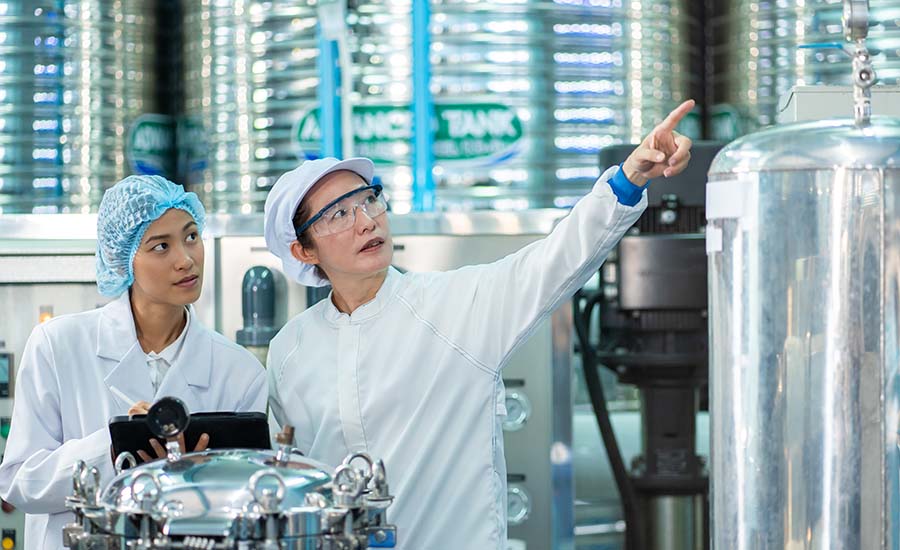
One of the most potent, yet dangerous, forms of informal training is peer-to-peer learning. Employees spend significantly more time with their coworkers than they do with trainers or managers. New hires naturally mirror the behaviors of their veteran colleagues.
If the senior staff models meticulous hygiene, the new employee will, by default, view that as the standard. However, if the experienced staff treats safety protocols as "optional" or "for the auditors," that culture of apathy will spread like wildfire. Organizations must recognize that peer learning is happening regardless of whether it is managed. By formalizing the role of mentors and ensuring that senior staff are properly trained to coach others, companies can turn this informal influence into a powerful tool for safety compliance.
Behavioral Science and the Feedback Loop
The efficacy of informal training relies heavily on the quality of feedback. Behavioral science dictates that feedback is only as effective as its specificity. Vague instructions like "be more careful" are ineffective because they don’t provide a pathway for change.
Effective informal coaching involves:
- Observation: Watching the employee perform a specific task.
- Specific Identification: Pointing out the exact action that deviates from protocol (e.g., "The thermometer wasn’t sanitized before you moved from the raw chicken to the salad prep area").
- Rationalization: Explaining the "why" to ensure the employee understands the risk.
- Correction: Asking the employee to demonstrate the correct action immediately.
This approach transforms the workplace into a dynamic classroom, building the employee’s self-efficacy and confidence. When workers feel comfortable asking questions during these routine interactions—rather than fearing embarrassment in a group classroom—they are more likely to resolve uncertainties before they lead to errors.
Cultivating a Culture of Safety
Ultimately, the most successful food safety programs are those that prioritize "Safety Culture" over "Safety Compliance." A strong culture is characterized by shared values where safety is viewed as a fundamental part of the job, not an obstacle to production.
Leadership commitment is the linchpin of this environment. If managers prioritize speed over safety, or if they view corrective feedback as a form of punishment rather than a learning opportunity, the culture will fail. Leaders who foster a "just culture"—one where employees feel safe reporting hazards and asking for help—are the ones who see the most consistent results.
The Path Forward: Integrating the Two Models
To modernize food safety, the industry must stop viewing formal and informal training as separate entities. Instead, they should be integrated into a comprehensive "Learning Ecosystem."
A New Framework for Food Safety
- Formal Foundation: Use classroom and digital training to establish the technical knowledge base.
- Informal Contextualization: Use on-the-job coaching to apply those concepts to the specific hazards of the establishment.
- Documentation: Develop simple systems to track informal coaching sessions, shift huddles, and peer-mentorship interactions. This data provides management with a clearer picture of whether safety protocols are being actively reinforced.
- Leadership Modeling: Ensure that management is not just overseeing production, but actively participating in the safety feedback loop.
By formalizing the informal, we can create a sustainable cycle of learning. Organizations that rely solely on periodic training are fighting an uphill battle against human nature and the pressures of the industry. Conversely, those that embed safety into the daily routine—through continuous coaching, peer accountability, and clear communication—are the ones that will truly reduce the risk of foodborne illness and ensure the highest standards of public health.
The future of food safety lies not in better tests, but in better conversations. By recognizing and valuing the informal interactions that define our workplaces, we can finally turn the "knowledge gap" into a bridge toward a safer, more resilient food system.


 Pevita Pearce
 Lina Hope