

 Dwi Wanna
 Nana Wu
 Muslim
 Reynand Wu
 Ammar Sabilarrohman
 Evan Lee Salim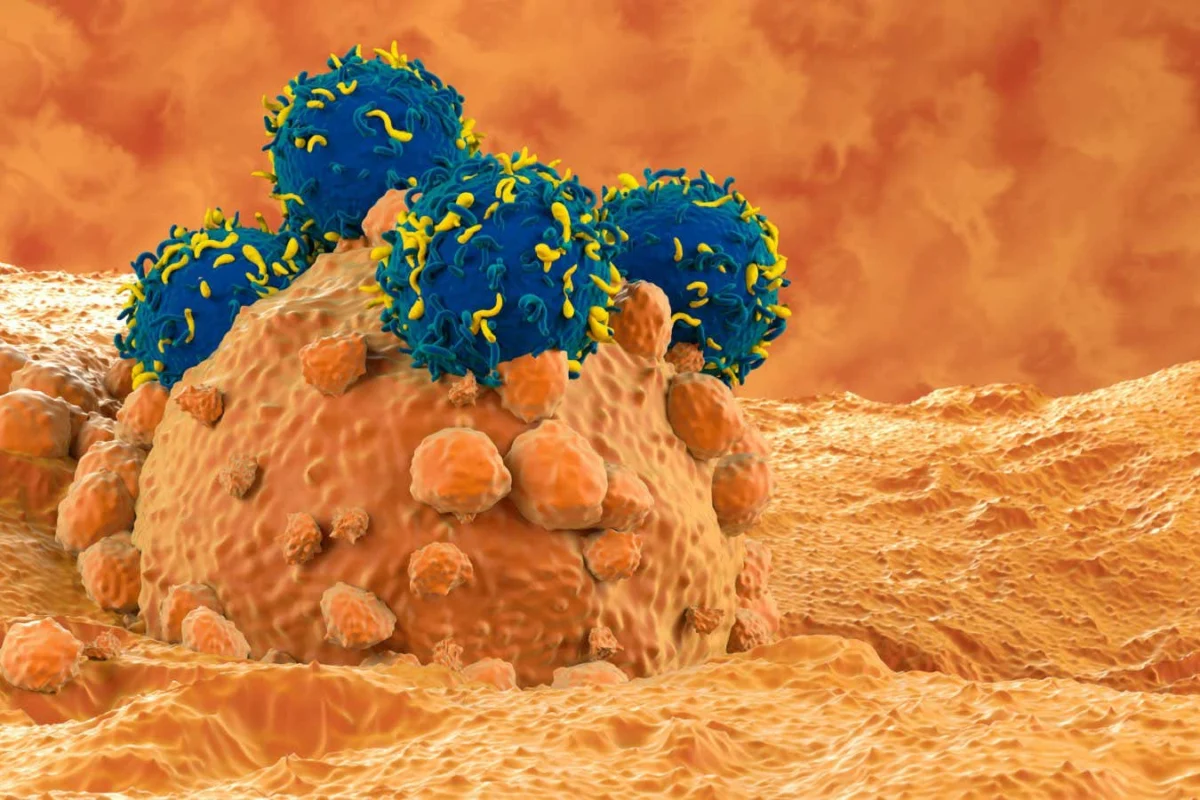
In the high-stakes world of oncology, the battle against cancer is often framed in biological terms: genetic mutations, signaling pathways, and protein expression. However, a groundbreaking new study suggests that we have been overlooking a fundamental property of cancer cells—their physical consistency. Researchers have discovered that by manipulating the mechanical "stiffness" of cancer cells, they can dramatically enhance the efficacy of immunotherapy, potentially turning the tide against even the most aggressive forms of skin cancer.
The findings, presented at the recent "Biophysical Immunoengineering: from insight to clinical application" conference in London, suggest that the softness of malignant cells may act as a physical shield, allowing them to evade the body’s natural defenders. By hardening these cells, scientists are essentially stripping away their "stealth" capabilities, rendering them vulnerable to a precise and lethal immune response.
The Mechanical Advantage: Why Cancer Softness Matters
For decades, the field of immuno-oncology has focused on the chemical signals cancer cells send to "turn off" immune cells. However, T-cells—the specialized soldiers of the immune system—are not just biochemical sensors; they are also mechanical ones. They navigate the body by probing the physical environment, using their receptors to gauge the stiffness of the surfaces they encounter.
"Cancer cells are often softer than healthy cells," explains Li Tang of the Swiss Federal Technology Institute of Lausanne (EPFL). This difference in mechanical texture isn’t merely a byproduct of malignancy; it is a tactical advantage. The research team hypothesized that this softness might interfere with the ability of T-cells to form a stable "synapse" with the tumor cell. If the target is too squishy, the T-cell cannot anchor itself effectively, making the delivery of toxic, cancer-killing payloads significantly less efficient.
Yi Sui, a researcher at Queen Mary University of London who was not involved in the study, describes the shift in perspective as revolutionary. "It’s a completely new concept," says Sui. "It’s really tackling a medical problem from a physical point of view. I think it’s highly promising."
Chronology of a Breakthrough: The Laboratory Evidence
The path to this discovery began with a granular look at the cell membrane. By comparing the composition of cancer cell membranes to healthy counterparts, the researchers identified a culprit: cholesterol. Cancer cells frequently pack their membranes with higher concentrations of cholesterol, which acts as a plasticizer, increasing the cell’s fluidity and softness.
To test whether reversing this softness could improve outcomes, the team conducted a controlled study using mice inoculated with melanoma—a particularly aggressive and deadly form of skin cancer.
The Experimental Protocol:
- Day 0: 24 mice were injected with melanoma cells to induce tumor growth.
- Day 9: The mice began a standard immunotherapy regimen. This included an infusion of genetically engineered T-cells designed to recognize tumor markers, simulating CAR T-cell therapy, alongside three infusions of IL-15, a cytokine protein known to stimulate T-cell activity.
- Day 9–18: The experimental group received daily injections of methyl β-cyclodextrin (meβCD), a compound specifically chosen for its ability to strip cholesterol from cell membranes, effectively increasing the "stiffness" of the tumor cells. The control group received only saline.
The results were stark. Within a month, every single mouse in the control group had succumbed to the disease as their tumors expanded unchecked. In contrast, the group treated with meβCD saw a remarkable survival benefit: seven mice died, but five experienced complete tumor regression.
Supporting Data: The Mechanics of the "Death Grip"
The success of the treatment lies in the physical interaction between the T-cell and the tumor. The team’s analysis revealed that when the cancer cells were stiffened, the T-cells were able to latch onto them with significantly greater force.
This stronger adhesion is critical for the activation of the T-cell’s cytotoxic machinery. Once firmly attached, the T-cell releases specialized proteins, most notably perforin. As the name suggests, perforin functions like a biological drill, puncturing holes into the membrane of the target cell. By hardening the tumor cell, the researchers effectively ensured that the T-cell could remain locked in place long enough to deliver a lethal dose of perforin, leading to the rapid disintegration of the cancer cell.
"The numbers are great; it’s quite impressive," notes Lance Kam of Columbia University. "It confirms that we are looking at a fundamental biological mechanism that was previously ignored in favor of purely chemical targets."
Official Perspectives and Expert Analysis
The scientific community has reacted with cautious optimism. While the data from the mouse model is compelling, experts emphasize the distance between a successful lab trial and a human clinical therapy.
Li Tang acknowledges that the transition to human trials is the "big challenge." Historically, many immunotherapies that demonstrate high efficacy in mouse models fail in human trials due to the vastly more complex human immune system and the tumor microenvironment.
However, there is reason for hope. Because the physical properties of cancer cells—specifically their softness—are a consistent feature across both mice and humans, the mechanical target is more "universal" than many genetic targets, which can vary wildly between patients. "Drugs that alter the stiffness of cancer cells may stand a better chance," Kam explains, "because this is a fundamental trait of the malignancy, not a random mutation that might be absent in some human patients."
Future Implications: Toward a New Class of Cancer Drugs
The research is now moving into a phase of refinement. The primary hurdle for clinical use is the delivery method. Currently, the requirement for daily injections of meβCD into the tumor site is not practical for human treatment.
To solve this, the team at EPFL is working on two fronts:
- Developing systemic delivery: The goal is to create a drug that can be administered in a single injection and target the tumor specifically, minimizing the impact on healthy cells.
- Broadening the scope: The team plans to test this method on a variety of solid tumors beyond melanoma. If this mechanical intervention works across different cancer types, it could represent a "universal adjuvant"—a treatment that could be combined with any existing CAR T-cell therapy to boost its effectiveness.
The Potential Impact on Immunotherapy
If successful, this approach could address one of the most persistent issues in modern oncology: the "exhaustion" and inefficiency of T-cells in the presence of bulky, resilient tumors. By turning the tumor into a "stiff" target, clinicians might be able to use lower doses of T-cells or less intensive regimens, reducing the harsh side effects often associated with current immunotherapy protocols.
As the field of biophysical immunoengineering matures, the integration of physics and biology is proving to be a potent combination. The ability to manipulate the material properties of cancer cells is not just an academic curiosity; it is a potential roadmap to overcoming the biological barriers that have long protected tumors from our best medical defenses. For patients suffering from aggressive, treatment-resistant cancers, this "stiffening" strategy may soon provide a new way to ensure the immune system finally gets a grip on the disease.


 Sagoh
Sagoh