
 Pevita Pearce

 Lina Hope
 Evan Lee Salim

 Lina Irawan

 Nana Muazin
In the quiet corners of Silicon Valley and the bustling feeds of biohacking influencers, a new metric has emerged to replace the humble calendar year: "Biological Age." This concept, popularized by centimillionaire entrepreneur Bryan Johnson—the central figure of the Netflix documentary Don’t Die—suggests that our chronological age is merely a suggestion. Johnson, who claims to have reversed his biological clock by over five years through a grueling, multi-million-dollar regimen of plasma infusions, hyperbaric oxygen therapy, and hundreds of daily supplements, has turned "bio age" from a niche scientific term into a mainstream cultural obsession.
As the interest in longevity science surges, so too does the marketplace for tests that promise to peer into our cells and tell us how fast we are truly aging. But behind the slick marketing of mail-order blood kits and DNA methylation reports lies a complex scientific landscape that is as promising as it is misunderstood.
The Science of Aging: Chronological vs. Biological
To understand the current fervor, one must first distinguish between the two ways we measure time. Chronological age is simple: it is the number of candles on your birthday cake. It is a linear, unavoidable countdown. Biological age, by contrast, refers to the functional status of your cells and organ systems.
Consider two 50-year-old men. One lives a sedentary life, consumes processed foods, and deals with high environmental pollution. The other prioritizes strength training, follows a nutrient-dense diet, and manages stress through mindfulness. While their birthdays are identical, their internal "machinery" tells a different story. The latter individual’s cells are likely functioning with the efficiency of a much younger person. This discrepancy is what bio age testing aims to quantify.
A Chronology of the Bio-Age Movement
The quest to quantify human longevity is not entirely new, but its recent acceleration is unprecedented:
- The Early Research (2000s–2010s): Scientists began identifying "biomarkers"—measurable indicators of biological state—such as telomere length (the protective caps on chromosomes) and DNA methylation patterns. These tools were initially intended for controlled clinical studies on disease progression.
- The "Biohacking" Explosion (2020–2023): As podcasts like The Huberman Lab and The Joe Rogan Experience brought longevity science to the masses, a cottage industry of direct-to-consumer testing companies emerged.
- The "Bryan Johnson Effect" (2023–Present): With the release of his documentary and his public "Blueprint" protocol, the concept of "aging in reverse" entered the public lexicon, prompting millions to wonder if they, too, could hack their own mortality.
Decoding the Biomarkers: How We Measure "Real" Age
If you decide to peer under the hood of your own health, you will encounter several different testing methodologies. Understanding what they measure is crucial to distinguishing between high-level diagnostics and marketing gimmicks.
1. DNA Methylation (The "Epigenetic Clocks")
This is currently considered the "gold standard" in research. DNA methylation is a process where chemical tags attach to your DNA, turning genes on or off. As we age, these patterns change in predictable ways. Algorithms like the Horvath Clock or DunedinPACE analyze these patterns to provide an estimate of your biological age. However, these tests are best viewed as snapshots of a specific tissue—usually blood—and may not reflect the aging rate of your heart, brain, or liver.
2. Telomere Analysis
Telomeres act like the plastic tips on shoelaces, protecting your DNA strands during cell division. As they shorten, cells lose their ability to divide. While scientifically fascinating, the commercial "qPCR" telomere tests sold to consumers are rarely as accurate as the "flow-FISH" tests used in clinical medical settings. For the average person, these results offer limited actionable intelligence.
3. Physiological Performance Metrics
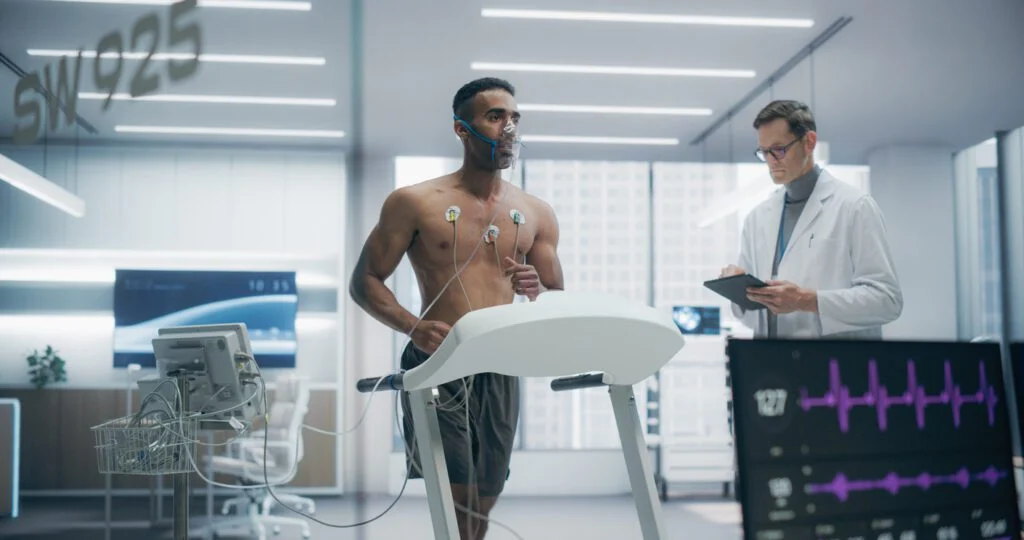
Perhaps the most reliable markers are those we can measure ourselves through movement. VO2 Max—the maximum amount of oxygen your body can utilize during intense exercise—is arguably the strongest predictor of longevity. A decline in VO2 Max is a classic sign of systemic aging, and unlike a blood test, it is highly responsive to consistent aerobic training.
Free and Accessible: The "DIY" Longevity Assessment
You do not need a million-dollar budget to assess your biological trajectory. Researchers have long utilized functional tests that correlate strongly with long-term survival.
The Sitting-Rising Test (SRT)
This test measures a combination of strength, balance, and flexibility. By lowering yourself to the floor and standing back up without using your hands or knees for support, you are testing the very mechanics that prevent late-life falls—a leading cause of injury-related mortality.
Grip Strength
Often referred to as the "vital sign of aging," grip strength is a remarkably accurate proxy for overall muscle health. Research consistently shows that those with lower grip strength have a higher incidence of age-related diseases. A standard tennis ball squeeze test can provide a baseline, while a dynamometer can offer precise data.
The Fatigability Scale
The Pittsburgh Fatigability Scale assesses how worn out you feel after common tasks. If you find that daily activities like grocery shopping or walking leave you feeling "mentally dull" or physically drained, it is often a lagging indicator of systemic inflammation or underlying health issues that warrant a discussion with your doctor.
Official Responses and Medical Implications
The medical establishment remains cautious about the "bio-age" boom. Leading physicians and researchers at institutions like the Mayo Clinic emphasize that while biomarkers are useful, they are not replacements for standard preventative care.
The New York Times and other investigative outlets have raised significant questions about the validity of these tests, noting that when companies provide biological ages, they are often using proprietary, non-peer-reviewed formulas. The concern is that consumers might feel a false sense of security—or unnecessary panic—based on numbers that have not been clinically validated.
The primary risk, according to medical professionals, is the "diagnostic trap." Patients may spend thousands on unproven supplements or expensive infusions while ignoring the "big rocks" of longevity: sleep, social connection, resistance training, and blood pressure management.
Turning Data into Action: The Path Forward
The true utility of any biomarker test—whether it’s a $300 DNA methylation kit or a $0 sit-to-rise test—lies in its ability to spark behavior change. If you learn your bone density is low, you should increase your weight-bearing exercise. If you find your VO2 Max is below average, you should integrate zone-2 cardio into your routine.
The "Big Rock" Strategy
Before diving into the latest longevity trends, prioritize the strategies that are scientifically proven to extend the "healthspan" (the years spent in good health):
- Resistance Training: Building muscle is the single most effective way to regulate blood sugar and maintain metabolic health.
- Protein Intake: Essential for maintaining muscle mass as you age.
- Sleep Hygiene: The body’s primary recovery and cellular cleanup phase.
- Stress Management: Chronic cortisol elevation is a known accelerator of biological aging.
Conclusion: Is it Worth It?
Should you or your client pursue bio-age testing? If you are a data-driven individual who uses that information to optimize your lifestyle, then yes—provided you treat the results as a starting point, not a final verdict.
However, be wary of the "hard sell." If a company pairs your test results with an expensive, proprietary supplement protocol, you are likely being marketed to rather than coached. The secret to longevity, according to the most rigorous longitudinal studies, is rarely found in a bottle or a high-tech lab. It is found in the consistency of your daily habits.
As you navigate the world of longevity, remember the cardinal rule of medicine: Data in isolation is just noise. It is only when you apply that data to the fundamental, evidence-based pillars of health that you truly begin to "don’t die"—or more importantly, live well for as long as possible.


 Asro

 Rifan Muazin