 Dwi Wanna
 Nana Wu
 Muslim
 Reynand Wu
 Ammar Sabilarrohman
 Nila Kartika Wati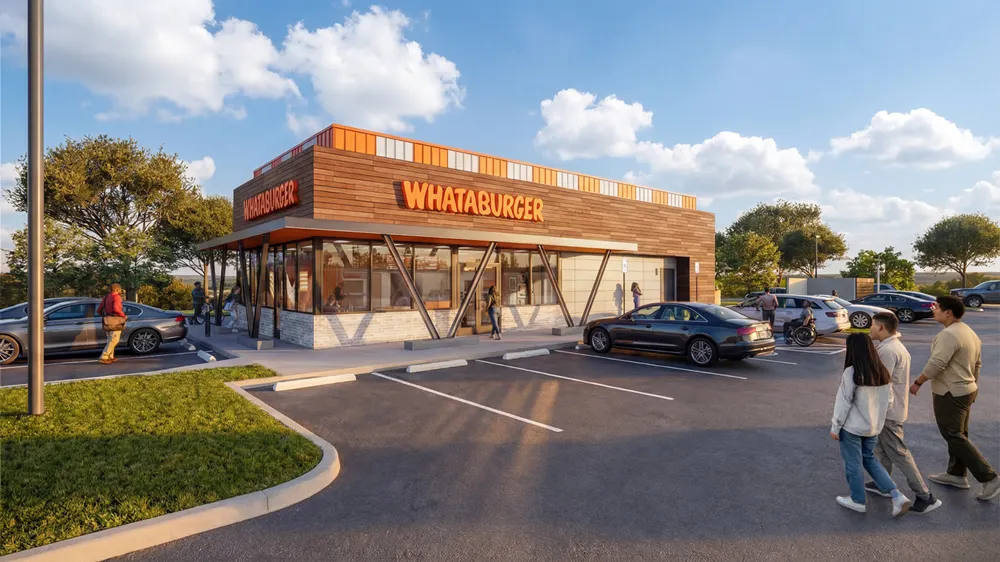
For millions of Texans, the silhouette of a Whataburger—defined by its soaring A-frame roof and vibrant orange-and-white striped facade—is more than just a place to grab a burger. It is a cultural landmark, a beacon of late-night reliability, and a symbol of Lone Star State heritage. With over 700 locations across Texas, the brand has cultivated a deep, almost generational emotional connection with its customer base.
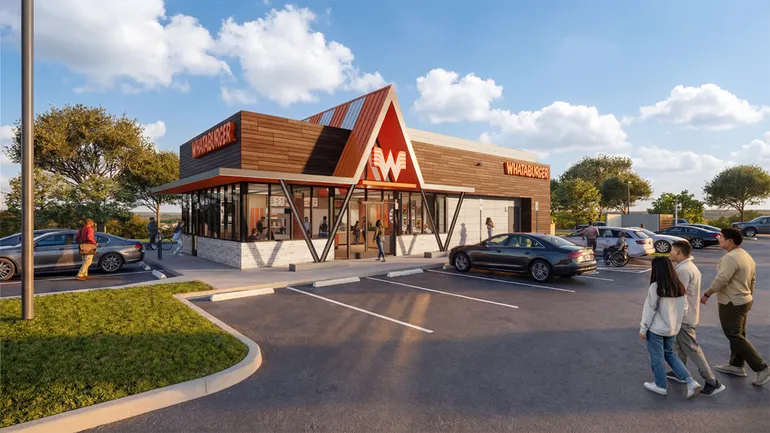
However, as the burger giant embarks on an aggressive national expansion, it has faced a design dilemma: how to translate its storied Texas identity into new markets where the iconic A-frame has been largely absent. To solve this, Whataburger is launching a new architectural strategy, unveiling two distinct prototypes—the "Legacy" and the "Essentials"—designed to export the brand’s soul while embracing modern efficiency.
Main Facts: A Dual-Track Design Evolution
The core of Whataburger’s new strategy lies in a deliberate attempt to reclaim its visual heritage. According to Chief Development Officer Todd Ewen, who joined the company last year, the decision to standardize the design was not merely aesthetic; it was a strategic move to establish brand presence in regions where the name "Whataburger" carries less historical weight.
The two new prototypes, developed in collaboration with Director of Design Billy Bias, represent a departure from the "generic box" designs that have become common in the Quick Service Restaurant (QSR) industry.
- The Legacy Prototype: This model serves as a direct homage to the company’s roots. It features the classic, high-profile A-frame structure, paired with a larger, more expansive dining room. It is designed for high-visibility locations where the building itself serves as a piece of marketing.
- The Essentials Prototype: This version prioritizes versatility and modern aesthetics. While it eschews the full A-frame in favor of a sleeker, more contemporary silhouette, it leans heavily into the signature orange-and-white stripes and warm wood tones.
Both designs utilize a sophisticated blend of glass and modern materials, intended to bridge the gap between the nostalgia of the 1950s and the demands of the 2020s.
A Chronology of Growth and Transformation
Whataburger’s journey from a single roadside stand in Corpus Christi, Texas, in 1950 to a national player has been marked by careful, deliberate scaling. For decades, the company’s growth was tethered to the physical footprint of its home state, where its architectural style became synonymous with the landscape.
- 2023–2024: The company initiates a leadership overhaul in its development department, bringing in Todd Ewen to oversee the next phase of national expansion. The leadership team begins analyzing the effectiveness of its existing real estate portfolio.
- Late 2026: Whataburger is slated to break ground on two company-owned test sites in Texas. These pilot locations will serve as the proving ground for the new design language, allowing the team to monitor operational flow and customer reception.
- Q2 2027: The official rollout begins in earnest. The brand plans to deploy the new prototypes across its rapidly expanding footprint in states including North Carolina, Florida, Arizona, South Carolina, and Georgia.
- Beyond 2027: The company expects the new models to become the standard for all future corporate builds, eventually transitioning to the franchise network.
Supporting Data: Why Design Matters in QSR
The QSR industry is currently in the midst of a "design renaissance." As competition for real estate and customer attention intensifies, major chains are recognizing that physical space is a key driver of sales.
According to industry data, the trend is widespread:
- Huey Magoo’s: Recently debuted a drive-thru-focused prototype that aims to reduce construction buildout costs by an impressive 40%.
- Burger King: Has been aggressively rolling out new remodels, linking store aesthetics directly to improved franchisee profitability.
- Starbucks: Continues to refine its store layouts, focusing on "third-place" seating arrangements and localized color palettes to keep customers engaged.
- Schlotzsky’s: Has undergone a comprehensive rebrand, using new prototypes to signal a shift in its market positioning.
For Whataburger, the primary driver for this pivot is not cost-cutting, though the new models are expected to be more economical to build than their predecessors. Instead, the focus is on "brand presence." By creating a structure that stands out from the monotonous sea of standard retail architecture, Whataburger aims to replicate the "Texas experience" for a customer in Georgia or South Carolina who has never seen an A-frame in their life.
Official Responses: The Philosophy of "Sense of Place"
"We have not necessarily built the A-frame beyond Texas in large numbers, and so we thought it was important that we bring that iconic element back for new customers," Todd Ewen stated regarding the strategic shift. "The opportunity to have that be a universal design going forward was really important to us."
The sentiment is echoed by Billy Bias, who emphasizes that the goal is to trigger an emotional response. "In Texas, you notice Whataburgers, and that’s really what we wanted to invoke in these new markets," Bias explained. "Creating these memories for new customers is really important to us."
When asked about the operational side of the new designs, Bias noted that the kitchen layout is being overhauled to improve speed and efficiency, though the final specifications are still being finalized. "We’ve done some test runs with a few municipalities across the U.S. in various states, and have received very favorable feedback," Ewen added. "They liked the fact that it was not just a generic box."
Implications: The Future of the Franchise Model
The shift to these two prototypes carries significant implications for Whataburger’s franchisee network. Currently, the company plans to handle the construction of the initial new-builds at the corporate level. Once the prototypes are fully vetted, they will be made available to franchise partners.
There is significant internal enthusiasm for the change. Ewen confirmed that the company already has a waiting list of operators eager to add new units as soon as the designs are finalized. This eagerness underscores the value that franchisees place on a strong brand identity.
However, the transition will not be uniform across all existing stores. While the company plans to incorporate many of the new interior design elements—such as the wood tones and updated finishes—into existing remodels, the iconic A-frame will largely remain absent from these projects. The cost-prohibitive nature of retrofitting the massive A-frame structure onto existing, non-conforming buildings makes it an impractical choice for widespread renovation.
A Strategic Pivot Toward Longevity
The decision to invest in these prototypes signals that Whataburger is playing a long-term game. In an era where many QSRs are shifting toward "digital-only" or "small-footprint" kiosks, Whataburger is doubling down on the physical dining experience.
By prioritizing a "sense of place," the company is betting that customers still value the atmosphere of a physical restaurant. Whether it is the classic A-frame Legacy model or the sleek, stripe-heavy Essentials version, the goal remains the same: to ensure that when a customer pulls off the highway, they know exactly where they are—and exactly what kind of burger they are about to get.
As the industry pivots toward hyper-efficiency and minimal human contact, Whataburger’s move stands as a reminder that in the fast-food world, architecture is not just shelter; it is an invitation. By bringing the "Texas look" to the national stage, the company is attempting to prove that a strong brand identity can transcend state lines, provided it is built with the right mix of nostalgia and modern vision.


 Pevita Pearce
 Azzam Bilal Chamdy