

 Dwi Wanna
 Nana Wu
 Muslim
 Reynand Wu
 Ammar Sabilarrohman
 Azzam Bilal Chamdy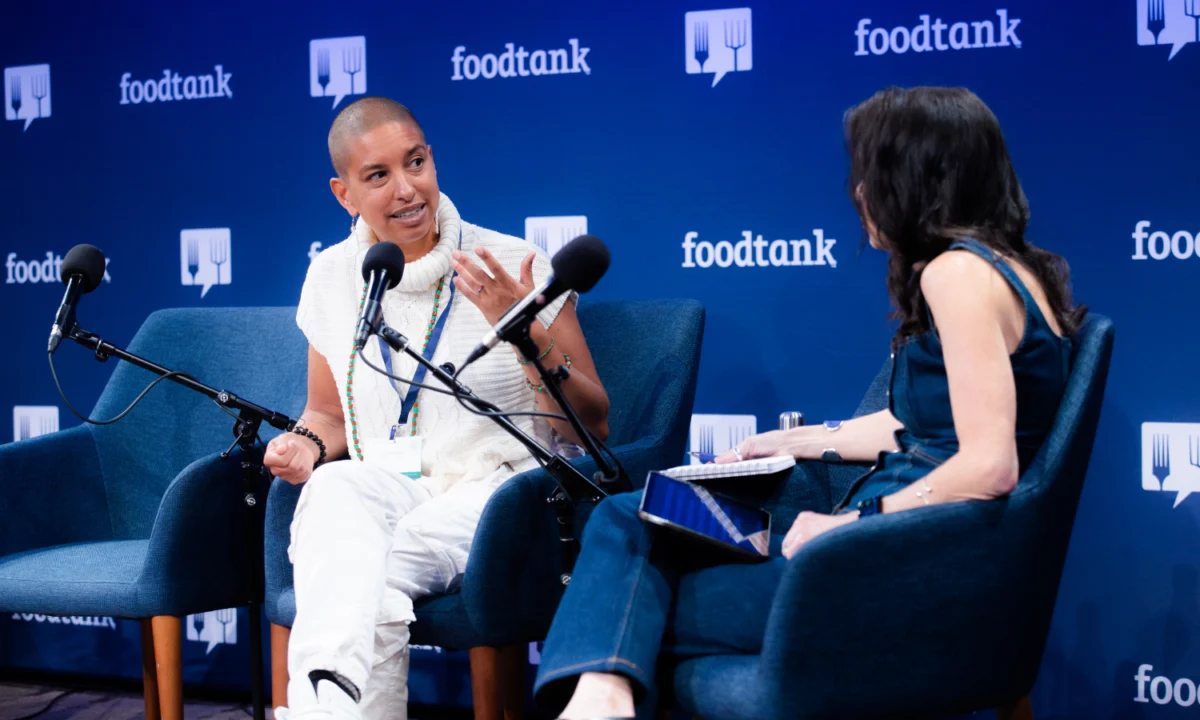
As the global community converges for Climate Week NYC, the conversation around food systems has shifted from mere sustainability to active, systemic regeneration. At the heart of this discourse lies the organic movement—a sector that has evolved from a niche alternative to a cornerstone of modern climate-smart agriculture. During the landmark "The Roots of Organic: From Soil to Shelf" summit, industry leaders, farmers, and advocates gathered to evaluate the past, present, and future of organic food systems, emphasizing that true progress requires a paradigm shift in how we value, finance, and communicate the importance of the soil beneath our feet.
The event, held in partnership with the Organic Trade Association, Organic Valley, Once Upon a Farm, Handsome Brook Farms, Stonyfield, and Amy’s Kitchen, alongside collaborators including Organic Voices, Lundberg Family Farms, Tradin Organic, and the Rodale Institute, served as a rallying cry for shared responsibility.
The Evolution of a Movement: Building Relationships, Not Just Certifications
The organic sector has long been defined by its rigorous certification standards, but as Danielle Nierenberg, President of Food Tank, aptly noted, the movement’s true power lies in its social infrastructure.
"The organic movement didn’t grow because of one certification," Nierenberg explained. "It grew because people built relationships that allowed ideas to spread." This sentiment set the tone for the summit: organic agriculture is as much about human connection and community as it is about chemical-free farming.
From its grassroots origins, the movement has matured into a complex, global supply chain. Yet, as the industry faces unprecedented climate volatility, the consensus among experts is that it must return to its roots—centering the farmer, prioritizing soil health, and demystifying the "climate-smart" label for the average consumer.
The Farmer as the Engine of Innovation
If soil is the foundation of organic agriculture, the farmer is its heartbeat. Matthew Dillon, Co-CEO of the Organic Trade Association, underscored this during his keynote, noting that the movement was built by pioneers who took immense personal and financial risks to prove that sustainable practices could feed a nation.
"The farmers are the true roots of this movement," Dillon stated. "We must recognize their contributions to the sector’s future by giving them the resources to adapt and ensuring their voices and expertise are centered in every policy discussion."
This focus on farmer-centric policy was a recurring theme. Shawna Nelson, CEO of Organic Valley, posed a critical question: "How do we make sure that farmers are at the table for all of these major milestones?" Nelson highlighted that organic farmers are among the most innovative in the industry, constantly iterating and refining their techniques to combat pests, drought, and soil degradation without synthetic inputs.
Bridging the Economic Divide: Financial Viability and Sustainability
Despite the clear environmental benefits, the transition to and maintenance of organic farming remains an economic hurdle. The panelists were unanimous: sustainability cannot be a cost burden borne solely by the producer.
"There’s not a one-size-fits-all solution," said Britt Lundgren, Senior Director of Sustainability and Government Affairs at Stonyfield. "But if the cost falls entirely at the farm level, we’re not going to succeed."
To address this, the summit highlighted the necessity of a "three-legged stool" approach to sustainability: environmental, social, and financial. Tracy Favre, Senior Vice President of Sustainability and Organic Strategies at Handsome Brook Farms, argued that for organic farming to scale, it must be viewed as a robust business strategy rather than just an ethical choice.
Strategies for Economic Resilience:
- Supply Chain Collaboration: Strengthening partnerships between farmers, processors, and retailers to distribute costs more equitably.
- Technical Assistance: Investing in education and infrastructure to help farmers navigate the transition to certified organic practices.
- Cash Incentives: Providing direct financial support for the adoption of low-emissions and regenerative practices.
Challenging the "Big Food" Narrative: The Role of Producers and Retailers
The responsibility for scaling organic food does not rest solely on the farm. Food producers and retailers play a pivotal role in shaping consumer behavior and breaking the dominance of ultra-processed, conventional options.
Paul Schiefer, CEO of Amy’s Kitchen, offered a blunt assessment of the current marketplace. "We’ve been deceived by Big Food for many years that conventional and ultra-processed is the only way," he said. According to Schiefer, the goal is not to shame consumers but to meet them where they are—leveraging taste, identity, and accessibility to make organic food the natural choice.
However, threading this needle is difficult. Jane Kuhn, Senior Director of Strategic Sourcing & Sustainability at Once Upon a Farm, acknowledged the inherent tension between affordability and the true cost of production. The industry must find ways to eliminate "expensive bottlenecks" in the value chain that inflate retail prices without necessarily providing more value to the farmer.
Moving Beyond Single-Metric Metrics: The Science of Holism
A significant portion of the summit was dedicated to the science of organic agriculture. Amber Sciligo, Senior Director of The Organic Center, warned against the tendency of modern research to reduce complex ecosystems to single metrics, such as carbon sequestration alone.
"Organic, regenerative, perennial systems are much more complex," Sciligo noted. "If we want to truly understand what is happening on the farm, we have to move away from these single metrics."
Beatriz Daim of Tradin Organic echoed this, emphasizing that "carbon is just one metric. You need to look at a farm as a much wider ecosystem." This shift in perspective is crucial for policy, as funding and grants are often tied to specific, narrow environmental targets that may not reflect the overall health and resilience of an organic farm.
The Human Element: Telling the Story of the Farm
Perhaps the most poignant moment of the summit came when Annie Watson, an organic dairy farmer at Sheepscot Valley Farm, spoke to the reality of the daily grind. She pointed out that while food system partners and marketers are adept at crafting messages, the farmers themselves are often too busy tending to the land to tell their own stories.
"There are only so many hours in a day, and dairy farming requires most of them," Watson said. "If we don’t tell the stories of farm life, no one will know. Farms are disappearing, and so are their stories. Somebody has to tell them."
This underscores a major challenge for the organic movement: how to maintain authenticity in a culture driven by short-form soundbites. Abianne Falla, founder of CatSpring Yaupon, noted that while the reality of organic farming is often "messy and complex," the movement must find ways to convey that depth without oversimplifying the truth.
Looking Forward: A Call for Political Advocacy
As the summit concluded, the message was clear: the organic movement is at a crossroads. Maria Rodale, Board Co-Chair of the Rodale Institute, urged the industry to pivot from defining organic by what it excludes (synthetic pesticides, GMOs) to defining it by what it includes (safe, trustworthy, nutrient-dense food).
The final call to action came from Leah Penniman, a farmer, author, and food justice activist at Soul Fire Farm. She challenged the audience to expand their scope of influence beyond the grocery store shelf.
"There is a powerful need to take a stand for the people who know the earth most intimately," Penniman said. "We are not going to solve the climate puzzle by ignoring the people who are tending to the climate. It’s not just about consumer choices and labels; we have to be political advocates."
Implications for the Future of Food
The "Roots of Organic" summit demonstrated that while the challenges facing the agricultural sector are immense—ranging from climate change to economic instability—the solutions are already being practiced on the ground. By centering farmers, investing in systemic research, and fostering transparent, collaborative supply chains, the organic sector is positioning itself as the blueprint for a climate-resilient future.
The path forward requires more than just consumer preference; it requires a structural overhaul of how food is valued. For the organic movement to succeed, it must ensure that the "roots" of the system—the farmers—are supported, heard, and financially rewarded for their role as stewards of the earth. As we look toward the future of global food security, one thing is certain: the most effective climate technology we have is healthy, living soil, and the people dedicated to tending it.
For those interested in watching the full proceedings, the livestream recording of "The Roots of Organic: From Soil to Shelf" is available on Food Tank’s YouTube channel. Further event schedules and climate-focused programming can be explored at FoodTank.com.


 Ali Ikhwan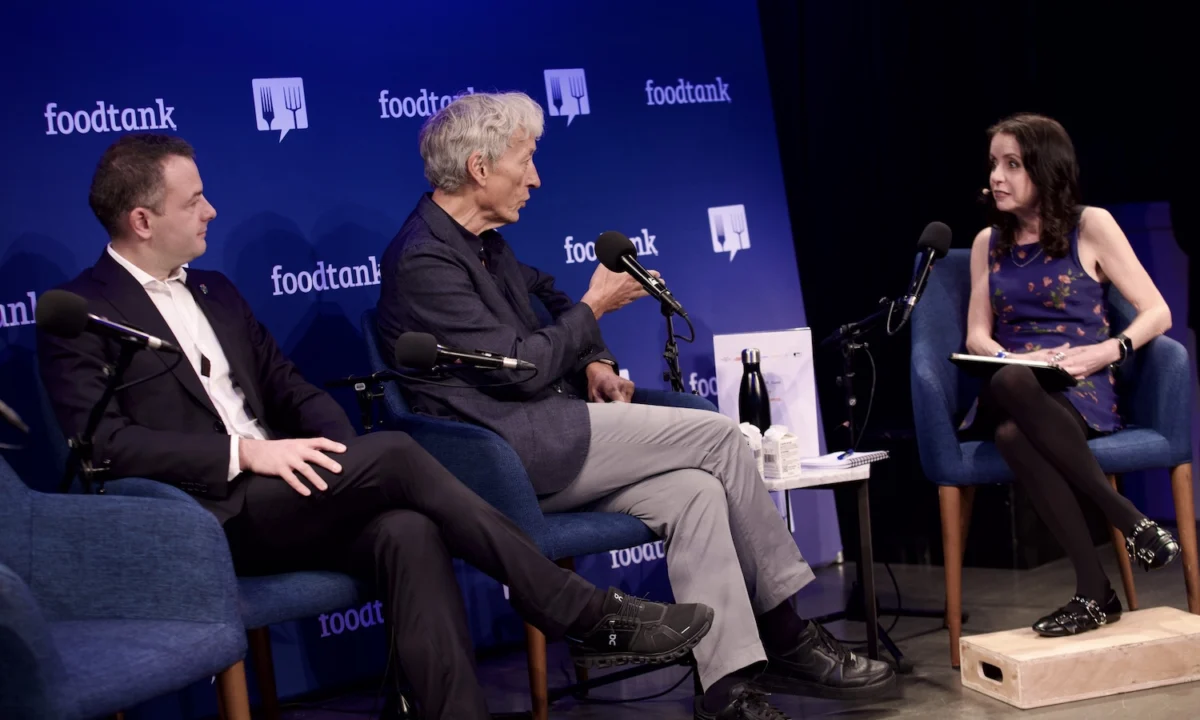
 Laily UPN
