

 Ammar Sabilarrohman
 Ali Ikhwan
 Dwi Wanna
 Neng Nana
 Siti Muinah
 Laily UPN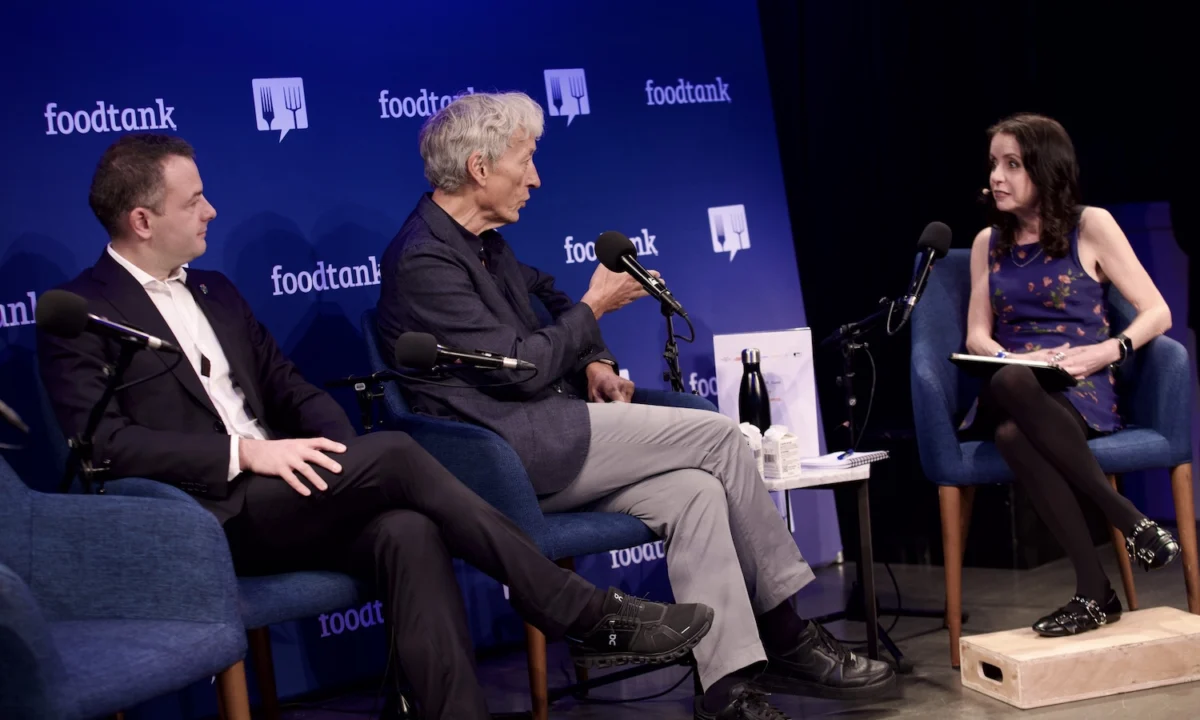
As the global climate crisis intensifies, the narrative surrounding environmental sustainability is undergoing a fundamental shift. While carbon emissions often dominate the headlines, experts are increasingly sounding the alarm on a more immediate, existential threat: the destabilization of the world’s water systems. From shrinking river basins and depleted aquifers to warming oceans, the pressure on our water resources is rippling through the entire global food supply chain, threatening the stability of civilizations.
This critical intersection of water and sustenance was the central theme of the "Water and Blue Foods Summit," held during Climate Week NYC. The event, hosted by Food Tank in partnership with the Future Food Institute, the Monterey Bay Aquarium, and Venice Climate Week, convened a diverse group of scientists, policymakers, chefs, and financiers to confront the reality that water is the primary lens through which we must view the future of food.
The Era of Water Bankruptcy
The summit opened with a stark assessment from Kaveh Madani, Director of the U.N. University Institute for Water, Environment and Health. He introduced the concept of "water bankruptcy"—a state in which the rate of human water consumption and pollution far outstrips the natural capacity of ecosystems to replenish.
"Nature at the beginning is generous and resilient," Madani explained. "But after a while, it loses its resilience and can never go back to where it was. We are seeing more and more systems getting pushed into that stage and losing their capacity to bounce back."
This "bankruptcy" is not merely a theoretical risk; it is a current reality. As agricultural demands grow to feed a ballooning global population, the strain on groundwater and surface water has reached a breaking point. When the buffers of nature are removed, the resulting scarcity threatens not just the crops we eat, but the very stability of our communities.
Chronology of a Crisis: From Source to Plate
To understand the gravity of the situation, one must look at the life cycle of food. David Laborde, Director at the U.N. Food and Agriculture Organization, emphasized that food production is not a miracle that happens in a vacuum.
"When we talk about food, it doesn’t come from the air," Laborde noted. "We have to grow it. You need water to grow your crops, feed your animals, process your food, and move things around."
The Supply Chain Disruption
- Irrigation and Cultivation: As climate change alters precipitation patterns, traditional farming regions face unpredictable droughts, forcing a reliance on dwindling aquifers.
- Processing and Logistics: Industrial food processing is incredibly water-intensive, requiring vast quantities for sanitation and cooling.
- Distribution: Even the transport of food relies on maritime and inland shipping routes, which are increasingly susceptible to low water levels in key canals and rivers.
This systemic interdependence means that water policy is, by definition, food policy. Brendan Shane of the Trust for Public Land underscored this, stating, "It’s all a system. The water is flowing from the land, so if you want to protect the water, you need to protect and sustainably manage the land."
The Blue Food Paradigm Shift
While terrestrial agriculture grapples with drought, the world’s oceans—the "blue food" sector—are facing their own set of profound challenges. The U.N. Food and Agriculture Organization reports that in 2021, only 62.3 percent of marine fish stocks were being fished at biologically sustainable levels. This has triggered a rapid pivot to aquaculture, which, as of 2022, officially produces more aquatic animals for human consumption than wild capture fisheries.
Rethinking Seafood Consumption
The shift toward aquaculture is necessary, but it is not a panacea. It requires a fundamental rethink of what we eat and how we value marine ecosystems. Chef Barton Seaver, a prominent voice in sustainable gastronomy, argued that the sustainability conversation has been too narrowly focused on producers, ignoring the critical role of consumer behavior.
"There’s an entire behavioral aspect of the consumers," Seaver noted. "The choices they make at the market drive the industry."
Wendy Norden, Director of Science and Global Strategies at the Monterey Bay Aquarium, suggests that we must view the changing ocean not just as a site of loss, but as an opportunity for adaptation. She pointed to the rise of "invasivorism"—the practice of consuming invasive aquatic species—as a powerful conservation tool. By turning a threat to local biodiversity into a source of food, society can simultaneously reduce pressure on native stocks and control harmful, non-native populations.
Supporting Data: The Global Stakes
The data presented at the summit paints a sobering picture of our current trajectory:
- Sustainability Gap: With less than two-thirds of marine stocks at sustainable levels, the pressure to reform industrial fishing is higher than ever.
- Aquaculture Dominance: The 51 percent majority share of aquaculture in the 2022 food system highlights a permanent shift in how humanity sources protein.
- Consumption Impact: Jenn Kemmerly of the Monterey Bay Aquarium emphasized that because the United States imports such a significant portion of its seafood, its domestic consumption patterns have massive, global environmental consequences. "To choose sustainable seafood is the easiest, most in-your-face, top-of-mind choice to make right now," she urged.
Official Responses and the Policy-Science Gap
A recurring theme throughout the summit was the disconnect between scientific reality and political action. Sara Roversi, Founder of the Future Food Institute, was blunt in her assessment: "We need to connect the research to the policymakers, but unfortunately, what we are seeing is that policymakers are not looking at the science at all."
This lack of alignment is further complicated by the financial sector. Sarisher Mann of BNP Paribas noted that while there is an increasing appetite for "blue finance" and investments in water resilience, the language gap between scientists and bankers remains a significant hurdle.
"Finance doesn’t necessarily speak the language of science," Mann observed. "We need much more translation of that science to make the business case for sustainability clear and actionable."
Implications: Cities as Laboratories for Hope
Despite the gravity of the challenges, the summit concluded on a note of cautious optimism, highlighting the potential for localized, innovative solutions. Venice, Italy, serves as the ultimate "living laboratory" for this struggle.
Mayor Simone Venturini noted that if a city as complex and environmentally vulnerable as Venice can implement effective climate solutions, those models can be exported globally. "We need to use Venice as an experimental field to put practice into theory," he said.
Riccardo Luna, Co-Curator of Venice Climate Week, echoed this sentiment with a call for urgent, scaled action. "Climate change is here to stay. It’s accelerating. But we have an opportunity. We have the playbook; we need to scale the solutions and take action."
Conclusion: The Path Forward
The "Water and Blue Foods Summit" made one thing abundantly clear: we can no longer treat water, food, and climate as separate silos. They are the three pillars of a single, fragile system.
Protecting our water means protecting our food security, and by extension, our public health and economic resilience. As Danielle Nierenberg, President of Food Tank, summarized, "Climate change is a water story. Food security is a water story. Public health, livelihoods, biodiversity, and resilience are all water stories."
The solutions exist—from sustainable aquaculture and watershed restoration to smarter financial incentives and informed consumer choices. The challenge for the coming decade is not one of invention, but of connection and scale. We must bridge the gap between scientists and policymakers, between finance and biology, and between the consumer and the source. If we fail to address the essentials—if we ignore the water that sustains us—we risk losing the very foundation of our global food system. The time to transition from the era of "water bankruptcy" to one of systemic stewardship is now.



