

 Nana Wu

 Dwi Wanna

 Suro Senen

 Evan Lee Salim

 Lina Hope
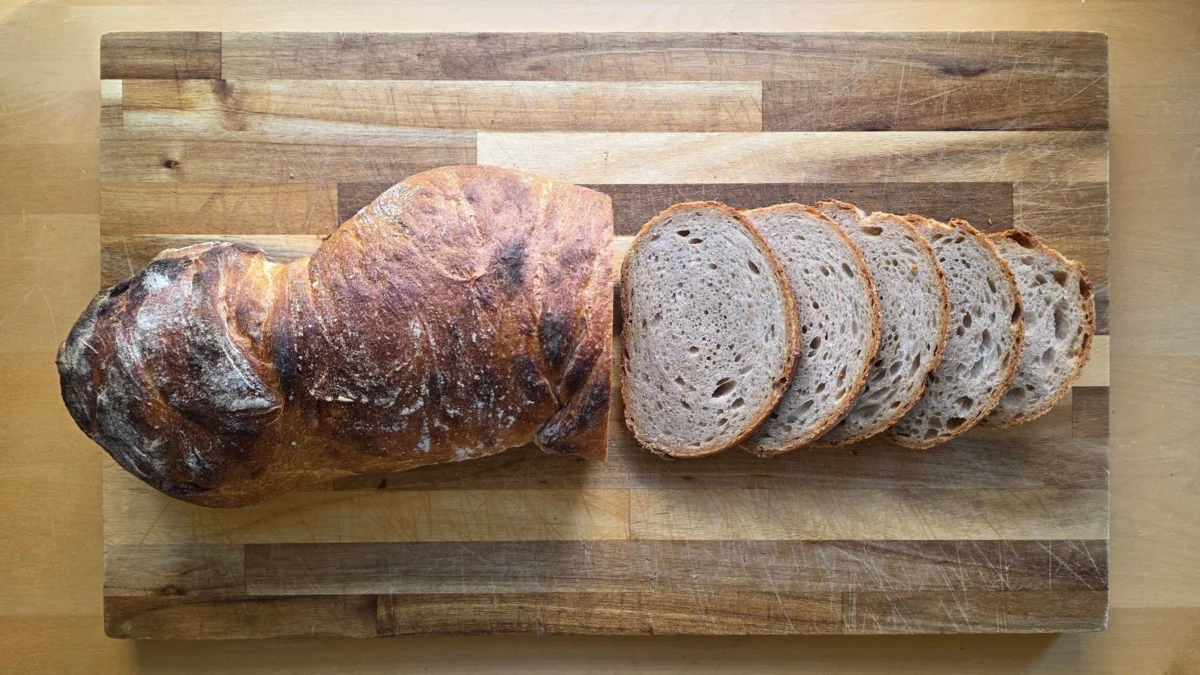
If one were to search for the definitive visual representation of "rustic bread," the result should undoubtedly be the pain gascon. With its deep, mahogany-colored crust and intricate, serpentine twist, this loaf is as much a work of art as it is a culinary staple. More than just a aesthetic triumph, the pain gascon represents a survival strategy born from the rural history of southwestern France—a loaf designed to last for days, if not weeks, in the harsh conditions of the Gascony countryside.
Main Facts: A Masterpiece of Rural Resilience
The pain gascon is a regional variation of the more widely known pain de campagne (French country bread). While the latter is typically shaped into a standard boule or bâtard, the pain gascon is characterized by its large, elongated, and twisted form. This unique shape is not merely for show; the thick, dark crust serves as a protective shell, sealing in moisture and flavor, which allows the interior crumb to remain tender and fresh long after standard loaves have gone stale.
Historically, this longevity was a necessity. In the rural villages of Gascony, families and neighborhoods relied on communal wood-fired ovens. Because these ovens were massive, they were only fired up once every week or two. Consequently, the bread had to be dense and resilient enough to remain edible for the duration of the cycle.
The most prominent modern steward of this tradition is the Au Pétrin Moissagais bakery in Bordeaux. The bakery is legendary for its 1765 wood-fired oven—a relic that continues to churn out loaves using techniques largely unchanged for over 250 years. According to bread historian and author Eric Pallant, understanding pain gascon is essentially an exercise in understanding the evolution of the French agrarian diet, which historically utilized mixed grains, including rye, due to the realities of field polyculture.
Chronology: The Journey from Moissac to the Modern Kitchen
The history of pain gascon is tied to the town of Moissac, from which the bakery Au Pétrin Moissagais derives its name.
- 18th Century: The construction of the wood-fired ovens that would eventually define the region’s baking culture.
- Traditional Era: For generations, pain gascon was the primary vehicle for daily sustenance in Gascony, baked in massive batches to satisfy the needs of the community for extended periods.
- Modern Era: As industrial bread became the norm, the specific, labor-intensive techniques required to create a genuine pain gascon began to fade. The Au Pétrin Moissagais bakery, led by Serge Combarieu, emerged as the final stronghold, preserving the "lost" shaping technique.
- The Contemporary Revival: In recent years, bakers like Eric Pallant and online culinary educators have begun documenting the process, translating the ancestral techniques for the modern home oven.
Supporting Data: The Science of the "Twist" and the Bake
Translating pain gascon to a home kitchen requires a departure from standard sourdough protocols. The primary challenge is replicating the intense, long-duration bake that creates the characteristic thick, flavorful crust without scorching the exterior.

The Leavening Process
Pain gascon is inherently a naturally leavened product. Because it relies on wild yeast and lactic acid bacteria, the dough requires multiple rise cycles. This long fermentation breaks down proteins and sugars, contributing to the complex, slightly acidic flavor profile associated with authentic French country loaves.
The Steam Factor
Steam is non-negotiable. In the professional setting of a wood-fired oven, the thermal mass and moisture retention are significant. At home, bakers must improvise. A successful replication often involves a steam-drip system—typically a hot pan with a pinhole that slowly releases water over a heated baking stone. This constant humidity allows the loaf to expand fully before the crust sets.
The "Flip" Technique
A critical discovery for home bakers is the thermal management of the loaf. Because the pain gascon is a large, twisted mass, it often requires a longer bake time than a standard boule. To achieve a perfectly toasted bottom and a well-baked center without burning the top, the loaf must be flipped halfway through the final ten minutes of the bake. This ensures the base—often the most flavorful part of the crust—achieves the necessary crunch.
Official Responses and Expert Insights
In conversations with experts like Eric Pallant, a recurring theme is the "soul" of the bread. It is not a recipe that can be rushed. The shaping technique—where the baker’s hands move in a rhythmic, directional roll—is designed to create tension within the dough.
Serge Combarieu, the owner of Au Pétrin Moissagais, emphasizes the tactile nature of the work. His technique involves a specific rolling motion that creates the twist. While modern bakers might look for shortcuts, Combarieu’s process demonstrates that the pain gascon is a product of manual labor and deep intuition. The video documentation of his process reveals that the twist is not merely an aesthetic choice; it influences the crumb structure, creating pockets that hold moisture and contribute to the bread’s legendary shelf life.
Implications: Why We Still Need "Slow Bread"
The resurgence of interest in pain gascon is not just a trend for hobbyist bakers; it has broader implications for our relationship with food.

Preservation of Heritage
When we bake pain gascon, we are performing an act of historical preservation. The recipe links us directly to the 18th-century agrarian lifestyle of southwestern France. It reminds us that bread was once a communal, long-term investment rather than a disposable commodity picked up in a plastic bag at the supermarket.
Culinary Sustainability
The pain gascon approach to baking—creating a bread that stays fresh for a week—is an antidote to the "throwaway culture" of modern food consumption. By utilizing high-hydration doughs, stone-baking techniques, and proper storage (often the bread’s own crust), we reduce food waste.
The Joy of the Process
Perhaps the most significant implication is the psychological reward of the craft. Shaping the dough, managing the steam, and waiting for the deep, mahogany color to develop on the crust provides a sense of accomplishment that processed, mass-produced bread cannot offer. The pain gascon demands patience, but it rewards the baker with a product that is profoundly satisfying in texture, aroma, and taste.
Looking Ahead
As we look to the future of artisanal baking, the pain gascon serves as a template for what is possible. Whether you are baking a single large loaf or dividing the dough into smaller, baguette-style twists, the principles remain the same: high-quality flour, natural leavening, and a respect for the heat of the oven. As more home bakers master the "twist," this piece of French history will continue to find its place on modern tables, proving that some traditions are far too delicious—and far too resilient—to be left in the past.
Quick Tips for the Home Baker:
- Flour Selection: Utilize hard red spring or winter wheats. The higher protein content provides the structural integrity needed for the twist.
- Hydration: If you are an experienced baker, increase the water content for a more open, airy crumb. If you are new to the process, stick to a standard pain de campagne ratio to ensure ease of handling.
- Temperature Control: Aim for an internal temperature of 205°F. If the crust is browning too quickly, tent the bread with aluminum foil or lower the oven temperature for the final phase of the bake.
- The Steam Trick: If you don’t have a professional steam oven, use a disposable aluminum pan with a pinhole. Test the flow rate over your sink to ensure it releases a steady, slow drip of water onto your stone or a secondary hot pan.
By embracing these methods, you aren’t just making a loaf of bread; you are participating in a living legacy that spans centuries, bridging the gap between the rural communal ovens of old France and the warmth of your own home.


 Jia Lissa

 Basiran

