
 Raul Delapena Setiawan
 Ammar Sabilarrohman
 Lina Irawan
 Suro Senen
 Dwi Wanna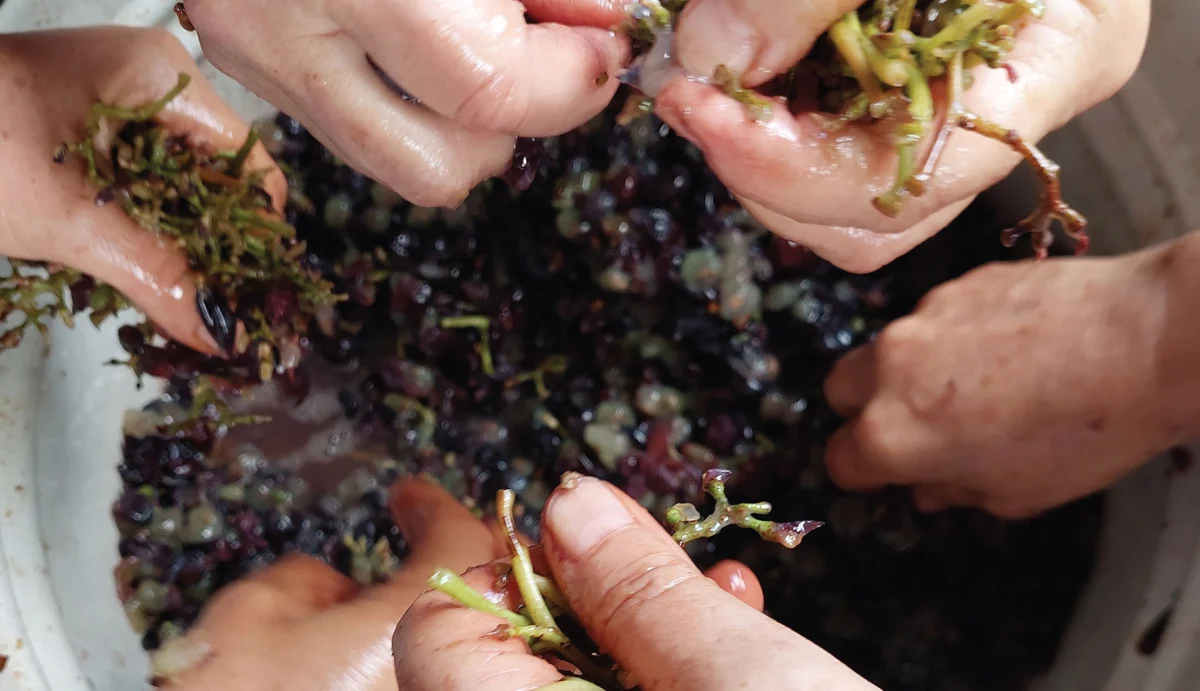
In 1952, the portraitist Robert Thom captured a scene of clinical serenity: French chemist Louis Pasteur, bathed in soft light, inspects experimental flasks while his wife, Marie, watches from an open doorway. This tableau was part of the Great Moments in Medicine series, a lavish public relations campaign commissioned by the pharmaceutical giant Parke, Davis and Company. The paintings, produced between 1948 and 1964, were more than art; they were Cold War propaganda, designed to frame Western science as a triumphant crusade against the "unruliness" of the microbial world.
Today, that legacy of conquest is being rigorously dismantled. The Spring 2026 issue of Gastronomica (Volume 26.1) marks a pivotal moment in food studies, moving beyond the binary of human versus microbe to explore a "post-Pasteurian" reality. Through a series of essays, researchers are uncovering a world where microbes are not enemies to be eradicated, but essential, co-constitutive partners in our food systems, our bodies, and our cultural identities.
The Chronology of Control: From Eradication to Symbiosis
To understand our present, we must look at the historical trajectory of the "Pasteurian regime." For over a century, the Western scientific consensus was defined by metaphors of combat. Pasteur was depicted as a warrior, and his success was measured by how effectively humanity could "combat," "persist against," and "triumph over" microbial life.
- 1948–1964: The Era of Triumph: Parke-Davis utilized the Great Moments in Medicine series to cement the idea that American pharmaceutical enterprise was the vanguard of civilization. Microbes were framed as chaotic threats to public health and industrial progress.
- The Mid-20th Century: The Rise of Industrial Standardization: This period saw the normalization of the "sterile" food environment. The goal was to remove microbial life from the equation of daily existence, leading to highly processed, standardized, and "safe" food systems.
- The 21st Century "Microbial Moment": Drawing on the work of anthropologists like Heather Paxson, contemporary scholars are identifying a shift. We are moving away from the eradication model toward a "post-Pasteurian" world, where the complexity of the microbiome is recognized as vital for health, taste, and ecological stability.
The Microbiopolitics of Food: Supporting Data and Analysis
The Gastronomica special section on microbes in food studies, introduced by Maya Hey and Sarah Elton, argues that microbes are the "invisible center" of our food systems. They are not merely biological contaminants; they are political actors that structure power relationships, regulate taste, and dictate the materiality of our bodies.
The Cyborg Politics of Milk
Annie Sandrussi’s contribution to the issue, "The Cyborg Politics of Milk Microbiota," offers a profound critique of how we manage food production. By applying Donna Haraway’s concept of the "cyborg," Sandrussi exposes a gendered biopolitics of control. In the dairy industry, the management of milk—from raw product to precision-fermented synthetic alternatives—is dictated by how "natural" or "unruly" the body producing the milk is perceived to be. This reveals that microbial management is often a proxy for the control of feminized bodies, both bovine and human.
Biodynamic Viticulture and the Probiotic Turn
Conversely, the field of winemaking offers a glimpse into a more collaborative future. Nikolai Siimes, Nick Lewis, and Emma L. Sharp explore how biodynamic wine producers are adopting "probiotic" approaches. By resisting the "eradicatory ethics of violence" common in conventional viniculture, these growers work with microbial communities to produce wine that reflects the "terroir" of the land. However, the authors are careful to note that these systems are not utopian; they remain bound by the economic imperatives of capitalism, forcing farmers to balance ecological health with financial viability.
Vertical Farming and the Illusion of Containment
In their study of vertical farming and cultivated meat, Lukáš Senft, Tereza Stöckelová, and Varvara Borisova provide a cautionary note. While these technologies rely on the collaboration of microbes, they are governed by a "politics of containment." Indoor farming attempts to bypass the "serendipities of soil and seasons," yet the researchers argue that this is ultimately an illusion. Seasonal microbial dynamics persist, and containment regimes simply create "new human-microbial natures" that may be just as unpredictable as the environments they seek to replace.
Official Perspectives: The Academy and the Field
The scholarly consensus emerging from this volume is that we must move beyond a simple narrative of chronological progress. We are not "past" the Pasteurian era; we are in a state of negotiation with it.
Academic contributors to Gastronomica—hailing from institutions across Czechia, Germany, South Africa, and the United States—employ a multidisciplinary toolkit. By combining anthropology, geography, science and technology studies (STS), rhetoric, and the environmental humanities, they have established that "flourishing with microbes cannot be achieved through a post-Pasteurian understanding alone."
The researchers emphasize that we are currently living through a "microbial moment." This is not a static scientific breakthrough but a dynamic, open-ended symbiosis. As the Anthropocene introduces unprecedented environmental volatility, the ability to adapt our responsiveness to microbial life has become a matter of existential importance.
Broader Implications: Fear, Freedom, and the Politics of Cake
The volume extends its analysis beyond microbes to investigate the postwar cultural psyche, specifically through the lens of Cold War anxiety.
Rebecca Burditt’s "Sweet Ruin: Cakes and the Visual Culture of Anxiety, 1945–1960" provides a brilliant analysis of how the domestic symbol of cake served as a proxy for nuclear fear. The rise of "quick-fix" cake mixes mirrored the era’s geopolitical desire for easy, totalizing solutions to complex problems. Just as nuclear weapons promised an absolute win, cake mixes promised an absolute, effortless domestic victory.
This theme of control continues in Phoebe Mitchem’s exploration of "food freedom." For those suffering from severe food allergies, the popular trend of "food freedom"—often touted as an antidote to rigid, controlling eating habits—is revealed to be a privilege. Mitchem argues for a more nuanced state of "food fascination," where one remains deeply engaged and informed about the biological and chemical impact of ingestion, rather than retreating into the binary of "control" versus "freedom."
Conclusion: Toward a Symbiotic Future
The Gastronomica spring 2026 issue serves as a vital reminder that our food is never just food. It is a carrier of microbes, a reflection of geopolitical history, and a site of intense personal and political struggle.
By analyzing the "connected foods" carried by migrants—where microbes travel across borders to create new marketplaces—to the "digestive belonging" felt by raw milk farmers, the authors of this collection invite us to rethink our relationship with the non-human world. We are being asked to move away from the image of Louis Pasteur holding his flask in a position of dominance and toward a more collaborative, humble, and deeply connected existence.
As we face the environmental challenges of the coming decades, our ability to thrive may depend on our willingness to acknowledge that we have never been alone. We are, and have always been, a multispecies assemblage. Embracing this, as the contributors to this volume suggest, is the first step toward a more sustainable and equitable future.

 Lina Hope