

 Nana Wu

 Dwi Wanna

 Suro Senen

 Evan Lee Salim

 Nila Kartika Wati
By Aneurin Canham-Clyne
Published: October 22, 2026
In a move that preserves one of the most successful collaborative relationships in the history of the quick-service restaurant (QSR) industry, Taco Bell and PepsiCo have officially announced an 11-year contract extension. The agreement, which runs through the end of 2036, secures the future of the iconic Mountain Dew Baja Blast and cements a strategic roadmap for beverage innovation that has defined the Taco Bell brand experience for over two decades.
The renewal arrives at a critical juncture for the Yum! Brands portfolio. While Taco Bell opts for continuity and a doubling-down on its legacy partnerships, its sister brand, KFC, recently sent shockwaves through the industry by announcing a total switch to The Coca-Cola Company, effective 2027. By choosing to stay the course with PepsiCo, Taco Bell is signaling that its winning formula—rooted in unique, cross-branded product development—remains the backbone of its competitive strategy.
Main Facts: A Billion-Dollar Alliance
The extension of the partnership covers both domestic U.S. operations and key international markets, including the United Kingdom, Canada, Ireland, and Thailand.
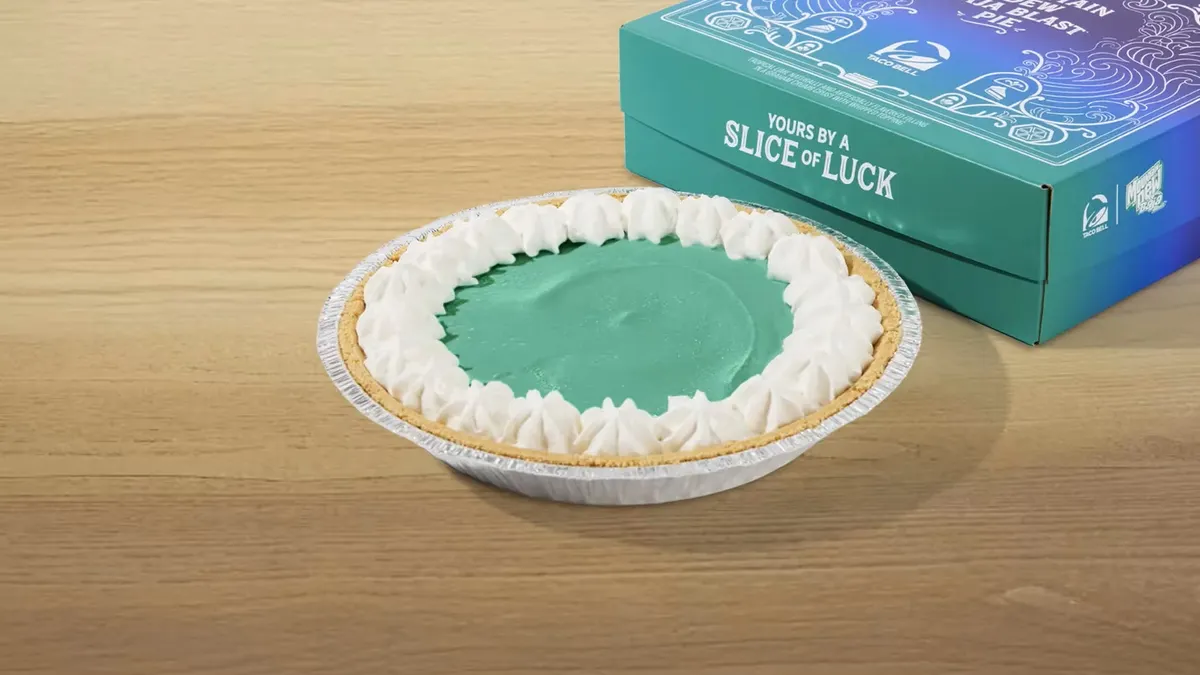
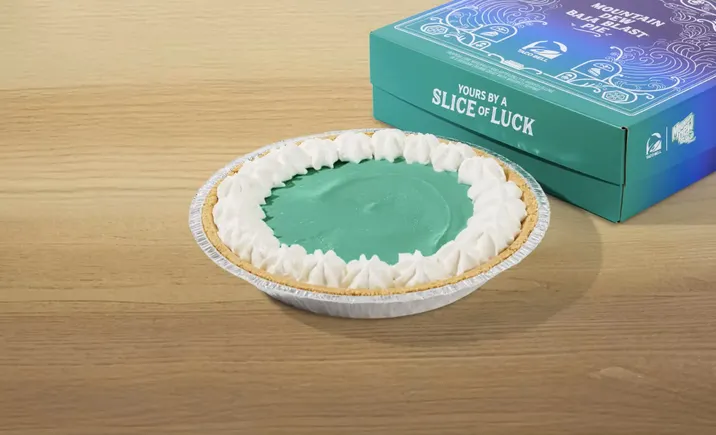
The centerpiece of this deal is the Mountain Dew Baja Blast. Far from a simple fountain drink, the Baja Blast has evolved into a "billion-dollar brand" in its own right. Through a symbiotic relationship, the two companies have leveraged the drink’s cult-like status to launch a variety of extensions, ranging from frozen slushies and gelato to limited-time food items like the viral Baja Blast pie.
Anne Fink, president of PepsiCo Global Food Away From Home, emphasized that the collaboration goes beyond mere syrup delivery. "Together, we have created a platform that consumers view not just as a beverage, but as a lifestyle brand," Fink stated. "From the Doritos Locos Taco to the Baja Blast ecosystem, our history of joint innovation is what keeps the customer coming back."
Chronology: From Tricon to the Modern Era
To understand the significance of this renewal, one must look at the historical entanglement of the two companies.
- Pre-1997: Taco Bell and KFC were both direct subsidiaries of PepsiCo, a vertical integration strategy that allowed for seamless menu development.
- 1997: PepsiCo spun off its restaurant division, creating Tricon Global Restaurants (later renamed Yum! Brands). Despite the corporate divorce, a deep-seated supplier relationship remained.
- 2004: The debut of Mountain Dew Baja Blast at Taco Bell locations. It became an instant sensation, creating a proprietary beverage moat that shielded Taco Bell from the generic soda offerings of its competitors.
- 2010s–2024: The partnership flourished with "co-branding" hits like the Doritos Locos Taco, which fundamentally changed how QSRs view collaborative product launches.
- October 2026: KFC announces a strategic pivot, ending its long-term relationship with PepsiCo in favor of Coca-Cola, citing a need for a massive menu overhaul to reverse years of stagnant sales.
- October 22, 2026: Taco Bell rejects the trend of switching suppliers, instead inking an 11-year extension with PepsiCo, prioritizing long-term stability and brand equity.
Supporting Data: Sales, Trends, and Consumer Sentiment
The decision to stick with PepsiCo is backed by rigorous data analytics regarding consumer habits. Taco Bell’s brand strength has historically been tied to its "craveability" factor—a metric where the Baja Blast ranks in the 99th percentile of QSR beverage loyalty.
While KFC has struggled with a multi-year sales slump, leading to its desperate menu makeover, Taco Bell has maintained a position of industry-leading sales performance. Although the chain faced headwinds this summer due to a widely publicized Cyclospora outbreak linked to its produce supply chain, the brand’s core menu—bolstered by its beverage strategy—remains resilient.
Industry analysts suggest that switching beverage suppliers is a high-risk, high-cost endeavor. It requires massive equipment retrofitting, employee retraining, and the potential alienation of legacy customers who visit specifically for signature drinks. By staying with PepsiCo, Taco Bell avoids the operational friction that KFC is currently undertaking, allowing the chain to focus its capital expenditure on digital transformation and emerging food trends.

Official Responses and Future Vision
In the press release detailing the agreement, both companies outlined a clear vision for the next decade. The focus is no longer just on high-fructose corn syrup staples, but on the "functional" and "energy" segments of the beverage market.
"We are looking at the future of the morning and afternoon day-parts," the statement noted. "Taco Bell is uniquely positioned to capture the Gen Z consumer who is moving away from traditional sodas and toward crafted, functional, and energy-focused beverages."
PepsiCo’s commitment includes developing proprietary energy drink formulations specifically for the Taco Bell menu, designed to pair with breakfast items or serve as mid-afternoon pick-me-ups. This is a direct play for market share against coffee-heavy chains like Starbucks or Dunkin’, utilizing the convenience of the drive-thru model that Taco Bell has mastered.
Implications: A Tale of Two Strategies
The divergence between Taco Bell and KFC represents a fundamental split in how Yum! Brands is managing its subsidiaries.
The KFC Overhaul
KFC is currently in a "reset" phase. By moving to Coca-Cola, the brand is attempting to signal to consumers that everything is changing. A beverage switch is the most visible way to tell a customer, "This is not the same KFC you remember." It is a risky, identity-level pivot intended to shake off the malaise of years of declining relevance.

The Taco Bell Continuity
Taco Bell’s strategy is the opposite: reinforce the core. By renewing with PepsiCo, Taco Bell is telling its investors and its customers that the foundation is solid. In a volatile economic climate, the Baja Blast is a "comfort anchor." It is a reliable, high-margin asset that drives traffic without the need for constant, risky re-invention.
Strategic Risks
However, there are risks to this continuity. If consumer tastes shift too rapidly away from traditional soda—even branded versions like Baja Blast—Taco Bell could find itself locked into a supplier agreement that feels dated by 2030. The burden of proof is now on PepsiCo to prove that they can continue to innovate at the speed of Taco Bell’s marketing team.
Furthermore, the operational reliance on a single partner means that any supply chain disruption at PepsiCo is now a direct threat to Taco Bell’s revenue. As the world faces increasing climate volatility and logistics instability, "keeping the fountain flowing" may prove more challenging in the 2030s than it was in the 2000s.
Conclusion
The 11-year extension is more than a supply contract; it is a declaration of identity. Taco Bell has decided that its future is inextricably linked to the legacy of the "Dew." As the QSR landscape becomes increasingly crowded and fragmented, Taco Bell’s decision to preserve its most iconic partnership suggests that, in a world of constant, often chaotic change, there is immense value in giving customers exactly what they have come to expect.
As the industry watches KFC undergo its painful transformation, Taco Bell is betting that the best way to move forward is to hold on tight to the things that built the brand in the first place. Whether this leads to a new era of dominance or a stagnation of innovation remains to be seen, but for now, the Baja Blast is here to stay.

 Asro

