
 Laily UPN

 Suro Senen

 Muslim

 Raul Delapena Setiawan
 Layla Zulfa
In a landmark achievement for global public health, the World Health Organization (WHO) has officially certified Timor-Leste as malaria-free. This declaration marks the culmination of a two-decade-long journey for the young nation, which emerged from the scars of conflict in 2002 to systematically dismantle one of the world’s most persistent infectious killers. By interrupting the chain of indigenous transmission for three consecutive years, Timor-Leste has transformed itself from a high-burden territory into a beacon of hope for tropical medicine and public health policy.
The announcement places Timor-Leste in an elite cohort; it is now one of only 47 countries and one territory globally to have reached this gold standard of elimination. Within the WHO South-East Asia region, it joins the Maldives and Sri Lanka, cementing its position as a regional leader in disease control.
The Chronology of a National Triumph
The story of Timor-Leste’s malaria elimination is inextricably linked to the country’s post-independence reconstruction. Following its emergence as a sovereign state in 2002, the government faced a daunting landscape: a fragile health infrastructure, a shortage of trained medical personnel, and a malaria burden that reached a staggering peak of over 223,000 clinically diagnosed cases by 2006.
The Foundation: 2003–2008
Recognizing that malaria was an existential threat to its development, the Ministry of Health established the National Malaria Programme in 2003. Despite starting with a skeleton crew of just two full-time officers, the program immediately focused on the fundamentals of epidemiological control: establishing clear managerial capacity, technical leadership, and meticulous data collection. By the mid-2000s, the country had integrated rapid diagnostic tests (RDTs) and artemisinin-based combination therapy (ACT) into its national guidelines, ensuring that patients could be diagnosed and treated quickly, even in remote areas.
The Scaling Phase: 2009–2015
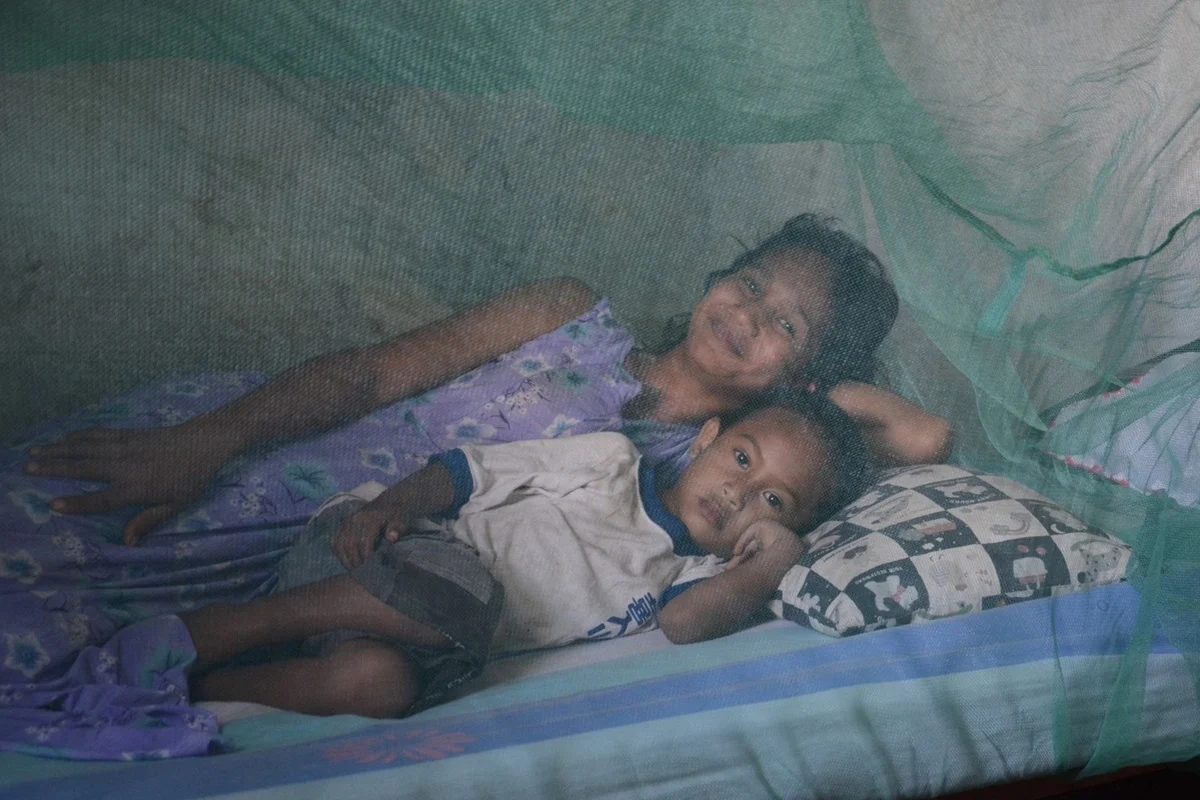
The middle phase of the campaign saw a dramatic intensification of vector control. With the vital support of the Global Fund to Fight AIDS, Tuberculosis and Malaria, the government launched a nationwide rollout of long-lasting insecticide-treated nets (LLINs) and implemented indoor residual spraying (IRS). During this time, the Ministry of Health pushed for the decentralization of diagnostic capabilities. Microscopy and RDTs were pushed to the "last mile," ensuring that local health posts—the first point of contact for most citizens—were equipped to handle malaria cases.
The Path to Zero: 2016–2024
The final push toward elimination was characterized by aggressive surveillance and the strengthening of the primary health care system. Recognizing that "zero cases" required a total halt to transmission, the government bolstered its three-tier health system: national and reference hospitals, community health centers (CHCs), and rural health posts. This ensured that no citizen was more than an hour’s walk from medical care. By 2021, the country reported zero indigenous cases, a streak it maintained through rigorous screening, mobile clinic outreach, and active surveillance at borders, ultimately leading to the formal WHO certification.
Supporting Data and Strategic Interventions
The transformation of Timor-Leste’s health landscape was not the result of a single "silver bullet," but rather a multifaceted, data-driven strategy. The core of this success lies in three specific areas:
1. Universal Health Care Policy
Timor-Leste implemented a policy of free universal health care at the point of service. By removing the financial barrier to entry, the government ensured that the poorest and most vulnerable populations—often those at highest risk for malaria—sought care immediately upon the onset of fever.
2. The Integrated Surveillance System
A sophisticated, real-time, case-based surveillance system was established to monitor the movement of the parasite. This system allowed health officials to respond to "hotspots" of transmission with surgical precision. By tracking data from every district down to the village level, the National Malaria Programme could deploy resources exactly where they were needed most, preventing minor clusters from spiraling into outbreaks.
3. Human Capital Development
Despite severe shortages of physicians and specialists, the country invested heavily in the training of community health workers. These workers became the backbone of the eradication effort. Through monthly mobile clinics and community outreach programs, they provided not just treatment, but education on bed-net usage and environmental management, fostering a culture of public health awareness that proved as effective as any pharmaceutical intervention.
Official Responses and Reflections
The international community has hailed the certification as a validation of the "whole-of-society" approach to health.
Dr. Tedros Adhanom Ghebreyesus, WHO Director-General, highlighted the political nature of the victory: "Timor-Leste’s success proves that malaria can be stopped in its tracks when strong political will, smart interventions, sustained domestic and external investment, and dedicated health workers unite."
Dr. Ália António de Araújo dos Reis Amaral, the Minister of Health, reflected on the emotional and historical weight of the accomplishment. "We did it. Malaria has been one of our most relentless enemies—silent, persistent, and deadly. We lost too many lives to a disease that should be preventable. From 223,000 cases to zero—this elimination honors every life lost and every life now saved."
Dr. Arvind Mathur, the WHO Representative to Timor-Leste, noted that the achievement is a testament to the nation’s grit. "Ending transmission and maintaining zero deaths takes more than science; it takes grit. This victory protects generations, present and future, and shows what a determined country can achieve."
The Implications of a Malaria-Free Future
The implications of this certification extend far beyond the elimination of a single pathogen. For Timor-Leste, the victory provides a strategic blueprint for tackling other public health challenges, including tuberculosis, HIV, and the rising tide of non-communicable diseases.
A Model for Developing Nations
Timor-Leste has demonstrated that a lack of initial resources is not an insurmountable barrier to success. By prioritizing a robust primary health care system and maintaining clear, data-driven leadership, the nation has provided a template for other countries in the Global South. It proves that investment in basic infrastructure—such as rural clinics and trained community health workers—yields a return in public health that far outweighs the initial expenditure.
The Challenge of Maintenance
While the country is now malaria-free, the work is far from over. "We must safeguard this victory with continued vigilance," Minister Amaral warned. The threat of re-entry is real, particularly in a globalized world where travel and trade can easily reintroduce the malaria parasite. The government plans to continue its surveillance efforts, maintaining high levels of community awareness and border screening to ensure that the disease does not return.
Regional Health Security
For the South-East Asia region, Timor-Leste’s certification acts as a catalyst for regional security. Malaria does not respect national borders; by eliminating the disease within its own territory, Timor-Leste has effectively removed a potential reservoir for the parasite, contributing to the broader goal of a malaria-free Asia.
Conclusion
The certification of Timor-Leste as malaria-free is more than just a formal recognition by the World Health Organization; it is a profound declaration of national maturity. In the span of a single generation, a country born from the struggle for independence has systematically dismantled a parasitic enemy that had plagued its people for centuries.
As Timor-Leste looks toward the future, it does so with a health system that is more resilient, more responsive, and more capable than ever before. The lessons learned in the fight against malaria—the importance of community trust, the necessity of equitable access, and the power of persistent, data-backed political will—will undoubtedly serve as the foundation for the nation’s future health endeavors. For the people of Timor-Leste, the message is clear: when a nation unites behind a common goal, even the most persistent and deadly of foes can be defeated.