 Lina Hope

 Jia Lissa

 Pevita Pearce

 Ammar Sabilarrohman

 Suro Senen
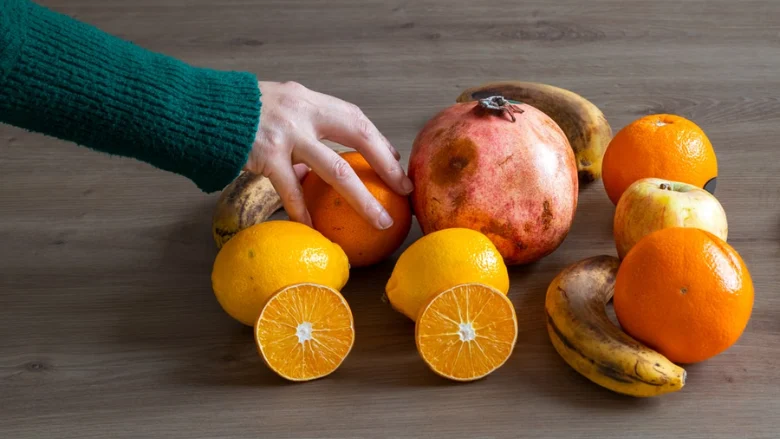
In the complex ecosystem of the global produce supply chain, the industry has long maintained a rigid, albeit necessary, distinction between "food quality" and "food safety." Quality, often measured by appearance, taste, and texture, has historically been viewed through a commercial lens—a metric for consumer satisfaction and shelf appeal. Safety, conversely, has been treated as a non-negotiable threshold of microbial purity.
However, a groundbreaking initiative led by Cornell University and supported by the Center for Produce Safety (CPS) is challenging this binary perspective. By developing a sophisticated Quantitative Microbial Risk Assessment (QMRA) model, researchers are proving that the two concepts are inextricably linked. The project, titled "Quantitative Microbial Risk Assessments Need to Consider Quality Parameters to Accurately Predict Produce Food Safety Risk," aims to provide the industry with a data-driven tool to understand how physical defects—ranging from minor bruising to pest-induced damage—act as catalysts for the proliferation of dangerous pathogens.
The Intersection of Aesthetics and Pathogens: The Core Concept
At the heart of this research is a fundamental realization: the structural integrity of produce is a primary barrier against microbial colonization. Dr. Martin Wiedmann, Ph.D., D.V.M., the project’s lead researcher, emphasizes that while a bruised apple or a wilted leaf may be aesthetically unappealing, its true danger lies in what those physical breaches allow to happen at a microscopic level.
"If it doesn’t look good, if it doesn’t taste right, very broadly speaking, that doesn’t mean it’s unsafe," Dr. Wiedmann notes. "Conversely, a product may carry an increased food safety risk even though it looks, smells, and tastes perfectly fine. These are conceptually separate, but the reality is that quality defects can and often do impact food safety risks."
The model specifically targets the survival and growth dynamics of two major foodborne pathogens: Listeria monocytogenes and enterohemorrhagic Escherichia coli (EHEC). By quantifying how structural damage—caused by mechanized harvesting equipment, improper storage temperatures, or pest infestations—creates an environment conducive to pathogen growth, the Cornell team is building a predictive engine that could redefine how produce handlers manage their inventories.
Chronology of the Research: From Disparate Definitions to Unified Data
The journey toward this model began with a surprising discovery: the industry lacked a common language. When the researchers began surveying produce handlers and processors, they discovered that terms such as "watersoak" or "mechanical damage" were used inconsistently across regions and company hierarchies.
Phase I: Establishing a Standardized Lexicon
Before a mathematical model could be built, the researchers had to ensure that the input data was uniform. In collaboration with the CPS Industry Advisory Council, the Cornell team spent months engaging with industry contacts to harmonize defect definitions. This was not merely an administrative hurdle; it was a scientific necessity. If a handler in California and a processor in New York define "surface lesion" differently, the resulting risk assessment would be fundamentally flawed. Through this collaborative effort, the researchers established a baseline vocabulary, potentially providing the industry with a secondary, unintended benefit: a universal standard for assessing produce quality that could streamline supply chain operations nationwide.
Phase II: The Inoculation Experiments
Once the vocabulary was standardized, the team moved into the laboratory. The process involved creating "standardized defects" in controlled environments. By replicating real-world damage—such as the microscopic tears caused by automated sorting lines—researchers were able to inoculate these produce samples with controlled amounts of L. monocytogenes and EHEC.
These experiments served as the empirical bedrock for the QMRA. By observing how pathogens behave within the compromised tissue of produce versus intact tissue, the team began to map out the specific variables that accelerate bacterial growth.
Phase III: Model Development and Validation
The final phase of the current research involves building the computerized QMRA model. This digital tool integrates existing scientific literature, previously unpublished proprietary data, and the findings from the laboratory inoculation experiments. Currently, the team is in the validation stage, running "blind" simulations to see if the model’s predictions align with real-world outcomes. Once fully validated, the model will be capable of simulating various "what-if" scenarios across the final stages of the supply chain.
Supporting Data: Why Quality Defects Matter
The scientific literature supporting this research suggests that produce defects are not just cosmetic issues; they are biological vulnerabilities. When the protective outer cuticle of a fruit or vegetable is breached, the internal nutrients are exposed. This creates a "nutrient-rich medium" that can facilitate rapid bacterial replication.
The QMRA model categorizes these risks based on:
- Severity of Damage: Differentiating between superficial bruising and deep-tissue penetration.
- Environmental Factors: Assessing how humidity and temperature variations (such as those occurring during transit) interact with damaged tissue to accelerate pathogen growth.
- Pathogen Type: Recognizing that L. monocytogenes may thrive in different damaged environments compared to EHEC, requiring nuanced risk management strategies.
By ranking these risk factors, the model provides a heat map of danger zones in the supply chain, allowing stakeholders to see exactly where the highest probability of pathogen proliferation exists.
Official Perspectives: The Path to Evidence-Based Investment
Dr. Wiedmann’s research is poised to change the way the produce industry allocates capital. In an industry where profit margins are often thin, companies must prioritize their investments in safety interventions—whether that involves upgrading cooling systems, purchasing better sorting technology, or changing sanitation protocols.
"The biggest opportunity is to help people make sure they’re putting their money where they get the biggest ‘bang for their buck,’" Dr. Wiedmann explains. "Sometimes decision-making is based on anecdotal evidence, and it can be hard for people to rationally assess different alternatives."
The QMRA model offers an objective, evidence-based alternative to intuition-led decision-making. For example, a company debating between vacuum-cooling and hydro-cooling can input their specific produce parameters into the model to see which method effectively minimizes the risk of pathogen growth in damaged goods. This allows for a cost-benefit analysis that considers both food safety outcomes and the long-term quality of the product.
Implications for the Future of Food Safety
The implications of this research extend far beyond the laboratory. By integrating quality and safety, the Cornell-CPS project is advocating for a "Total Systems Approach" to produce handling.
Improving Regulatory Compliance
As global food safety regulations, such as those governed by the Food Safety Modernization Act (FSMA) in the U.S., become increasingly stringent, having a quantitative tool to justify safety protocols will be invaluable for industry players. The QMRA model could serve as a defensive document during audits, proving that safety interventions were chosen based on rigorous risk assessment rather than guesswork.
Standardizing Global Supply Chains
If the standardized definitions developed by the Cornell team gain widespread adoption, it could lead to a global shift in how produce is traded. Consistent terminology facilitates clearer communication between growers, packers, and retailers, reducing the likelihood of errors that lead to foodborne illness outbreaks.
Empowering the Consumer
While the model is designed for industry professionals, the ultimate beneficiary is the consumer. By reducing the presence of pathogens in the final stages of the supply chain, the industry can significantly decrease the risk of foodborne outbreaks. Furthermore, by improving quality management, consumers receive fresher, more durable produce, creating a cycle of trust that benefits the entire market.
Conclusion
The Cornell University project, led by Dr. Martin Wiedmann, marks a significant shift in the food safety paradigm. By breaking down the silos between quality management and safety protocols, the research team is providing the produce industry with a roadmap for the future. As the QMRA model moves toward completion, it promises to be more than just a software tool; it will be a standard-bearer for a more analytical, efficient, and—most importantly—safer food supply chain.
The industry is currently at a turning point where data, rather than tradition, is set to dictate the standards of tomorrow. As stakeholders look to integrate these findings into their operations, the focus remains clear: through the scientific analysis of the seemingly minor, we can mitigate the major risks that threaten public health. With the support of the Center for Produce Safety, this research is not merely a theoretical exercise; it is a critical step forward in ensuring that the produce on our tables is as safe as it is high in quality.