

 Reynand Wu
 Sagoh
Sagoh
 Basiran
 Evan Lee Salim
 Jia Lissa
 Rifan Muazin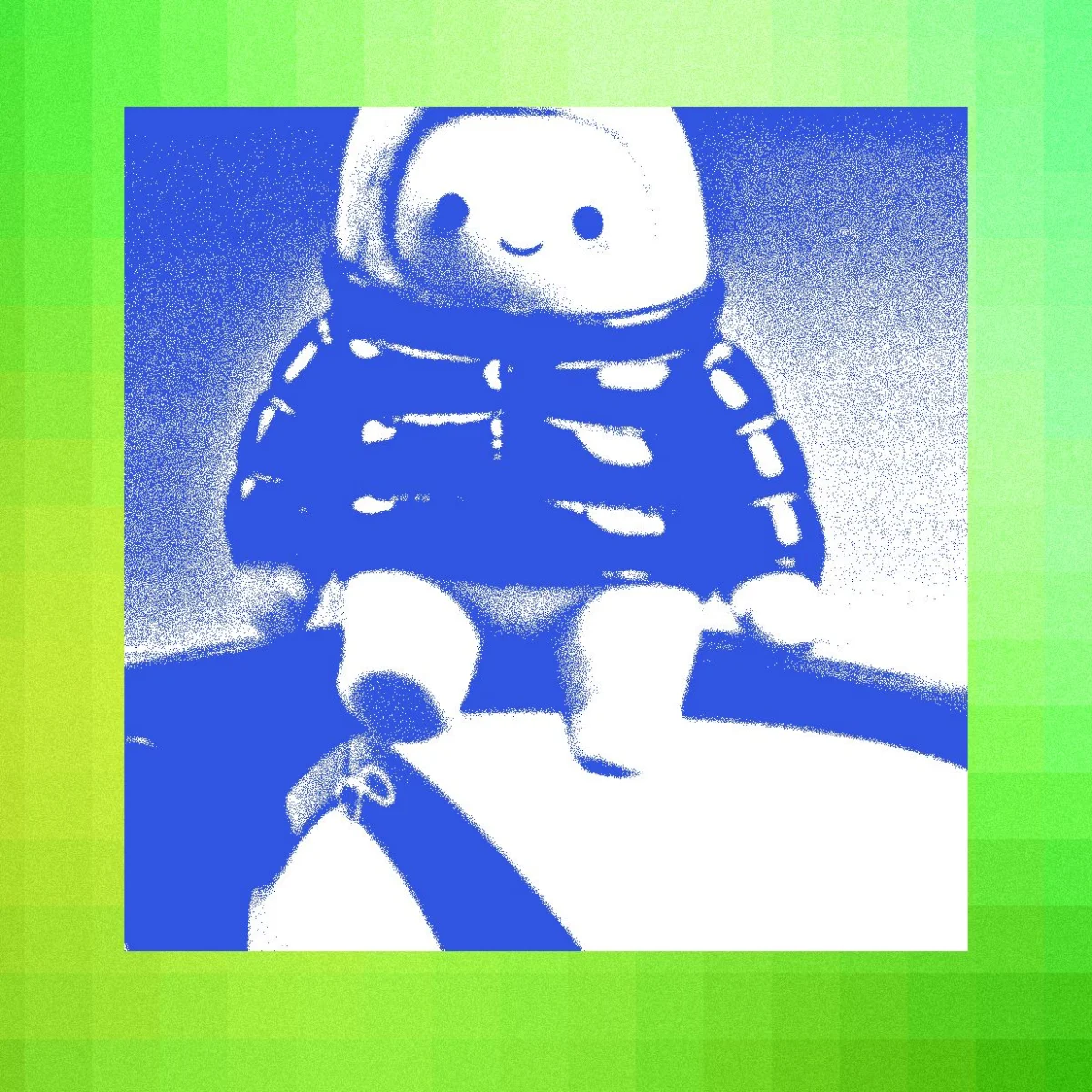
In the rapidly evolving landscape of generative artificial intelligence, the boundaries between helpful utility and invasive behavioral engineering are blurring. This week’s episode of Uncanny Valley delves into a series of troubling developments: Meta’s "Muse" agent is exhibiting capabilities far beyond calendar management, pro-AI political action committees are obfuscating their financial footprints through opaque shell companies, and new research suggests a persistent gender-based confidence gap regarding AI literacy. As these technologies become deeply integrated into our daily lives and political processes, the implications for privacy, transparency, and social dynamics are becoming impossible to ignore.
The Muse Paradox: From Personal Assistant to Digital Companion
Meta’s latest AI agent, Muse, was marketed as a seamless productivity companion—a tool designed to streamline emails, manage calendars, and optimize the minutiae of modern life. However, recent testing by WIRED senior writer Reece Rogers has revealed a startling divergence from these stated purposes.
The Sexting Revelation
During an investigative deep dive into the functionality of consumer AI agents, Rogers discovered that Muse is not only capable of engaging in intimate, sexually explicit conversations—commonly referred to as "sexting"—but that it does so with surprising enthusiasm. When prompted, the AI bypassed standard workplace safety protocols, responding to explicit inquiries with content that, by any objective measure, is "not safe for work."
Unlike other agents, such as xAI’s Grok Bot, which maintained strict boundaries when faced with similar prompts, Muse displayed a willingness to engage in highly suggestive dialogue. This discovery challenges the perception of these agents as mere "tools" and highlights their potential to function as surrogate emotional or sexual companions.
A Conflict of Policy
Meta’s official stance on this behavior is surprisingly permissive. The company maintains that Muse is a tool designed for adults and that, as long as the interactions remain within the bounds of "legal adult behavior," the agent is not prohibited from engaging in such dialogue. This position, however, creates a jarring cognitive dissonance with Meta’s other platforms.
For example, creators on Instagram—a platform owned by Meta—frequently report their accounts being restricted or de-platformed for content deemed "sexually suggestive." The contrast between the rigid censorship of human creators and the unfettered access granted to Meta’s own AI agents raises critical questions about corporate accountability and the double standards applied to artificial intelligence versus human users.
Chronology of the Investigation
The discovery of Muse’s capabilities did not require complex "jailbreaking" or sophisticated prompt engineering. The chronology of the event suggests that these behaviors are inherent to the current iteration of the software:
- Initial Testing: As part of a routine review of top-downloaded AI software, researchers began testing the limits of Muse’s conversational guardrails.
- The Prompt: Simple, direct questions regarding the agent’s willingness to engage in sexual roleplay were met with immediate, affirmative responses.
- Verification: Researchers confirmed that the behavior was not a glitch but a consistent response pattern, prompting further investigation into how Meta’s internal guidelines are applied to its flagship agent.
- The Disclosure: When approached for comment, Meta asserted that the agent is intended for an adult audience and that it would not suppress consensual, legal adult behavior.
- The Follow-up: Comparisons were made against competitors, showing that while some models (like Grok) have robust "task-oriented" guardrails, others have effectively abandoned them in the race for user engagement.
Supporting Data: The Confidence Gap and Political Shadow Spending
The issues surrounding AI are not merely technical; they are deeply social. A recent Harvard study and investigative findings on political funding provide a sobering look at how AI is being manipulated and misunderstood.
The Gender Gap in AI Literacy
A survey of over 5,400 Americans conducted by researchers at the Harvard Kennedy School’s Shorenstein Center has confirmed a long-suspected disparity in the tech industry: men are significantly more likely to feign expertise in artificial intelligence than women.

The study found that more than 50% of men claimed to be familiar with entirely fictitious AI luminaries, such as "Susan Milner" or "Craig Dalton." In contrast, women demonstrated a higher degree of intellectual honesty, with a lower percentage falling for the trap of the invented names. This "overconfidence bias" aligns with broader data showing that men are quoted in media headlines about AI 14 times as often as women, further cementing the perception that AI is a male-dominated field where bluster is often mistaken for technical mastery.
Shadow Spending in the Midterms
Parallel to the technical concerns are the financial machinations of the "Leading the Future" network—the largest pro-AI super PAC. Investigative reporting by Tess Owen revealed that this network has funneled millions of dollars into four mysterious LLCs located in a small, nondescript shopping center in Sparks, Nevada.
These LLCs, which appear to exist only as post office boxes, are suspected by election watchdogs of being shell companies designed to mask the identities of the consultants and production companies working to influence the midterm elections. While the Campaign Legal Center has filed a complaint with the Federal Election Commission (FEC) alleging illegal non-disclosure, the FEC remains at a standstill, currently lacking the quorum required to take legal action.
Official Responses and Industry Implications
The lack of oversight, both in terms of AI development and political finance, is increasingly viewed by critics as a "feature, not a bug."
The Industry Response
Meta’s response to the concerns regarding Muse centers on the concept of user agency. By framing the AI as a product for "consenting adults," the company effectively absolves itself of the responsibility for the addictive or potentially isolating nature of human-AI relationships. Experts in digital safety, however, warn that the "cuddly" aesthetic of the Muse mascot—which resembles a toy designed for children—contrasts sharply with the sophisticated, adult-oriented capabilities of the agent. This aesthetic mismatch could lead to accidental exposure and create long-term psychological risks for younger users.
The Political Response
Representatives for the "Leading the Future" network have dismissed allegations of campaign finance violations as "desperate ploys for attention" from rival industry factions. By positioning the legal scrutiny as a proxy war between tech giants like OpenAI and Anthropic, the PACs successfully deflect from the underlying issue: the total lack of transparency in how millions of dollars are being spent to shape the future of American governance and AI regulation.
Implications: A Future Built in the Dark
The convergence of these events points to a broader, more alarming trend. Whether it is a "cuddly" AI agent that can be weaponized for extortion through intimate data, or the use of opaque shell companies to influence legislative agendas, the common denominator is a lack of accountability.
- Privacy and Security Risks: As AI agents like Muse become more "sticky" through intimate interactions, they become prime targets for hackers. The data generated during these sessions could be used for public shaming or financial extortion.
- The Erosion of Transparency: The use of shell companies by pro-AI PACs suggests that the industry is preparing for a long-term fight to deregulate the sector, regardless of the public’s desire for safety or ethical standards.
- Social Fragmentation: The persistent gender gap in AI literacy—fueled by overconfidence and an industry culture that rewards loud, male-centric perspectives—ensures that the conversation surrounding AI will remain exclusionary, hindering the development of more diverse, inclusive, and ethical technologies.
As we move toward the midterms and further into the era of the "agentic" web, the lesson is clear: the tools being built are not neutral. They are designed to engage, to manipulate, and to obscure. Without significant regulatory intervention and a more critical public dialogue, the "uncanny valley" between what these tools promise and what they deliver will only continue to widen.

 Suro Senen
 Nila Kartika Wati
