

 Sagoh

 Azzam Bilal Chamdy

 Jia Lissa


 Basiran
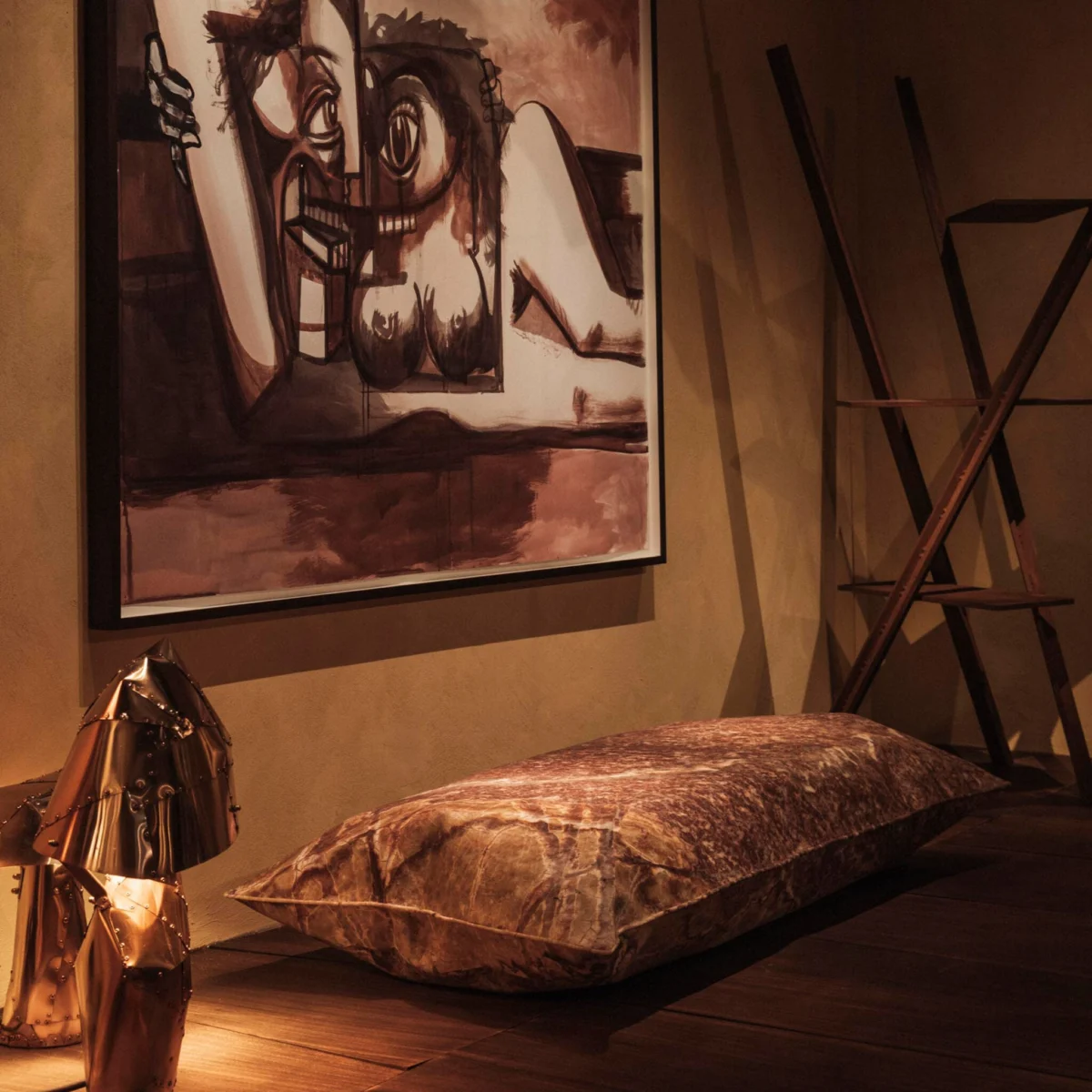
The intersection of history, materiality, and contemporary craftsmanship has rarely felt as visceral as it does in the current exhibition What Remains?, curated by the Brussels-based design platform Objects with Narratives. Staged at the prestigious PAD London design fair in Berkeley Square, the exhibition serves as a profound meditation on the lifecycle of objects. By juxtaposing amorphous, patinated forms against high-tech fabrication, the gallery invites collectors and visitors to reconsider the permanence of design in an era of rapid consumption.
Main Facts: The Curatorial Vision of Objects with Narratives
Objects with Narratives, led by founders Nik Vandewyngaerde, Robbe Vandewyngaerde, and Oskar Eryatmaz, has established a reputation for prioritizing the story—the "narrative"—behind the piece as much as the object itself. Their second appearance at PAD London is defined by a texture-heavy aesthetic that blurs the lines between industrial art and functional furniture.
The premise of What Remains? is deceptively simple: it questions what imparts an object with the aura of longevity. Is it the raw material, the technical mastery of the maker, or a deliberate aesthetic choice to design for an "undefined time"? By bringing together an international cohort of designers—including Ben Storms, Paul Cocksedge, Sofie Middernacht, Jojo Corvaia, KRJST Studio, and Karl Monies—the gallery has assembled a collection that feels simultaneously ancient and avant-garde.
Chronology: From Brussels Origins to the Global Stage
The trajectory of Objects with Narratives reflects the rapid rise of the contemporary design gallery model.
- 2023: The trio behind the platform cemented their presence in the art world by opening their first permanent brick-and-mortar space in Brussels. The gallery is housed within a historic 1920s fur atelier, a space that inherently bridges the gap between old-world craftsmanship and modern artistic expression.
- 2025–2026: The gallery began its strategic expansion into the international fair circuit, identifying PAD London as the ideal environment for their narrative-driven approach.
- October 14–19, 2026: The current iteration of What Remains? occupies the limelight at PAD London. The exhibition serves as a focal point for the fair, drawing critical attention to the gallery’s unique ability to merge historical resonance with modern manufacturing techniques.
Supporting Data: The Materiality of the Collection
The exhibition is defined by a deliberate tension between the "soft" and the "hard." Each piece in the collection serves as a case study in material manipulation.
Ben Storms and the Illusion of Softness
Belgian designer Ben Storms has long been obsessed with the subversion of material expectations. His latest contribution to the exhibition, the Ex Hale coffee table, is perhaps the most striking example of this philosophy. Crafted from veiny red Mexican onyx, the table takes the form of a plush, tufted cushion.
The technical process behind Ex Hale is a masterclass in modern innovation:
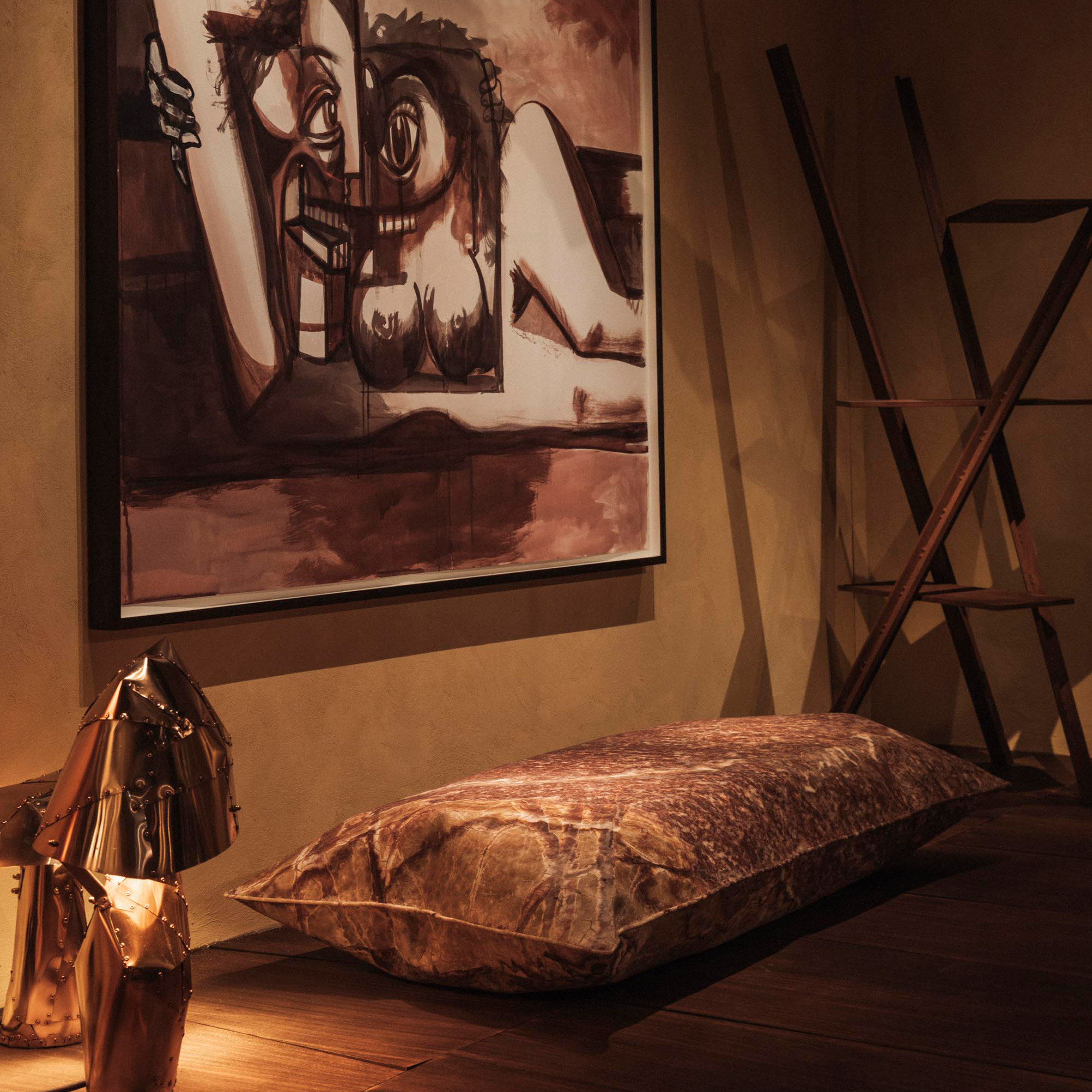
- Hydroforming: Storms began by welding two metal sheets together and inflating them to create a organic, cushioned silhouette.
- 3D Mapping: The resulting form was scanned to create a digital blueprint.
- CNC Milling: A CNC machine was employed to carve the exact, "soft" cushion shape out of a solid, heavy block of stone.
The result is a cognitive dissonance: the viewer’s eye perceives a soft, malleable object, while the tactile reality is one of cold, unyielding mineral.
Paul Cocksedge’s Critical Mass
British designer Paul Cocksedge presents Critical Mass, a standing shelf made from Corten steel. The work is a spiritual successor to his 2025 installation in Trafalgar Square, What Nelson Sees. Critical Mass is characterized by an internal tension—a sense that the metal is held in a precarious, temporary state of equilibrium. The work relies on the weathering properties of the steel, ensuring that as the object ages, it only becomes more deeply integrated into the "narrative" of its environment.
The Material Diversity of the Show
Beyond stone and steel, the exhibition explores a wide spectrum of tactile sensations:
- Sofie Middernacht: Known for repurposing industrial waste, Middernacht contributes a credenza, bench, and stools finished in a vivid, gleaming crimson resin. Her work explicitly references archaeology, framing modern waste as the future’s artifacts.
- Jojo Corvaia: The Venezuelan artist showcases vessels of volcanic clay, grounding the exhibition in elemental, earth-based processes.
- KRJST Studio: Bringing a sensory contrast, the Belgian practice contributes lamps covered in shaggy mohair and wool, introducing warmth to the otherwise cool, metallic, and stony environment.
- Karl Monies: The Danish designer completes the aesthetic range with lighting fixtures composed of patchwork slabs of copper, highlighting the beauty in the seam and the weld.
Official Responses and Curatorial Philosophy
The curators of Objects with Narratives have been vocal about the underlying philosophy of the show. During the opening days at Berkeley Square, the team emphasized that the pieces were "crafted in the present, yet many carry a sense of the past, as though found rather than fabricated."
This statement is the cornerstone of the exhibition’s identity. It suggests that the gallery is not merely selling furniture, but curating a feeling of permanence. When asked about the selection process for What Remains?, the gallery noted, "The exhibition asks what gives an object the sense that it might outlive the moment of its making: the material, the craft, or simply the possibility that some objects belong to no single time at all."
This perspective shifts the focus from the designer’s ego to the object’s endurance. It is a subtle critique of the "fast furniture" culture, positioning these works as long-term investments that transcend trends.
Implications: The Future of Collectible Design
The success of What Remains? at PAD London holds several implications for the future of the high-end design market.
1. The Rise of "Narrative-First" Curation
Collectors are increasingly seeking meaning beyond the functional utility of an object. The ability of a gallery to weave a compelling story—one that touches on geology, history, or industrial evolution—has become a key value-add. Galleries that adopt this "narrative-heavy" approach are finding success because they provide an intellectual framework that justifies the high price points associated with limited-edition design.
2. The Blurring of Art and Design
The pieces on display—particularly those by Storms and Middernacht—are intentionally difficult to classify. Are they furniture, or are they sculptures? By focusing on texture and material integrity, these designers are moving away from the traditional constraints of "utility" and toward a form of functional art that prioritizes emotional and aesthetic impact.
3. Sustainability through Longevity
By framing these objects as "artifacts" that are designed to survive the current moment, Objects with Narratives is inadvertently addressing the sustainability crisis in design. While the materials used (such as steel and resin) are industrial, the intent of the design is to ensure that these pieces are never discarded. The exhibition suggests that true sustainability is not just about eco-friendly materials, but about creating things that people want to keep for generations.
Conclusion
As PAD London continues to serve as a bellwether for the international design market, What Remains? stands out as one of the most intellectually stimulating displays of the 2026 season. It is a show that demands a slow, deliberate engagement from its audience. By inviting us to look past the surface of the stone, the steel, and the resin, Objects with Narratives reminds us that we are not just looking at furniture; we are looking at the remnants of our own time, crystallized into objects that hope to tell a story long after we are gone.
The exhibition remains on view at Berkeley Square until October 18, 2026. For those interested in the evolving dialogue between contemporary art and design, this collection offers a rare glimpse into the future of the field: a future that looks backward to move forward.


 Nana Wu

 Dwi Wanna
