

 Nana Wu

 Dwi Wanna

 Suro Senen

 Evan Lee Salim

 Asep Darmawan
For years, the cultural narrative surrounding Generation Z has been defined by a singular, persistent critique: they are the "indoor generation." From the Los Angeles Times to various lifestyle columns, the consensus has painted a portrait of a cohort paralyzed by the loneliness epidemic, retreating from the traditional social sphere. They allegedly don’t dance, they don’t frequent bars, and they certainly don’t engage in the messy, analog spontaneity of physical community.
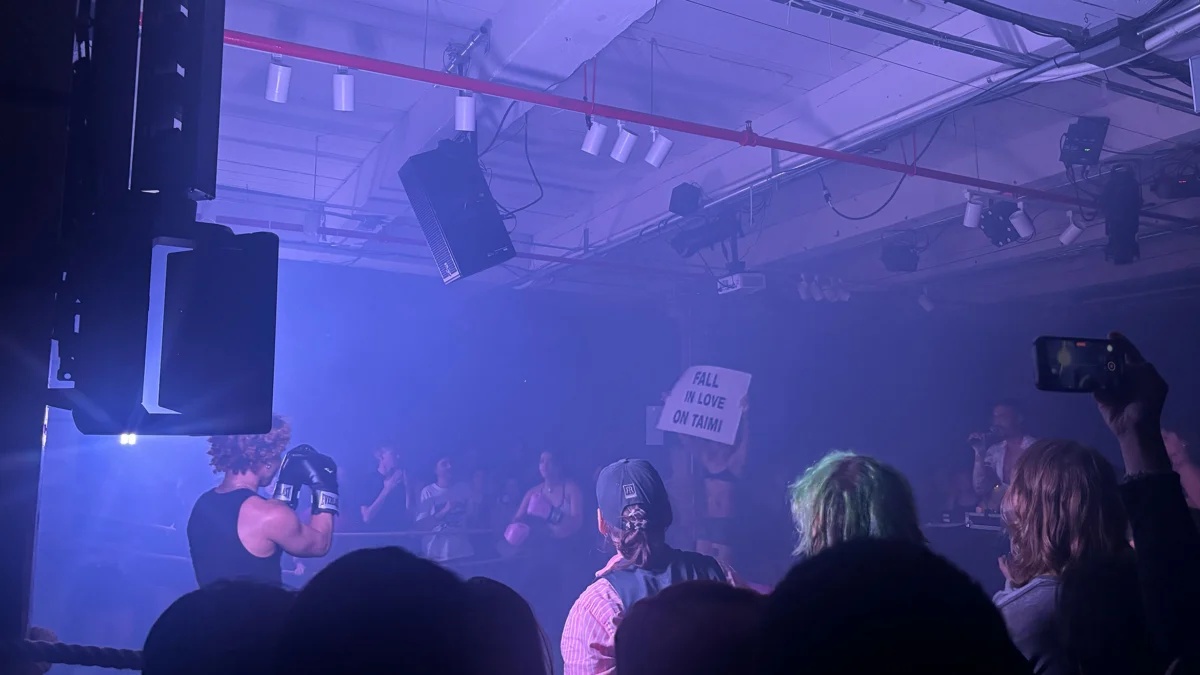
But on a recent, hazy night in Brooklyn, I went to the ring to see if we could, quite literally, beat the allegations.
The event, dubbed the "Fight Your Evil Situationship Boxing Rave," was hosted by Grownkid, a social club for 18- to 24-year-olds. As I climbed the stairs into a cavernous, smoke-filled industrial space, the bass rattled in my chest before I even caught a glimpse of the makeshift arena. I expected a party; I didn’t expect to see a full-sized boxing ring framed by strobe lights and a high-energy DJ booth.
The Rise of Physical Community
The Grownkid collective, founded by Gael Aitor and Kayla Suarez, is part of a growing, visceral movement aimed at reclaiming the "third space." Their mission is simple yet provocative: "The meaning of life is play."
They are not alone in this endeavor. Across the city—and indeed, across the country—there is a burgeoning trend of combat-centric nightlife. From modern medieval combat leagues to the underground spectacle of "lesbian oil wrestling" and the now-mainstream "Twinks vs. Dolls" showcases, young people are gravitating toward high-contact, high-adrenaline social experiences. Even the local skate park circuit has seen a resurgence in Lucha Libre-style wrestling events, where freestyle combat is paired with the consumption of traditional mariscos.

This movement represents a reaction against the digital isolation of the social media age. While Gen Z is statistically the most "connected" generation in history, they are also the most aware of the paradox: connectivity often breeds division. Grownkid aims to bridge the online-to-offline gap, offering tools for interaction that feel relevant to a generation raised on screens but starved for touch.
Chronology of a "Situationship" Showdown
The evening’s premise was grounded in the philosophy that "healthy conflict is key for a happy life." However, the combat was far from traditional. This was performance art—a cathartic, hyperbolic theater where the "opponents" were former flames, ex-situationships, and people with whom they had unfinished business.
The fights were MCed by Caroline Jo and Basquiat, whose commentary functioned as a running, chronically-online monologue. The stories were painfully familiar to anyone who has navigated modern dating:
- The Cheating Scandal: Randy and Meredith, who met on Tinder, took to the ring to "rebuild trust" after a messy fallout involving a "hey, girly" DM sent by an ex.
- The Cat Custody Case: Shani and Nik, who moved in together after only two months, engaged in a mock-battle that stemmed from mutual infidelity allegations and a legalistic dispute over their shared pet.
- The Unlabeled: Katie and Marshall, a classic "avoidant vs. anxious" pairing, spent ten months in a gray area before their "breakup." Their match, which ended with Katie mounting Marshall’s shoulders, was a visceral reenactment of the frustration that comes with undefined romantic boundaries.
The crowd’s reaction was electric. Every punch, every feint, and every dramatic, make-out session that inevitably ended the fights drew gasps and screams of recognition. It was a shared, communal processing of the trauma inherent in modern digital dating.
Supporting Data: The Loneliness Epidemic vs. The Reality
The sociological implications of these events are significant. According to recent data from the U.S. Surgeon General’s office and various independent studies on the youth mental health crisis, Gen Z reports higher levels of loneliness than any other generation. Yet, events like those hosted by Grownkid suggest that the problem is not a lack of desire for connection, but a lack of meaningful infrastructure.

The "Grownkid" manifesto explicitly targets the decline of third spaces—the community hubs outside of home and work—that historically fostered social cohesion. By framing these events as "raves" rather than standard mixers, the organizers tap into a subcultural desire for play.
Why the 24-year-old cutoff? The founders suggest that by 25, the expectation of "adulthood" often mandates a shift toward professionalization and the shedding of playfulness. By keeping the community strictly within the 18–24 demographic, they maintain a pressure-free environment where the stakes are low, but the stakes for connection remain high.
Official Responses and The "Manifesto"
When asked about the intent behind these events, the Grownkid founders emphasize that they are not just throwing parties; they are conducting social experiments. They believe that if the digital world has made us avoid conflict, the physical world must teach us how to engage with it.
"Healthy conflict," they argue, "is a prerequisite for a happy life." By turning the frustration of a failed "situationship" into a physical, performative act, attendees are encouraged to laugh at their own emotional entanglements. It is a form of exposure therapy disguised as a nightlife event.
Observers like Aran, a TikTok content creator who attended a previous event, note that this is "quintessentially Gen Z." It is a synthesis of irony, sincerity, and an urgent need for human interaction. It is not about winning or losing the fight; it is about the "excuse to talk to someone" that the ring provides.

Implications for the Future of Nightlife
Is this a passing trend, or the beginning of a larger shift in how young people socialize? The success of Grownkid and its counterparts suggests that the "boring" allegations leveled against Gen Z are largely overstated—or at least, misdirected.
The desire for "third spaces" is not dead; it has simply evolved. The traditional bar scene, with its focus on passive drinking, is being replaced by active, participatory social clubs that require more from their attendees. Whether it is boxing, wrestling, or immersive art, Gen Z is demanding experiences that are as "online" in their sensibility as they are "offline" in their execution.
As the night drew to a close, I found myself surrounded by strangers who were eager to discuss the matches, the music, and the absurdity of the "situationship" label. I realized that my own discomfort with the term was being replaced by a broader understanding of the human condition. We are all, in our own way, trying to navigate the complexities of attachment in an age of infinite digital distance.
The night wasn’t just a rave. It was a testament to the resilience of human connection. We may be "the inside generation," but we are clearly ready to step into the ring. We aren’t disappearing into our phones—we are just finding new, louder, and more physical ways to make sure we’re heard. Gen Z hasn’t stopped partying; we’ve just changed the rules of the game. And if that means we have to settle our differences with boxing gloves and a bit of "healthy conflict," then so be it.

 Basiran

