
 Jia Lissa
 Raul Delapena Setiawan

 Asro
 Layla Zulfa

 Sagoh
 Lina Irawan
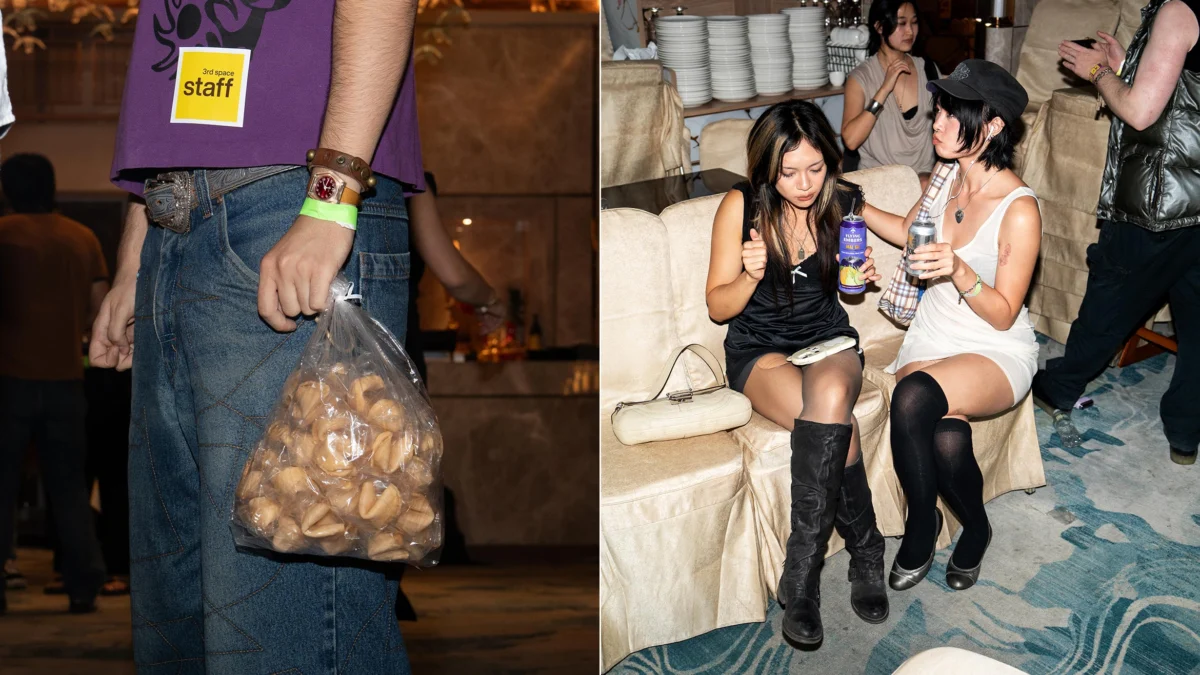
In an era where the live music experience has become increasingly homogenized—defined by massive, impersonal arenas, identical sound systems, and the pervasive glow of smartphone screens—a quiet revolution is taking root in the hidden corners of New York City. Enter 3rd Space, a nomadic events collective that is systematically dismantling the traditional concert model by transmuting unconventional, everyday locations into intimate, high-octane musical sanctuaries.
From the steam-filled, dimly lit atmosphere of an underground dim sum lounge to the windswept, industrial aesthetic of a midtown Manhattan heliport, 3rd Space is proving that the setting is not merely a backdrop for music; it is the catalyst for the experience itself.
The Genesis of 3rd Space: An Organic Evolution
The story of 3rd Space began roughly 20 months ago, born from the restless ambition of its founder, Spencer Papandrea. A management consultant by trade and a law student by day, Papandrea’s true North Star has always been the transformative power of live music. Having moved to New York City with a desire to engage more deeply with the local scene, he found himself disillusioned by the "cookie-cutter" nature of the city’s established venues.
"I have gone to hundreds and hundreds of shows," Papandrea explains. "But Brooklyn Steel versus Webster Hall versus Terminal Five are all similar at the end of the day. It loses a little bit of the magic that I felt as a kid going to these places for the first time."
His solution was radical in its simplicity: he began walking through his neighborhood, cold-calling local business owners. He wasn’t looking for stages; he was looking for life. The inaugural events were modest—a show in a local record store, followed by a set in a neighborhood dumpling shop, a laundromat, and eventually, a smoke shop. These early experiments revealed a fundamental truth: when you strip away the polished veneer of a traditional club and place a band in a space where they don’t "belong," the audience reacts differently.
Chronology of Innovation: A Timeline of Unlikely Venues
The evolution of 3rd Space has been marked by a series of increasingly ambitious, site-specific curations. The collective’s growth reflects a deliberate attempt to match the energy of the music to the architecture and culture of the host site.
- The Foundational Phase: Initial shows focused on retail spaces (record stores, laundromats) to prove the concept of "third space" social interaction.
- The Contextual Expansion: As the brand gained traction, 3rd Space began aligning specific genres with the cultural weight of the venue. A prime example was the partnership with the Ginseng Museum, where an East Asian underground showcase was held in a dim sum lounge, paired with a curated menu of traditional cuisine.
- The Architectural Pivot: Moving into larger, more challenging spaces like a midtown heliport (featuring IDM-style electronic sets) and a gritty underground soccer facility, the collective began using the venue’s inherent noise and geography as part of the production design.
- The Future Horizon: Having mastered the art of the "impossible" venue, Papandrea is currently scouting locations such as armories and public swimming pools, aiming to push the boundaries of where music can thrive.
The Psychology of the "Stunt" vs. The Immersive Experience
In a digital age, critics might dismiss these pop-up concerts as "stunt events" designed for social media engagement. However, the data—or rather, the behavioral observation—suggests otherwise. Papandrea posits that in a post-pandemic world, audiences are suffering from a "dearth of presence."

"It seems like, post-COVID, there needs to be an extra variable to shows to get people to be more aware and off their phones," Papandrea notes. "There’s a lack of people dancing at shows nowadays, and I’ve found that when you put people in more unique settings together, they’re more likely to put the phone down and enjoy being in the moment."
This intentionality is the cornerstone of the 3rd Space philosophy. By forcing the audience into a space that feels inherently "off-limits" or unexpected for a performance, the collective effectively breaks the fourth wall. The environment demands attention, and the music rewards it.
Production Logistics: The Mechanics of the Bespoke
Producing a show in a non-traditional venue is an exercise in complex logistics. Unlike a standard concert hall, which comes pre-equipped with sound, lighting, and fire suppression systems, a 3rd Space venue requires a mobile, modular approach to production.
Curating the Environment
When 3rd Space took over an underground soccer facility for a World Cup-themed event, the team didn’t just place a band on the field. They curated the environment so that live matches were playing simultaneously with the musical sets, creating a multimedia atmosphere.
Menu Engineering
When a restaurant serves as a venue, the food is not an afterthought; it is a structural element of the night. In the case of the dim sum lounge, the team worked with the kitchen to pare down a sprawling 15-item menu into a tight, four-item selection. By focusing on crowd-pleasers like barbecue pork buns and vegetarian spring rolls, they ensured the logistics of service didn’t interrupt the sonic immersion.
Talent Selection
Booking talent at 3rd Space is an exercise in cultural discovery. Papandrea and his creative team prioritize "bubbling up" artists—those navigating the local scene who possess an innovative sound but lack the traditional venue infrastructure to reach their audience. Whether it is a hardcore punk band in a gritty dumpling shop or an avant-garde electronic artist at a helipad, the music is chosen specifically to enhance the "vibe" of the architecture.
Supporting Data: Demographics and Community Impact
The audience for 3rd Space is predominantly composed of individuals in their early to mid-20s, a demographic that is notoriously difficult to capture through traditional marketing. However, the true success of 3rd Space isn’t just in ticket sales; it’s in the social connectivity of the attendees.

The events have become a hub for disparate subcultures. A single night might see the convergence of "crust punk" fans, hyperpop enthusiasts, and fashion-forward attendees from the East Asian underground scene. Papandrea highlights that these cross-pollinations are a primary goal: "Something I’m really proud of is that we bring people from different scenes together… I’ve seen time and again people making friends or starting romantic relationships."
Implications: The Future of the Hospitality Industry
The rise of 3rd Space signals a broader shift in the hospitality and entertainment sectors. For business owners, these partnerships provide a new revenue stream during off-peak hours. While restaurants are more expensive to rent than vacant warehouses because they occupy "prime" real estate, the value-add of having a built-in audience and a specialized event concept makes them highly attractive partners.
However, there is a clear distinction between these events and the corporate-sponsored "experiential" marketing that currently plagues many urban centers. 3rd Space operates with a sense of "organic growth"—the venues are chosen because they possess character, not because they have a high foot-traffic index or a massive marketing budget.
Challenges to Scaling
- Regulatory Hurdles: Turning a non-traditional space into a legal, permitted concert venue in New York City is a labyrinth of fire codes, sound ordinances, and insurance requirements.
- The Cost of "Weird": As the venues get weirder, the cost of production increases. Transforming a pool or an ice rink requires specialized staging that is significantly more expensive than a flat floor.
- Maintaining Authenticity: As the collective gains notoriety, the challenge will be to maintain the intimate, "underground" feeling that makes the experience special in the first place.
Conclusion: The "Third Space" Philosophy
Ultimately, the term "3rd Space" refers to the social environments outside of the home (the first space) and the office (the second space). By reclaiming these liminal areas for music, Papandrea is not just producing shows; he is reviving the social fabric of the city.
As the collective looks toward future venues—perhaps an ice rink, as suggested by his booking manager, or an expansive mall atrium—the mission remains consistent. By demanding that the audience pay attention to their surroundings, 3rd Space is forcing a return to the roots of live music: a shared, singular, and unrepeatable moment in time. In a city that never stops moving, 3rd Space offers the rarest commodity of all: a place to stand still, listen, and truly connect.