 Jia Lissa
 Raul Delapena Setiawan

 Asro
 Layla Zulfa
 Sagoh
 Ali Ikhwan
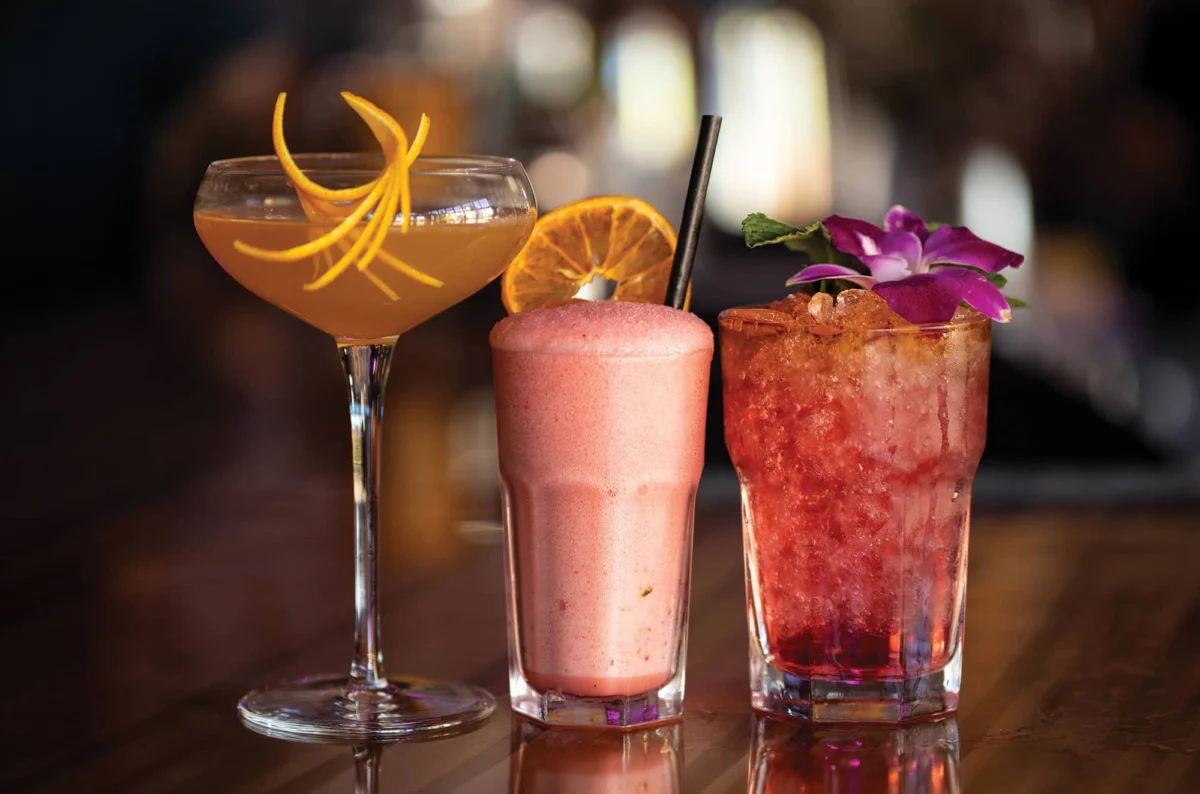
St. Louis, Missouri, has long been defined in the national consciousness by its iconic skyline—anchored by the Gateway Arch—and its deep-rooted history as a titan of the American brewing industry. However, for those who look beyond the legacy of the 1852 Anheuser-Busch Brewery, a different, more vibrant story is unfolding. Today, the city is shedding its reputation as a "flyover" destination, proving that its Midwestern manners mask a sophisticated, high-octane culinary and mixology scene that consistently punches well above its weight.
From the historic confluence of the Mississippi and Missouri Rivers to its status as the first non-European city to host the Olympic Games in 1904, St. Louis has always been a hub of activity. Yet, the current evolution of the city is driven not by its past, but by a new generation of visionaries who are reimagining the "St. Louis experience" one cocktail and one plate at a time.
The Evolution of the Scene: A Chronology of Taste
The ascent of the St. Louis bar scene did not happen overnight. It was a slow, deliberate build fueled by industry veterans and, more recently, an influx of talent from larger markets.
- 1992: Frazer Cameron opens Frazer’s Restaurant & Lounge, establishing a cornerstone of neighborhood dining that would eventually evolve into a theatrical cocktail powerhouse.
- 2001: Little Saigon Café opens in the Central West End, a family-run staple that would later gain cult status for its unexpected, high-end bar program.
- 2013: Ted Kilgore opens Planter’s House, a pivotal moment that effectively put St. Louis on the national map for craft cocktails.
- 2018: Small Change opens in Benton Park, bringing "dive-bar-chic" to the forefront of the city’s nightlife.
- 2021: Meredith Barry opens Platypus, creating a community-centric "yes-and" space that reflects the city’s eclectic spirit.
- 2023–2024: A wave of innovation, including the opening of None of the Above in the City Foundry tunnels and Telva at the Ridge, signals a maturation of the city’s hospitality landscape.
Expert Insight: Why St. Louis is the Next Frontier
Meredith Barry, a Chicago transplant who has spent the last seven years deeply embedded in the St. Louis industry, believes the city’s potential remains vastly underestimated.
"I don’t think people give St. Louis enough credit for having a really amazing food and drink scene," Barry says. "It’s not just about the big names anymore; it’s about the smaller, intentional spots that are doing things you simply can’t find anywhere else."
Barry, who runs the multi-faceted Platypus and the newcomer Loba & Lore, emphasizes that the city’s success is rooted in accessibility and creativity. Whether it is the liquid nitrogen-chilled theatrics at Frazer’s or the educational, sommelier-led environment at The Passport Cocktail Bar & Bottle Shop, the common thread is a commitment to hospitality that feels both local and global.
Spotlight: The Curators of the Night
The diversity of the current scene is best represented by the individual establishments pushing the boundaries of what a "neighborhood bar" can be.
The Theatrical: Frazer’s Restaurant & Lounge
What began as a lunch spot for brewery workers has transformed into a destination for the avant-garde. The signature Who Goes There cocktail is the ultimate calling card: a server in a cloak and staff, carrying an antique lantern, bellows the drink’s name to the crowd before delivering the Old Fashioned riff. It is, as Barry notes, "extraordinarily welcoming" despite its flair.
The Art-Centric: Idol Wolf & Loba & Lore
At the 21c Museum Hotel, Idol Wolf brings a Spanish-inspired sophistication to downtown, with a Martini list—specifically the Dirty Dalí—that captures the city’s growing appetite for high-end, ingredient-forward drinks. Similarly, Loba & Lore in Midtown acts as a canvas for artist Lisa Marie Thalhammer and Barry, blending "she-wolf energy" with complex, narrative-driven cocktails like the Missouri Miso Mushroom Manhattan.
The Highbrow-Lowbrow: Kenny’s Upstairs & Small Change
St. Louis excels at bridging the gap between refinement and grit. Kenny’s Upstairs offers a "highbrow-lowbrow" experience with its checkerboard floors and world-famous pickle martinis, while Small Change serves as the "dive-bar-chic" stepchild to the legendary Planter’s House. Here, a shot of Mellow Corn alongside a can of Hamm’s is as respected as a perfectly stirred classic Martini.
The Hidden Gems: Little Saigon Café & None of the Above
The city’s best-kept secrets are often found in the most unexpected places. Little Saigon Café utilizes the talents of Eddie Hsia to create matcha-laced tea ceremonies and Thai Pepper Kiwi Margarita Punches that pair seamlessly with traditional pho. Meanwhile, None of the Above, accessed through the industrial tunnels of the City Foundry, offers a sophisticated speakeasy experience that feels like a secret world beneath the bustling city.
Supporting Data: Economic and Social Implications
The rise of this scene is not merely a matter of taste; it is a significant economic driver. The professionalization of the hospitality industry in St. Louis—led by figures like Javia Gilliam-Sanford and Kaje Sanford of The Passport—has fostered a culture of education and mentorship. By offering wine clubs, mixology workshops, and community-focused events, these establishments are transforming St. Louis into a hub for hospitality workers who want to refine their craft in a supportive, rather than cutthroat, environment.
Furthermore, the integration of diverse cultural influences—such as the Bosnian community’s influence on Telva at the Ridge—has elevated the city’s culinary standing. When chef Loryn Nalic, a James Beard Award winner, opens a space, it brings international attention to the city’s unique demographic history, validating St. Louis as a cosmopolitan center.
Official Responses and Industry Outlook
The consensus among local operators is that St. Louis is currently in a "golden age" of discovery. The barriers to entry are lower than in coastal cities, allowing for more creative freedom.
"I didn’t want to be chained to a menu," says Barry regarding her rotating chalkboard at Platypus. This sentiment is echoed across the city. By refusing to conform to the rigid structures of more established culinary capitals, St. Louis operators are creating a "St. Louis style"—one that is defined by "yes-and" hospitality, where the cocktail is a conduit for conversation and community.
Implications for the Future
The implications for St. Louis are clear: the city is transitioning from a regional stopover to a destination. As more travelers seek authentic, non-homogenized experiences, the "St. Louis scene" offers a compelling alternative to the oversaturated markets of New York or Los Angeles.
The success of the city’s hospitality sector is attracting a demographic of young, skilled workers who are drawn by the affordability and the ability to make a mark on the local culture. If the current trajectory continues, St. Louis will not just be known for its river confluence or its brewing past; it will be recognized as a standard-bearer for American craft hospitality—a place where you can find a world-class Martini in a tunnel, a Bosnian brunch on a patio, and a sense of community that is increasingly rare in the modern age.
In summary, the "Lou" is no longer just holding its own. It is rewriting the rules of the game, proving that with enough imagination, even a modest-sized city can lead the way in global flavor and cultural expression. Whether you are a local or a visitor, the invitation is open: come for the history, but stay for the drinks.