

 Nana Wu

 Dwi Wanna

 Suro Senen

 Evan Lee Salim

 Raul Delapena Setiawan
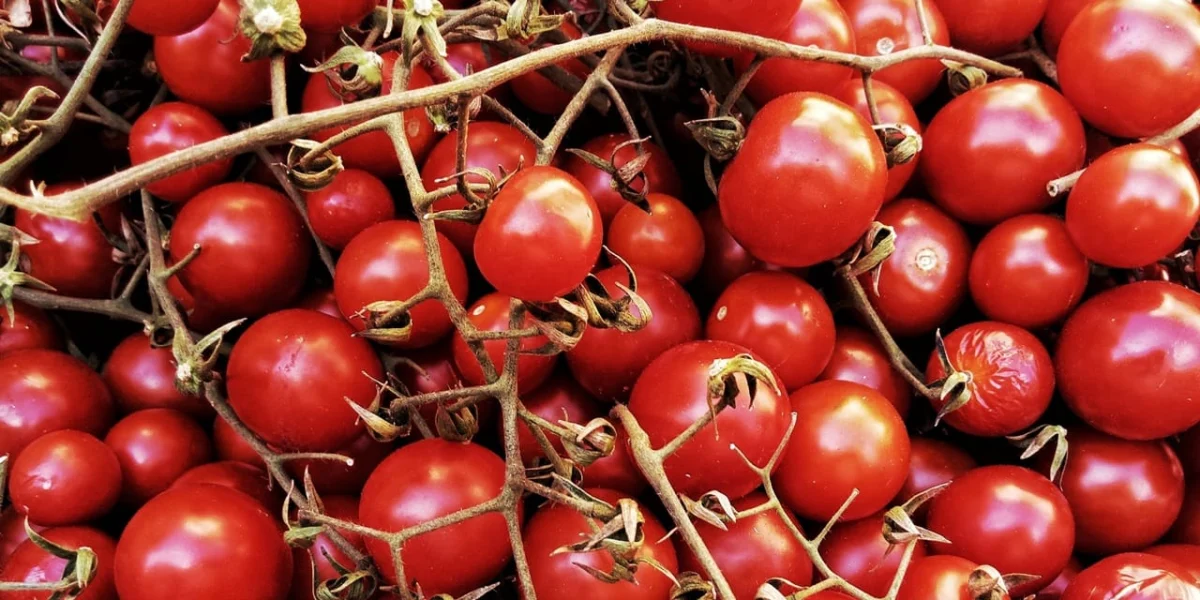
Main Facts: A Precautionary Crisis
Public health authorities in the Italian region of Emilia-Romagna have implemented a sweeping prohibition on the service of raw cherry and datterini tomatoes across all institutional catering sectors. This directive, issued under the "precautionary principle," mandates that all tomatoes served in schools, hospitals, nursing homes, and social care facilities must undergo thorough heat treatment (cooking) before consumption.
The ban, which remains in effect until further notice, represents a significant escalation in the regional response to a persistent and geographically sprawling Salmonella outbreak. Officials have underscored the severity of the situation, noting that failure to comply with these safety measures could result in legal prosecution. This move follows similar emergency protocols enacted in the Puglia region, signaling a growing lack of confidence in the current traceability and safety protocols governing the fresh produce supply chain in Italy.
The pathogen at the center of this crisis—specifically monophasic Salmonella Typhimurium and Salmonella Strathcona—has proven particularly difficult to contain. Because these bacteria can survive on the surfaces of fresh produce, they present a high risk in settings where vulnerable populations, such as the immunocompromised and the elderly, congregate.
Chronology: A Multi-Year Escalation
The current health crisis is not a sudden, isolated event but the culmination of a multi-year trend that has puzzled European food safety experts since 2024.
- 2024–2025: The initial emergence of Salmonella Strathcona and monophasic Salmonella Typhimurium began to appear in clinical data across several European nations. During this period, the European Centre for Disease Prevention and Control (ECDC) and the European Food Safety Authority (EFSA) issued two major outbreak assessments, signaling that a common food vehicle was likely responsible for the rising case counts.
- Late 2025: A critical breakthrough in investigative efforts occurred in Austria, where testing confirmed the presence of the outbreak strain within samples of organic cherry tomatoes imported from Italy. Simultaneously, investigators identified the same strain in irrigation water samples taken from a tomato production site in Sicily, pointing toward environmental contamination as a possible root cause.
- July 2026: The outbreak reached a tipping point, with over 160 confirmed infections reported across ten European countries, indicating a systemic failure in the distribution of fresh produce.
- September 30, 2026: Recognizing the national implications of the crisis, the Italian government convened a high-level national task force. Experts confirmed that recent surges in Puglia, Lombardy, Lazio, and Friuli-Venezia Giulia were directly linked to contaminated tomatoes.
- October 2026: In response to these findings and a specific detection of Salmonella in a batch of tomatoes originating from Caltanissetta, authorities in Puglia moved to ban raw tomatoes in institutional catering. Emilia-Romagna followed suit shortly thereafter, formalizing the ban as the regional standard.
Supporting Data: The Scope of the Infection
The statistical footprint of this outbreak is expansive, reflecting the interconnected nature of the modern European food supply chain. In Emilia-Romagna alone, intensive surveillance conducted between 2024 and 2026 identified 112 cases of Salmonella Strathcona and five cases of monophasic Salmonella Typhimurium.
The international picture is equally concerning. According to the Robert Koch Institute (RKI) in Germany, at least 39 patients have been identified as part of the outbreak since June 2026. In Austria, the impact has been widespread, with 21 confirmed cases and eight probable cases spread across seven different federal states. Additional cases have been reported in Denmark, France, Ireland, Luxembourg, the Netherlands, Norway, and Sweden, underscoring the reach of the distribution networks implicated in the contamination.
The persistence of these specific strains—sequence type 34 for Typhimurium and sequence type 2559 for Strathcona—suggests a stable environmental reservoir. The contamination of irrigation water in Sicily suggests that once the pathogen enters the production cycle, it can be distributed rapidly through regional and international trade routes before producers or retailers are even aware of the breach.
Official Responses and Regulatory Challenges
The response to the Salmonella crisis has been characterized by a struggle between the need for public safety and the economic realities of the agricultural sector.
The Traceability Gap
Emilia-Romagna’s health officials have publicly identified a major hurdle in their investigations: the "complex traceability" of fresh tomato supply chains. In modern produce distribution, small batches from multiple farms are often consolidated at regional hubs. This makes it nearly impossible for authorities to isolate the exact origin of a contaminated batch once it has entered the retail or catering stream. This lack of granular tracking has forced health authorities to issue broad, blanket bans rather than targeted product recalls, which effectively paralyze segments of the supply chain.
The Role of EFSA and RASFF
The European Rapid Alert System for Food and Feed (RASFF) has been the primary conduit for information sharing between member states. However, the recurring nature of these alerts highlights a systemic issue with fresh produce safety. EFSA and ECDC continue to advocate for enhanced "farm-to-fork" monitoring, but as the irrigation water contamination in Sicily demonstrated, the point of origin may be an environmental source that is currently outside the scope of standard agricultural testing.
National Task Force Actions
The task force convened in September 2026 has been tasked with standardizing the response across Italy’s autonomous regions. While Puglia and Emilia-Romagna have taken the lead, other regions are under pressure to adopt similar measures to prevent the "leakage" of potentially contaminated products into institutional food services.
Implications: The Future of Fresh Produce Safety
The ongoing Salmonella crisis has profound implications for both the Italian agricultural industry and the broader European food safety framework.
Institutional Vulnerability
The focus on hospitals, schools, and nursing homes is not accidental. These institutions serve the most vulnerable segments of the population. The decision to ban raw tomatoes is a drastic measure that carries significant logistical consequences, forcing catering facilities to alter menus and shift to cooked alternatives. This represents a "worst-case scenario" for food suppliers who rely on the institutional sector for steady, high-volume demand.
Environmental Contamination Concerns
The findings in Sicily are particularly troubling for the agricultural sector. If the Salmonella strain has become endemic in local water sources used for irrigation, the solution may go beyond simple facility inspections. It may require a massive, costly overhaul of water management systems and irrigation infrastructure across major growing regions. The prospect of "clean" produce being contaminated at the farm level via water sources challenges the efficacy of post-harvest washing procedures.
Consumer Confidence and Market Shifts
The repeated warnings in Germany, Austria, and Italy have already begun to affect consumer behavior. There is a palpable shift away from raw fresh produce, particularly organic cherry tomatoes, which were specifically implicated in the Austrian findings. For the Italian tomato industry, which is a major exporter, this represents a significant economic threat. If the perception persists that Italian produce is a vector for Salmonella, the market impact could last long after the current outbreak is contained.
Moving Toward Genomic Surveillance
Moving forward, the reliance on whole-genome sequencing (WGS) has become the gold standard for tracking this outbreak. The ability to link cases across 10 countries to a specific sequence type has allowed authorities to connect dots that would have been invisible a decade ago. The future of produce safety will likely depend on integrating this high-level genomic data with stricter, mandatory traceability requirements at the farm level.
As investigations continue, the primary goal for Italian authorities remains the prevention of further morbidity. Until the source of the Salmonella reservoir is located and eradicated, the restrictions on raw tomato service in institutional settings are expected to remain in place, serving as a stark reminder of the fragile interface between industrial-scale agriculture and public health.


