

 Nana Wu

 Dwi Wanna

 Suro Senen

 Evan Lee Salim

 Ammar Sabilarrohman
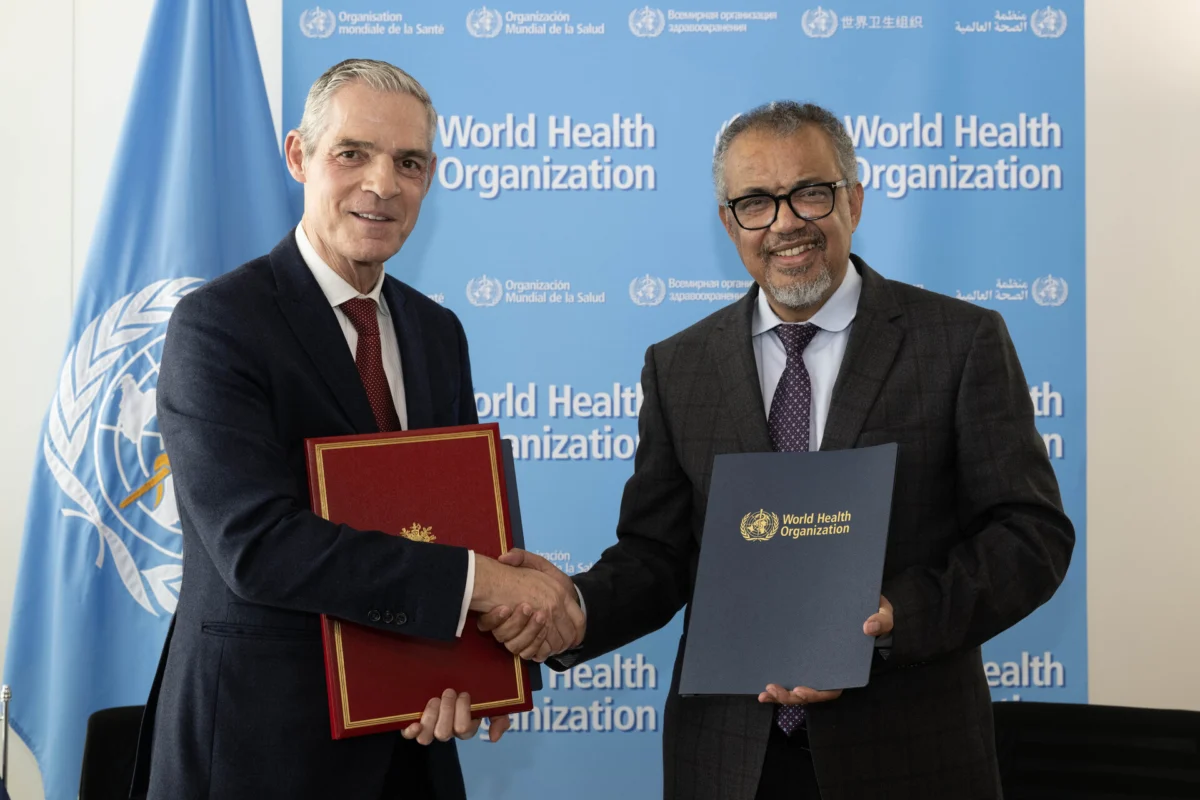
GENEVA, 17 October 2024 – In a significant boost to international public health, the World Health Organization (WHO) and the Government of France have entered into a landmark series of agreements designed to fortify global health security and address urgent humanitarian crises. Following a formal signing ceremony at the WHO headquarters in Geneva, the two entities confirmed a new financial contribution of €24 million, marking a pivotal moment in the ongoing collaboration between the French Ministry for Europe and Foreign Affairs and the United Nations’ health agency.
The partnership, underscored by the signing of seven distinct contribution agreements, reaffirms France’s role as a cornerstone donor and strategic ally in the execution of the WHO’s Fourteenth General Programme of Work (2025–2028).
The Core Facts: A Strategic Financial Injection
The €24 million contribution is not merely a lump sum; it is a targeted financial instrument designed to provide both immediate relief and long-term structural support. Central to this funding is a €4.5 million allocation to the Core Voluntary Contributions Account (CVCA). This "fully flexible" funding is highly prized by the WHO, as it allows the organization to pivot resources rapidly toward underfunded crises or unexpected health emergencies that do not receive the same level of global media attention as high-profile outbreaks.
The remaining funds are earmarked for a diverse array of critical health priorities that align with the France-WHO Framework Agreement (2020–2025). This framework serves as the legal and operational backbone of the relationship, ensuring that French financial support is not only generous but also strategically integrated into the WHO’s broader mission of achieving universal health coverage and building resilient health systems.
Chronology of Collaboration: A Long-standing Commitment
The relationship between France and the WHO is rooted in decades of shared health diplomacy. However, the current iteration of this partnership—formalized under the 2020–2025 Framework Agreement—has seen an evolution toward more flexible and predictable funding models.
- 2020: The signing of the current five-year Framework Agreement established a clear roadmap for administrative and financial synergy.
- 2023: France intensified its advocacy for a "fully and flexibly financed WHO," emphasizing that the organization’s independence is contingent upon move away from hyper-earmarked, project-specific funding.
- May 2024: The World Health Assembly approved the Fourteenth General Programme of Work, setting the stage for the current funding cycle.
- October 2024: The signing ceremony in Geneva marks the latest milestone, bridging the gap between policy commitments and operational reality on the ground.
This trajectory reflects France’s transition from a standard donor to a strategic partner that actively shapes the WHO’s agenda, particularly regarding the reform of global health governance.
Supporting Data: Where the Funding Goes
The impact of this €24 million investment will be felt across several high-priority sectors, each chosen for its potential to improve global health outcomes:

1. Emergency Response and Humanitarian Aid
A significant portion of the funding is directed toward active conflict and crisis zones. This includes specialized support for the WHO’s health response in Gaza, where the destruction of healthcare infrastructure has created an unprecedented medical emergency. Furthermore, the funding will bolster cholera response efforts globally—a disease that remains a potent indicator of health system fragility—and provide essential mental health support for populations impacted by the ongoing war in Ukraine.
2. Preparedness: The Lyon Hub
France continues to cement its role as a global leader in epidemic preparedness through its continued support of the WHO emergencies centre in Lyon. This facility acts as a critical node in the global alert-and-response network, facilitating training, logistical coordination, and the rapid deployment of resources when new pathogens emerge.
3. Chronic Health Challenges
Recognizing that pandemics are not the only threat to humanity, the funding covers non-communicable diseases (NCDs) such as cancer, diabetes, and cardiovascular disease, which are responsible for the vast majority of global deaths. The initiative also supports "urban health labs," which study how dense, modern city environments affect public health, providing a blueprint for the future of urban sanitation and healthcare delivery.
4. The One Health Approach
France has been a vocal proponent of the "One Health" agenda, which recognizes that human health is inextricably linked to animal health and the environment. This funding supports the integration of these sectors, aimed at preventing the next zoonotic spillover (the transmission of viruses from animals to humans).
Official Responses: Aligning Policy and Purpose
The signing ceremony provided a platform for both parties to articulate the philosophy behind their partnership.
His Excellency Mr. Jérôme Bonnafont, Permanent Representative of France to the United Nations in Geneva, emphasized the moral and strategic imperative of the contribution. "France remains deeply committed to supporting the World Health Organization in its efforts to tackle critical global health challenges," Bonnafont stated. "These agreements reflect our shared priorities of promoting health equity, responding to emergencies, and strengthening healthcare systems worldwide. We believe that a strong, well-funded WHO is the only way to ensure the security of our interconnected world."
Dr. Tedros Adhanom Ghebreyesus, Director-General of the WHO, responded with a clear acknowledgment of France’s leadership. "We are immensely grateful to the French Government for its steadfast support to WHO, continued partnership, and leadership in global health," Dr. Tedros remarked. "This contribution will enable us to address key health threats, from non-communicable diseases to emergency response, helping to save lives and protect the most vulnerable populations."

Implications: A New Era of Health Governance
The implications of this agreement extend far beyond the €24 million price tag. The funding serves as a model for how donor nations should interact with multilateral organizations.
The Shift Toward Predictability
For years, the WHO has been hampered by funding that is "tied" to specific projects, often dictated by donor interests rather than objective medical needs. France’s emphasis on the Core Voluntary Contributions Account (CVCA) signals a change in philosophy. By providing flexible funding, France is demonstrating trust in the WHO’s technical capacity to allocate resources where they are most needed, rather than where they are most politically visible.
The Investment Round
France’s role as a co-host of the WHO’s first "Investment Round" is perhaps the most significant structural implication of this deal. The Investment Round is a new mechanism designed to mobilize predictable, flexible, and sustainable resources for the organization’s 2025–2028 agenda. By leading this initiative, France is essentially campaigning for a more robust WHO that is less reliant on the "boom and bust" cycle of emergency-specific donations.
Global Health Equity
By balancing its support between high-tech preparedness in Lyon and humanitarian assistance in Gaza and Ukraine, France is reinforcing the concept that global health security is indivisible. A weakness in one region—whether due to an unchecked epidemic or the collapse of a local healthcare system—is a threat to all.
Strengthening Multilateralism
In a geopolitical climate where international cooperation is often strained, the France-WHO partnership serves as a testament to the continued relevance of multilateralism. The agreement reinforces the idea that global health is a "global public good," requiring sustained state support that transcends individual political cycles.
Conclusion: A Blueprint for the Future
As the world grapples with the fallout of the COVID-19 pandemic and faces the looming threats of climate change and shifting disease burdens, the partnership between France and the WHO offers a template for success. Through a combination of rigorous framework agreements, flexible financial support, and a commitment to both immediate emergency response and long-term systemic change, this €24 million contribution serves as a beacon of stability.
The collaboration not only addresses the immediate medical needs of the world’s most vulnerable populations but also strengthens the institutional architecture required to manage the health threats of the 21st century. As the WHO prepares for its next four-year cycle under the Fourteenth General Programme of Work, the firm hand of French diplomacy and the dedicated support of its treasury ensure that the organization remains equipped, empowered, and ready to meet the challenges ahead.


