

 Nana Wu

 Dwi Wanna

 Suro Senen

 Evan Lee Salim

 Pevita Pearce
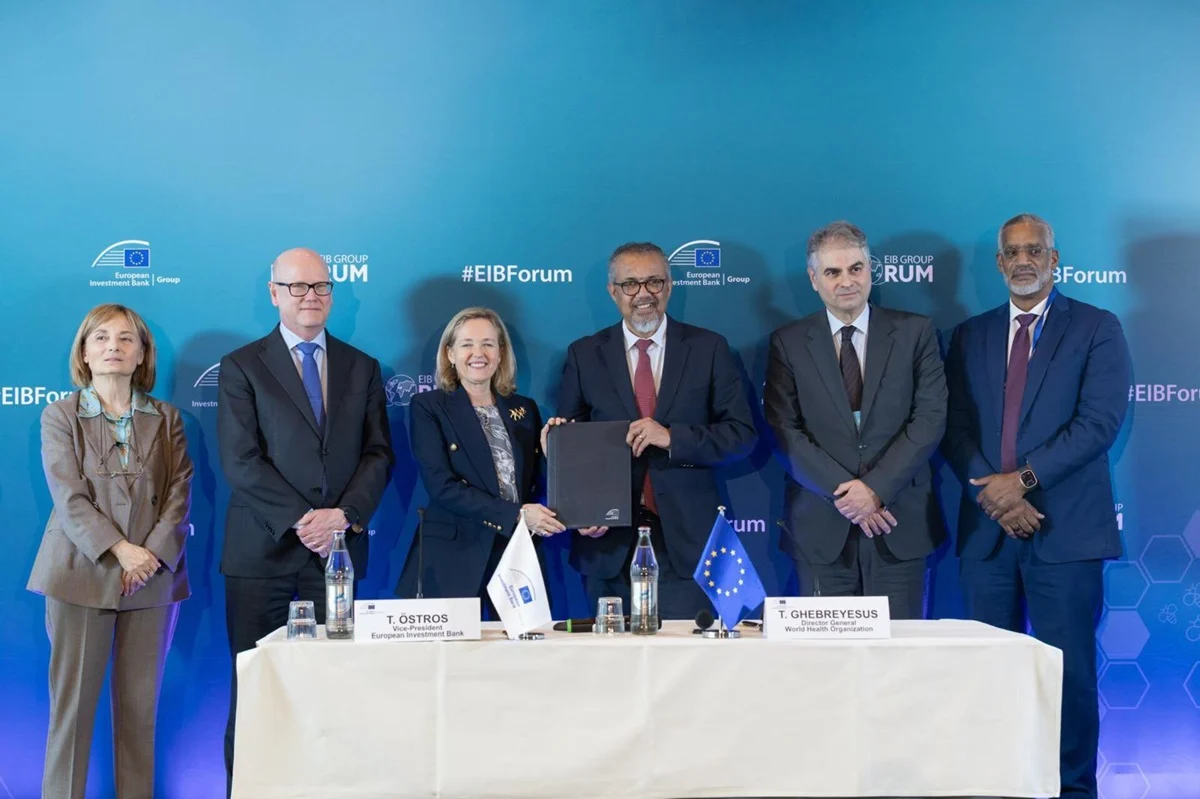
LUXEMBOURG – On 6 March 2025, a significant milestone in international humanitarian cooperation was reached at the European Investment Bank (EIB) Group Forum. Dr. Tedros Adhanom Ghebreyesus, Director-General of the World Health Organization (WHO), and Thomas Östros, Vice-President of the European Investment Bank (EIB Global), officially signed a landmark agreement to provide a €10 million grant aimed at fortifying Lebanon’s crumbling public health infrastructure.
This initiative arrives at a critical juncture for the Lebanese Republic, which has faced a protracted socioeconomic collapse compounded by regional instability, massive population displacement, and a debilitating strain on its healthcare system. By targeting the rehabilitation of essential laboratory services and ensuring the continuity of care for the most vulnerable, the partnership seeks to stabilize a sector that has been on the brink of failure for years.
The Core Initiative: Rebuilding Foundations and Sustaining Life
The €10 million grant is not merely a financial injection; it is a strategic intervention designed to address both the systemic and immediate needs of the Lebanese healthcare landscape. The funding is bifurcated into two primary objectives: the restoration of institutional capability and the direct provision of life-saving medical supplies.
1. Re-establishing the Central Public Health Laboratory (CPHL)
The centerpiece of this collaboration is the restoration of Lebanon’s Central Public Health Laboratory. Following years of underinvestment and the devastating impact of the 2020 Beirut port explosion, the laboratory’s operational capacity has been severely compromised. As the backbone of disease surveillance, outbreak response, and diagnostics, the CPHL is essential for public health security. A functional laboratory is the first line of defense against infectious disease outbreaks and ensures that health authorities can make evidence-based decisions during crises.
2. Ensuring Continuity of Care for Chronic Conditions
Beyond infrastructure, the initiative allocates critical resources to the management of non-communicable diseases (NCDs). In a country where the cost of living has skyrocketed, tens of thousands of patients have been forced to choose between food and medicine. This project prioritizes the provision of essential medications for over 50,000 people suffering from chronic conditions, including diabetes, cardiovascular diseases, and cancer. By bridging the supply gap, the WHO and EIB Global aim to prevent the preventable—reducing the long-term burden on hospitals and saving lives that would otherwise be lost to treatment interruptions.
Chronology of a Crisis: Why Lebanon Needs Support Now
To understand the magnitude of this intervention, one must examine the timeline of degradation that has plagued the Lebanese healthcare system.
- 2019: The Onset of Economic Freefall: The beginning of the economic crisis in Lebanon led to a rapid devaluation of the national currency, making the importation of medical equipment and pharmaceuticals prohibitively expensive.
- 2020: The Beirut Port Explosion: The catastrophic blast on 4 August 2020 decimated medical facilities, pharmacies, and the central storage units for medicine, dealing a massive blow to the nation’s health infrastructure.
- 2021–2023: The Great Brain Drain: As the economic situation deteriorated, a significant percentage of Lebanon’s highly skilled medical workforce—doctors, nurses, and laboratory technicians—emigrated, leaving the system understaffed and underskilled.
- 2024: Regional Instability: The escalation of regional tensions placed further pressure on the public health system, as it struggled to balance the needs of the domestic population with the influx of those displaced by conflict.
- 6 March 2025: The signing of the EIB Global-WHO agreement marks a pivot toward systemic recovery, signaling a shift from reactive emergency aid to sustainable capacity building.
Supporting Data: The Scale of the Health Emergency
The necessity of this €10 million grant is underscored by harrowing data regarding the state of health in Lebanon. According to recent WHO assessments, the Lebanese healthcare system has lost nearly 40% of its medical doctors and 30% of its nursing staff since 2019.
Furthermore, the cost of essential medicines has increased by several hundred percent, pushing them out of reach for a majority of the population. Data indicates that:
- NCD Burden: Over 35% of deaths in Lebanon are attributed to cardiovascular disease, yet access to basic blood pressure and cholesterol-lowering medication has been intermittent.
- Diagnostic Gaps: The absence of a fully operational central laboratory has hindered the ability to track antimicrobial resistance (AMR), a growing global threat that is particularly dangerous in the Levant region.
- Displacement Impact: With one of the highest per-capita refugee populations in the world, the demand for public health services consistently exceeds the capacity of the state-run clinics, making the €10 million injection a vital supplement to the stretched resources of the Ministry of Public Health.
Official Responses: A Call for Global Solidarity
During the signing ceremony at the EIB Group Forum, both leadership figures emphasized the moral and strategic imperatives of the partnership.
Dr. Tedros Adhanom Ghebreyesus, WHO Director-General:
"The health of the people in Lebanon is a shared responsibility. We are seeing a system that has been pushed to the brink by a ‘polycrisis.’ This agreement with the European Investment Bank is a critical step in ensuring that the most vulnerable do not pay the ultimate price for these systemic failures. By rebuilding the Central Public Health Laboratory, we are ensuring that Lebanon is better prepared to face future health shocks, whether they be pandemics or other emergencies."
Thomas Östros, Vice-President of the EIB Global:
"At the European Investment Bank, we recognize that economic stability is inextricably linked to public health. We cannot talk about development in Lebanon without ensuring that the citizens have access to basic life-saving medicines and a functioning diagnostic system. This grant reflects the commitment of Europe to stand by the people of Lebanon during these challenging times, moving beyond simple humanitarian aid toward structural resilience."
The European Union, which backs the EIB, has long been a primary donor to Lebanon, but this specific collaboration marks a more integrated approach, combining the financing expertise of the EIB with the technical guidance of the WHO.
Implications: A New Model for Humanitarian-Development Nexus
The partnership between the WHO and EIB Global serves as a blueprint for the "Humanitarian-Development Nexus"—the idea that emergency aid must be designed to build long-term development.
Strengthening Health Security
By investing in the Central Public Health Laboratory, the initiative is not just fixing a building; it is reinforcing regional health security. The laboratory will serve as a hub for training, data collection, and surveillance, which benefits not only Lebanon but the surrounding region. In an era of global health interdependence, a weakness in one nation’s diagnostic capacity represents a risk to its neighbors.
Mitigating the Socioeconomic Burden
The provision of medicine for chronic diseases has a direct economic impact. When a cancer patient or a diabetic can manage their condition through consistent, subsidized care, they are more likely to remain part of the workforce and less likely to require emergency hospitalization, which is significantly more expensive. By preventing the escalation of these conditions, the initiative serves as a form of social protection that preserves the human capital of the nation.
Challenges Ahead: Sustainability and Governance
While the €10 million grant is a significant contribution, experts warn that it is not a panacea. The long-term success of this initiative will depend on the stability of the Lebanese government and its ability to maintain the facilities once they are restored. Transparency in the distribution of medicines and the retention of the laboratory staff will be the ultimate tests of this partnership. The WHO and EIB have stated that they will maintain rigorous oversight, ensuring that funds are used exclusively for their intended purposes and that the supply chain for medication is protected from corruption and mismanagement.
Conclusion
The agreement signed on 6 March 2025 is a beacon of hope for a nation weary of crisis. By bridging the gap between high-level policy and grassroots health needs, the World Health Organization and EIB Global are providing a lifeline to the people of Lebanon. As the project begins to roll out, the international community will be watching closely, as the success of this model could determine how similar crises are handled in the future.
The restoration of the Central Public Health Laboratory and the steady supply of medication to 50,000 chronic disease patients are foundational steps toward a more resilient Lebanon. However, as Dr. Tedros and Mr. Östros noted, the true impact will be measured in the lives saved and the stability restored to a system that, for too long, has been operating in the shadows of uncertainty. This initiative is not just an investment in medicine; it is an investment in the dignity and future of the Lebanese people.


