Nana Wu

 Dwi Wanna

 Suro Senen

 Evan Lee Salim

 Siti Muinah
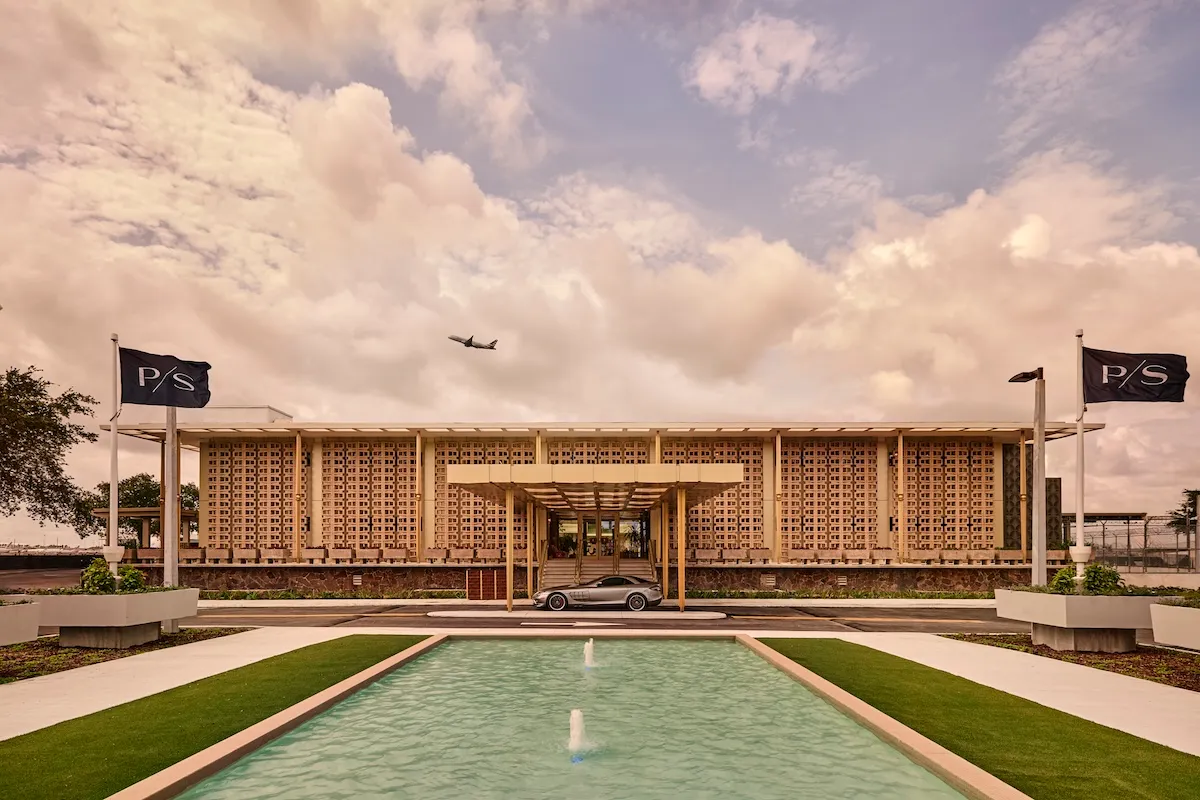
At the Los Angeles International Airport, the traditional air travel experience is defined by noise, queues, and the frantic navigation of fluorescent-lit terminals. But for a select group of travelers, the airport experience is defined by the absence of all those things.
Step into the private terminal operated by PS, and the friction of modern transit evaporates. A staff member greets you by name, recalling your preferred beverage or specific dietary requirements from your last visit. In an era where high-end hotels and exclusive members’ clubs are struggling to maintain a personal touch, PS has elevated hyper-personalization to an institutional standard.
PS—formerly known as The Private Suite—is currently rewriting the playbook for ultra-luxury aviation. By allowing commercial airline passengers to bypass the public terminal entirely, the company has carved out a lucrative, high-barrier-to-entry niche in the travel industry. Under the leadership of CEO Amina Belouizdad Porter, the company is scaling rapidly, shifting from a localized LAX curiosity to a national infrastructure powerhouse for the elite traveler.
The Chronology: From Concept to National Network
The evolution of PS is a study in identifying a "pain point" that the mainstream travel industry was ill-equipped to solve.
- 2017: The Genesis. Originally branded as "The Private Suite," the company launched at Los Angeles International Airport (LAX). The concept was simple but audacious: provide a private, standalone terminal for commercial passengers, offering a gated entrance, private TSA screening, and a chauffeured drive to the aircraft door.
- 2021: The Rebrand. As the company began to eye expansion beyond the California market, it rebranded to "PS." This shift signaled a move away from being a singular, location-dependent service to becoming a lifestyle brand.
- 2023: The Atlanta Milestone. After years of perfecting the LAX model, PS successfully launched its second location at Hartsfield-Jackson Atlanta International Airport, the world’s busiest airport. This proved that the business model could be exported to high-traffic, non-coastal hubs.
- 2024: The Year of Scaling. This past summer, PS effectively doubled its footprint. The company launched operations at Dallas-Fort Worth (DFW) and Miami International Airport (MIA), signaling a shift from experimental boutique operation to a national network.
Supporting Data: The Economics of Exclusivity
The PS model operates on a bifurcated revenue stream: annual memberships and one-time "all-access" fees. While the company does not disclose its private financial statements, industry analysts point to the rapid expansion in 2024 as evidence of high demand among the "Ultra-High-Net-Worth" (UHNW) demographic.
The Membership Tiers
- The Annual Membership: Costs approximately $4,850 per year. It provides access to the private terminals, discounted service rates, and the ability to book private suites.
- The "All Access" Experience: Even for members, the use of the suite costs upwards of $3,000–$4,000 per visit, depending on the airport and the party size.
The value proposition is rooted in time-saving and privacy. By offloading the security and customs processes to private, on-site personnel, PS saves its guests an average of 90 minutes per departure or arrival. In the world of global business, where time is the ultimate currency, this efficiency is viewed as a necessity rather than a luxury.
Official Perspectives: Amina Belouizdad Porter’s Vision
Amina Belouizdad Porter, the CEO of PS, brings a distinct perspective to the table. Her professional background—rooted in private equity and high-end hotel development—allows her to view the business through a dual lens: the rigorous discipline of an investor and the nuanced empathy of a hospitality operator.
In recent discussions, Porter emphasized that PS is not merely selling a lounge; it is selling "the gift of time and the absence of anxiety."
"We are super-serving a clientele that is accustomed to being looked after," Porter noted. "The challenge is that this is an exceptionally complicated business. We are operating within the most heavily regulated environment on earth—the airport perimeter. To deliver a seamless, warm, and highly personalized experience within the rigid constraints of the TSA and Customs and Border Protection is an engineering feat of hospitality."
Porter’s strategy is clear: focus on airports with the highest density of premium travelers. By securing long-term leases at major domestic hubs, PS is building a "moat" that competitors—often hindered by the complexity of airport security compliance—cannot easily replicate.
Implications: The Future of High-End Travel
The rise of PS signals a broader trend in the travel sector: the "privatization of the public experience." As commercial airports become increasingly crowded and infrastructure lags behind passenger demand, the gap between the average experience and the elite experience is widening.
1. The Death of the "Terminal Experience"
For the ultra-wealthy, the airport terminal has ceased to be a place of transit; it is now a place to be avoided. The implication for airlines is significant. Premium carriers like Emirates, Singapore Airlines, and Delta have long prioritized high-end lounges, but even the best lounges require navigating the terminal. PS solves this by removing the terminal from the equation entirely.
2. Operational Complexity as a Competitive Advantage
Many companies have attempted to replicate the "VIP meet-and-greet" service, but few have managed the physical infrastructure of a private terminal. The regulatory hurdles of creating a private TSA checkpoint are immense. By successfully navigating these, PS has created a business that is almost impossible to disrupt.
3. The "Membership Economy" in Travel
PS is effectively a private members’ club that happens to be located at an airport. Much like Soho House or NetJets, the brand derives its value from the community it creates. Members are not just buying a flight service; they are buying entry into a network of travelers who value privacy and consistency above all else.
4. The Potential for Global Expansion
With four major U.S. hubs now under its belt, the question for PS is: Where next? Industry speculation suggests that the model is perfectly suited for international gateways like London Heathrow, Dubai, or Singapore. If PS can prove that its U.S.-based operational rigor translates to international customs environments, it could become the global standard for luxury transit.
Final Thoughts: The Invisible Exit
The ultimate success of PS lies in how little it is noticed. When a guest arrives at the PS terminal, they are ushered into a private suite, served a gourmet meal, and driven in a luxury car directly to the steps of their aircraft. They never see a line. They never hear an announcement. They never engage with the chaos of the public terminal.
As the travel industry continues to recover and thrive, the demand for this kind of "invisible service" will only grow. For Amina Belouizdad Porter and her team, the goal is not to be the biggest player in the sky, but the most essential one for those who cannot afford to lose a single minute of their day.
In a world of noise, PS is selling silence. And in a world of complexity, they are selling the ultimate luxury: a frictionless journey.

 Lina Irawan