

 Nana Wu

 Dwi Wanna

 Suro Senen

 Evan Lee Salim

 Laily UPN
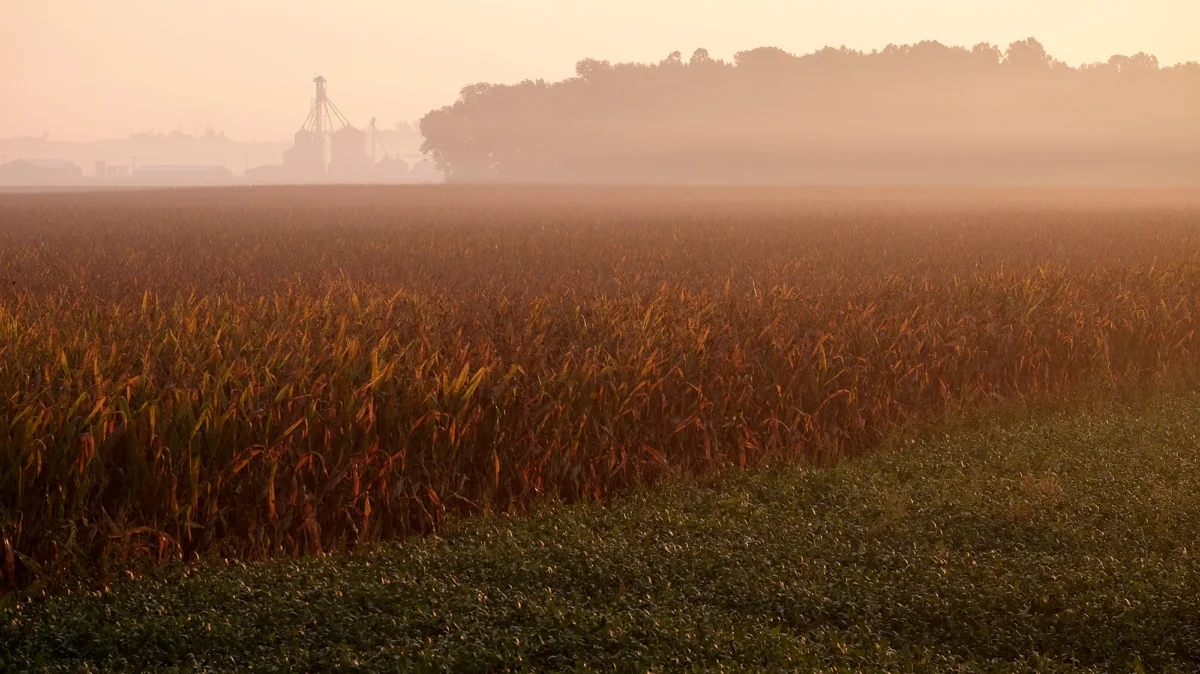
In the quiet, flat stretches of rural Indiana, a new, invisible industry is taking root. Beneath the rows of corn and soybeans that define the landscape of Clymers, corporations are preparing to inject millions of tons of industrial carbon dioxide deep into the earth. Billed as a "slam dunk" for the climate, these carbon sequestration projects are being hailed by federal regulators as a cornerstone of the nation’s decarbonization strategy. Yet, for the residents who call these regions home, the projects represent something far more ominous: an existential threat to their land, their water, and the future of their communities.
The Epicenter of Tension: The Case of Clymers
For Melissa Harrison, Clymers is not merely a geographic location; it is the repository of her life’s history. Her ancestors lie in the local cemetery, and she is currently raising five grandchildren in a town that has already weathered decades of industrial encroachment. Today, Clymers is defined by a precarious intersection of agricultural necessity and industrial hazard, housing a fertilizer supplier, a hazardous waste recycling facility, and a massive ethanol plant.
The latest proposal from this ethanol plant to use the town as a geologic repository for carbon has galvanized residents. While proponents argue that burying carbon dioxide 3,000 feet underground is a safe and necessary climate mitigation strategy, Harrison and her neighbors see it as a predatory land grab. "If they make Clymers bad enough that no one wants to live here, they can take over the whole town, real cheap," Harrison says, echoing a sentiment of deep-seated distrust that has become a rallying cry for rural resistance movements across the United States.
A Chronology of the "Carbon Gold Rush"
The surge in carbon capture and storage (CCS) projects is not a coincidence; it is the direct result of a calculated shift in federal policy.
- Early 2000s: Carbon capture technology emerges as a niche, experimental method for climate mitigation. Early pioneers, including some who now regret their involvement, initially champion the technology as a way to "clean up" fossil fuel emissions.
- 2022 (The Inflation Reduction Act): The Biden administration bolsters the 45Q tax credit, a policy that provides $85 per metric ton of stored carbon. This creates a massive financial incentive, effectively turning CO2 into a commodity worth capturing.
- 2024: The nation’s first commercial carbon sequestration project, located under a lake in Illinois, suffers two significant leaks. This failure sparks alarm, leading to a ban on similar projects near major aquifers in the state.
- 2025–2026: A wave of corporate permit applications reaches the Environmental Protection Agency (EPA) and state regulators. The "carbon gold rush" enters a critical phase as developers attempt to fast-track projects before public scrutiny can reach a fever pitch.
Supporting Data: Following the Money
The economic engine driving these projects is arguably more significant than their environmental impact. According to analysts at Enverus, an energy industry data firm, the federal subsidies associated with these projects can be so lucrative that they effectively double an ethanol plant’s revenue.
The math is simple but staggering:
- The 45Q Bounty: A relatively small project sequestering 200,000 metric tons of CO2 per year can generate approximately $17 million in annual tax credits.
- Scaling Up: Larger projects, which are already being planned, aim to sequester tens of millions of tons, translating into billions of dollars in federal subsidies.
- The Ethanol Factor: Because ethanol production creates a near-pure stream of CO2, it is the lowest-hanging fruit for companies looking to maximize their 45Q claims.
For critics like Kerwin Olson of the Indiana-based Citizens Action Coalition, these numbers reveal the true motive. "You can do the math," Olson says. "That is a lot of cash—an enormous amount of cash. You’re talking billions of dollars."
Official Responses and Industry Defense
The companies behind these projects, such as The Andersons Renewables, maintain that the technology is robust and heavily regulated. In a formal statement to The Guardian, the company asserted that its project relies on "safe, established technology" involving a "rigorous permitting, engineering, and monitoring process to protect groundwater, public health, and the surrounding environment."
The company claims that seismic analysis and the drilling of test wells have confirmed the site’s suitability for permanent storage. Regarding community pushback, the company acknowledged that residents have legitimate concerns but insisted they are committed to transparency.
However, many experts remain skeptical of such assurances. Charles Harvey, a professor of civil and environmental engineering at MIT, has become a vocal critic of the industry he once helped pioneer. He argues that the focus on CCS is a strategic diversion. "It is loved by the industry because it’s a subsidy for whatever they’re already doing," Harvey explains. He suggests that the billions currently flowing into CCS would be better spent on accelerating the transition to wind, solar, and battery storage—technologies that do not carry the risk of underground leaks.
The Implications: Safety, Health, and Property Rights
The fears expressed by residents like Dennis Crume—a local farmer who refused a payment to host a carbon injection well—are rooted in real-world precedents.
The Risk of Failure
The 2024 Illinois leak highlighted the volatility of underground storage. Even more concerning to local populations is the risk of a pipeline rupture. In 2020, a CO2 pipeline in rural Mississippi failed, leading to a catastrophic release that sent 45 people to the hospital and forced the evacuation of 200 residents. The scenes from that event were described by first responders as a "zombie apocalypse," with victims suffering from oxygen deprivation and confusion as the heavier-than-air gas displaced the atmosphere at ground level.
The Erosion of Local Sovereignty
Perhaps the most contentious issue is the legal framework surrounding these projects. In many states, including Indiana, laws are increasingly interpreted in ways that favor industrial expansion over individual land rights. When companies offer nominal sums—sometimes as little as $150 an acre—they are often operating within a legal framework that can override a landowner’s desire to keep their property free of carbon injection infrastructure.
The Climate Dilemma
The central paradox of carbon sequestration is its role in the global climate strategy. The Intergovernmental Panel on Climate Change (IPCC) suggests that while CCS can be a tool to keep warming in check, it must be secondary to an urgent, systemic reduction in fossil fuel usage. Critics argue that by subsidizing the very companies responsible for the climate crisis, the government is creating a "moral hazard." Instead of cutting emissions at the source, industry leaders are incentivized to keep fossil-fuel-reliant plants running indefinitely, provided they can "bury the evidence" underground.
Conclusion: A Community at a Crossroads
As the EPA and state regulators prepare to greenlight a new wave of sequestration projects, the residents of towns like Clymers are finding themselves on the front lines of a national debate. The struggle is not just about environmental safety; it is about who holds the power in a rapidly changing economy.
For Melissa Harrison, the fight is about the future of her grandchildren. For the industry, it is a race to claim federal tax credits before the political winds shift. And for the nation, it is a test of whether a climate solution can truly be considered "green" if it requires the sacrifice of the very communities it is supposed to protect. As the projects move from blueprints to reality, one thing is certain: the ground beneath the American heartland is becoming the most contested territory in the climate transition.

 Asep Darmawan

 Layla Zulfa

