

 Nana Wu

 Dwi Wanna

 Suro Senen

 Evan Lee Salim

 Layla Zulfa
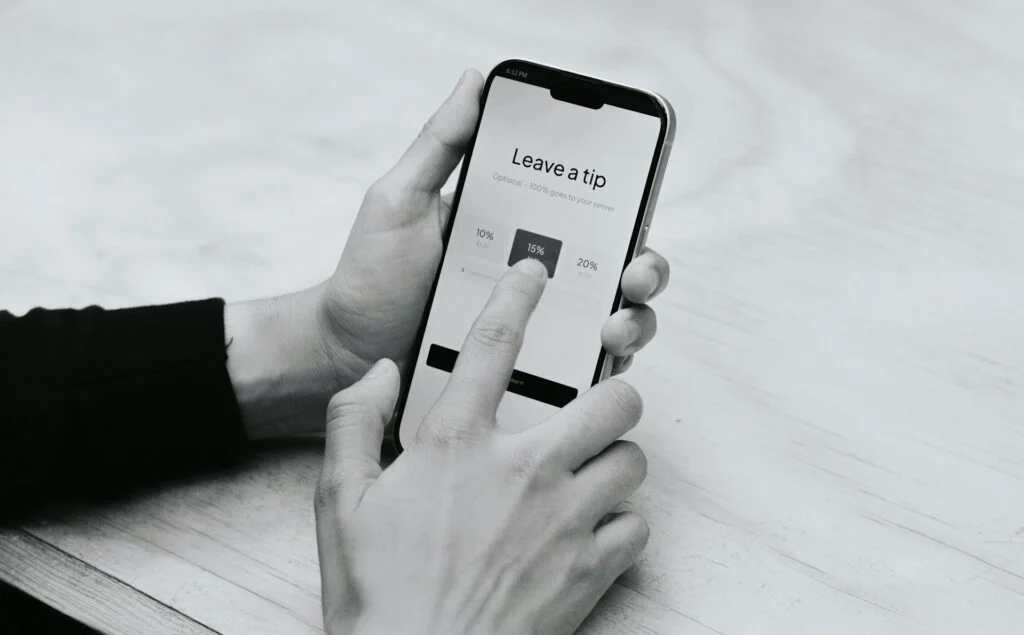
In the modern American economy, the simple act of buying a cup of coffee or a quick sandwich has transformed from a straightforward transaction into a psychological gauntlet. The culprit is the ubiquitous digital payment screen—the "spinning iPad"—which presents customers with pre-set tipping options before they have even received their order. While these tools were designed to streamline payments and bolster worker income, new research suggests they may be reaching a breaking point, fundamentally altering the relationship between businesses and their patrons.
According to a comprehensive study by Oobit, a leader in mobile payment solutions, the aggressive expansion of digital tipping prompts has triggered a phenomenon known as "tip fatigue." The data reveals a startling trend: more than half of Americans report that constant prompts have made them feel less generous overall. Perhaps more damaging for the hospitality industry is the finding that 37 percent of consumers have actively stopped patronizing specific businesses because they found the tipping prompts to be too aggressive.
Main Facts: The High Cost of the "Guilt Trip"
The Oobit study paints a picture of a consumer base that feels increasingly cornered by technology. While tipping was once a voluntary gesture of gratitude for exceptional service, digital interfaces have rebranded it as a mandatory-adjacent social obligation.
The research highlights three primary areas of concern for the modern diner:
- Relationship Erosion: While digital screens are highly effective at extracting a few extra dollars in the moment, they often leave a "bad taste" in the customer’s mouth. Bernard Fisher, Chief Marketing Officer at Oobit, notes that the screen can be a double-edged sword. "The screen can be very effective at winning a few extra dollars in one transaction, while potentially damaging the relationship with that customer afterward," he explained.
- The "Awkwardness" Tax: Nearly half of Americans (45 percent) admit to tipping more than they originally intended simply because navigating past the preset options felt socially awkward or technically difficult.
- The Transparency Gap: A significant crisis of trust is brewing. Only 30 percent of respondents expressed confidence that their digital tips actually reach the individual worker rather than being absorbed by the business to cover overhead or credit card processing fees.
This lack of transparency, combined with the feeling of being "watched" by staff during the transaction, has turned a once-positive final interaction into a moment of friction.
Chronology: From the Tip Jar to the Digital Interface
To understand how the U.S. reached this "tipping point," one must look at the technological and economic evolution of the last decade.
For much of the 20th century, tipping was confined to full-service restaurants, bars, and specific service roles like bellhops or taxi drivers. In counter-service environments, the "tip jar" was a passive fixture—a glass container near the register where customers could drop their spare change if they felt so inclined. There was no social penalty for ignoring it.
The shift began in the early 2010s with the rise of Point-of-Sale (POS) systems like Square, Toast, and Clover. These systems integrated tipping into the software flow, moving the choice from a passive jar to an active, unavoidable digital prompt.
The COVID-19 pandemic accelerated this trend. In 2020 and 2021, consumers were encouraged to tip generously even for takeout to help keep struggling local businesses afloat and reward "essential workers" taking health risks. This "hero tipping" became the new baseline. However, as the pandemic receded and inflation surged, businesses maintained—and in some cases increased—the default tip percentages on their screens to offset rising labor costs without raising menu prices.
By 2024, the "tipping creep" had expanded into industries where gratuities were previously unheard of, including self-service kiosks, online retail checkouts, and even some automated car washes. This chronological expansion has led directly to the current state of consumer exhaustion.
Supporting Data: Demographics and the Psychology of the Screen
The Oobit study provides a granular look at how different segments of the population react to the pressure of the digital screen. The data suggests that the "one-size-fits-all" approach to POS design is failing to account for varied psychological profiles.
Generational Divide: Gen Z’s Digital Dilemma
Gen Z, the most digitally native generation, paradoxically feels the most pressure from digital tipping interfaces.
- 58 percent of Gen Z respondents reported tipping more than intended because the preset options were awkward to bypass.
- 49 percent admitted to tipping solely because they felt the employee was watching their choice.
- 62 percent stated that the constant barrage of prompts has made them less generous in the long run.
"I do not read that as younger consumers being less willing to tip," said Fisher. "I think it shows they are particularly responsive to the social and design cues built into digital checkout, but they are also particularly likely to push back when those cues start to feel manipulative."
Gender Differences in Social Pressure
The study also found that women are more susceptible to the social pressure inherent in the digital checkout process.
- 46 percent of women tipped because they felt watched, compared to 38 percent of men.
- 48 percent of women left a larger tip than intended, versus 40 percent of men.
Fisher notes that these demographic results prove there is no "average customer." The same interface that feels like a helpful shortcut to one person can feel like an predatory tactic to another.
Specific Consumer Grievances
When asked what specifically bothered them about the digital experience, diners were clear:
- High Presets: Starting the suggested tip at 20 or 25 percent for counter service was the top complaint.
- The "Watcher" Effect: Having the worker stand and watch while the customer selects a tip amount.
- Hidden "No Tip" Options: 17 percent of users expressed frustration when the "no tip" or "custom tip" buttons were obscured or required extra steps to find.
Official Responses: Guidance for the Hospitality Industry
In light of these findings, industry experts and the leadership at Oobit are urging business owners to rethink their digital strategies. The consensus is not that tipping should be abolished, but that the method of asking must be refined to preserve the customer-business relationship.
Bernard Fisher suggests that operators should favor choice and transparency over aggressive defaults. "The technology should support the hospitality experience, not dictate it," he stated.
Recommendations for Business Owners:
- Calibrate Presets Appropriately: A full-service restaurant may justify a 20-25 percent preset, but a coffee shop or bakery should consider starting presets at lower increments (e.g., $1, $2, or 10-15 percent) to match the level of service.
- Prioritize UI Transparency: Ensure the "No Tip" and "Custom Tip" buttons are just as visible and easy to click as the preset options. Research indicates that when customers feel they have a legitimate choice, they are more likely to feel positive about the brand.
- Address the Trust Deficit: Businesses should clearly communicate who receives the tips. Whether it is through a small sign or a note on the digital screen, confirming that 100 percent of tips go to the staff can alleviate the 70 percent of consumers who currently doubt the destination of their money.
- The "Turn-Away" Policy: Staff should be trained to look away or step back while the customer is interacting with the payment screen to reduce the feeling of coercion.
Fisher warns that if consumers begin to view tip requests as just another hidden fee or sales tactic, the frustration will eventually spill over into traditional service environments—like sit-down dining—where workers genuinely depend on those gratuities for their livelihood.
Implications: The Future of the American Tipping Model
The long-term implications of "tip fatigue" suggest a potential shift in the American economic landscape. The Oobit study found that two-thirds of respondents would prefer businesses to simply raise their prices and eliminate tipping altogether.
The Rise of "Service-Inclusive" Models
While the "no-tip" model has struggled to gain traction in the U.S. in the past—most notably with Union Square Hospitality Group’s temporary shift away from tips—the current level of consumer frustration may provide a new opening for service-inclusive pricing. In these models, the cost of labor is built into the menu price, allowing for a "what you see is what you pay" experience.
However, Fisher remains skeptical that a single model will dominate the entire U.S. market soon. "Tipping is deeply embedded in American dining," he noted. "People may dislike tip prompts, but they can also react negatively to mandatory service charges or noticeably higher menu prices."
Evolution, Not Revolution
Rather than an overnight disappearance of tipping, the industry is likely to see an evolution:
- Counter-Service Retreat: We may see a reduction in tip prompts in environments where service is minimal or automated.
- Hybrid Models: More businesses may move toward "service charges" that are clearly defined, rather than the "guilt-based" variable tip screen.
- Traditional Strength: Tipping is likely to remain the standard in full-service environments where personal rapport and high-touch service are the primary products.
The Bottom Line for Restaurants
The ultimate danger for the hospitality sector is that the payment screen—the final touchpoint of the customer journey—is currently undermining all the hard work done in the kitchen and on the floor. If a guest leaves a restaurant feeling pressured, manipulated, or guilty, that emotion will outweigh the quality of the food or the ambiance.
"Restaurants live on repeat visits, loyalty, and word-of-mouth," Fisher concluded. "If a guest leaves thinking, ‘I was pressured into paying more than I wanted,’ that feeling can outweigh an otherwise good experience."
As the digital payment landscape continues to mature, the businesses that survive and thrive will likely be those that treat the payment screen not as a revenue extraction tool, but as a final act of hospitality—one that respects the customer’s agency and fosters long-term trust.


 Pevita Pearce

 Asep Darmawan

