

 Nana Wu

 Dwi Wanna

 Suro Senen

 Evan Lee Salim

 Asep Darmawan
By [Your Publication Name] National Correspondent
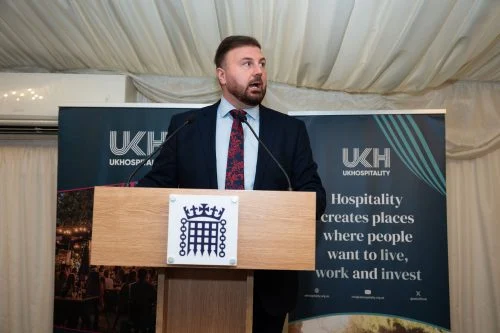
LONDON — In the shadow of a pivotal fiscal announcement, the halls of the Palace of Westminster played host to a critical assembly of the UK’s most influential hospitality leaders and policymakers. On Tuesday, October 20, HospitalityUK convened its annual Parliamentary Reception, an event that has transitioned from a mere networking opportunity into a high-stakes briefing session. With the 2026 Budget looming just a week away, the atmosphere was one of calculated urgency, as the sector sought to underscore its status not merely as a service industry, but as the foundational bedrock of the British economy and social fabric.
Main Facts: A Sector at a Crossroads
The reception served as a strategic platform for HospitalityUK, the industry’s leading trade body, to bridge the gap between abstract legislative policy and the granular reality of running businesses on the ground. The timing of the event was no coincidence; with the Chancellor of the Exchequer finalizing the 2026 Budget, the hospitality sector seized the moment to present a unified front.
The core message of the evening was twofold: hospitality is the UK’s most significant engine for social mobility and local investment, yet it remains precariously balanced due to mounting operational costs. Leaders from across the spectrum—representing indoor leisure, traditional pubs, luxury hotels, quick-service restaurants (QSR), late-night venues, and contract catering—shared a singular narrative with Members of Parliament (MPs) and peers from the House of Lords. They argued that while their venues are often full, the path to profitability is narrower than ever.
Key statistics underpinned the discussions. The hospitality sector remains one of the UK’s largest employers, responsible for over 3.5 million jobs and contributing significantly to the £140 billion in annual economic output. However, the dialogue at Westminster focused on the "cost of doing business" crisis, highlighting how business rates, energy costs, and wage pressures are squeezing margins to the breaking point.
Chronology: A Strategic Evening of Advocacy
The proceedings began with an air of bipartisan cooperation, reflecting the sector’s reach into every constituency in the United Kingdom.
The Opening Address
Chris Webb, the Member of Parliament for Blackpool South and Chair of the All-Party Parliamentary Group (APPG) for Hospitality and Tourism, opened the reception. Representing a quintessential British seaside resort, Webb’s presence underscored the vital link between hospitality and coastal regeneration. He welcomed the diverse crowd of operators and legislators, framing the evening as a celebration of the sector’s resilience and a sober reflection on the support it requires to thrive.
Engaging the Legislators
Throughout the evening, the reception facilitated direct "trench-level" briefings. Operators did not merely exchange pleasantries; they provided MPs with real-life case studies of how specific policy decisions—ranging from alcohol duties to apprenticeship levies—impact their day-to-day operations and, more importantly, their long-term investment plans.
MPs representing rural constituencies in Scotland and Wales were particularly active in these discussions. They noted that in many remote areas, a single pub or hotel is often the primary employer and the only remaining community hub. The "diversity of offer" was a recurring theme, illustrating that the sector’s health is a direct indicator of regional equity across the UK.
The Ministerial and Shadow Perspectives
As the night progressed, the floor was taken by key figures from both the government and the opposition. Kate Dearden MP, the Minister for the Future of Work and Hospitality, offered a perspective rooted in personal experience and labor policy. Following her, Julia Lopez MP, representing the Shadow Cabinet, and Daisy Cooper MP of the Liberal Democrats, provided their respective critiques and visions for the sector.
Closing Remarks
The evening concluded with a forward-looking address by Allen Simpson, the Chief Executive of HospitalityUK. His remarks were directed squarely at the upcoming Budget, serving as a final "call to action" for the government to recognize the sector’s potential as a primary driver of national economic growth.
Supporting Data: The Economic and Social Weight of Hospitality
To understand the urgency of the Westminster reception, one must look at the data that defines the industry’s current state. Hospitality is not a monolith; it is an ecosystem that sustains a vast supply chain including agriculture, logistics, and construction.
Employment and Social Mobility
Data shared during the event highlighted that hospitality is the "entry point" for the UK workforce. It employs more young people (aged 16–24) than any other sector. According to industry figures, roughly one in three people in the UK started their professional lives in a kitchen, behind a bar, or in front-of-house service. This "first job" status provides essential soft skills—communication, crisis management, and teamwork—that are transferable to every other sector of the economy.
The Profitability Paradox
A significant portion of the evening’s data-driven discussion focused on the "Profitability Paradox." While consumer demand remains relatively stable and venues often appear "busy," the underlying financial health of these businesses is under threat. Since 2019, the sector has faced a cumulative increase in operating costs of nearly 40%, driven by:
- Energy Volatility: Despite some stabilization, energy costs remain significantly higher than pre-pandemic levels.
- Labor Costs: While operators support fair wages, the rapid rise in the National Living Wage without corresponding tax relief has tightened margins.
- Business Rates: The current system is widely viewed by attendees as antiquated, over-burdening physical high-street businesses compared to online giants.
Regional Impact
The presence of MPs from Scotland and Wales brought regional data to the forefront. In coastal and rural communities, hospitality accounts for a higher percentage of the local GDP than in urban centers. For every £1 spent in a local pub, a significant portion is reinvested directly into the local economy through local suppliers and staff wages.
Official Responses: Voices from the Front Line of Policy
The reception featured a rare alignment of political voices, all acknowledging the sector’s importance, though differing slightly on the mechanisms of support.
Kate Dearden MP, Minister for the Future of Work and Hospitality:
Minister Dearden took a personal tone, reflecting on her own trajectory. "My first job was in a café when I was 14. I eventually became a manager and that job gave me more skills and experience than I could ever imagine," she told the assembly. Her focus remained on the "Future of Work," emphasizing that the government views hospitality as a key partner in solving the UK’s skills gap. She reaffirmed her commitment to ensuring the sector remains a viable and attractive career path for the next generation.
Julia Lopez MP, Interim Shadow Secretary of State for Business:
Representing the Opposition, Lopez was blunt about the financial pressures facing the industry. She described hospitality as the "true barometer" of the UK’s economic health. "I had the privilege of seeing the sheer power of the sector across the UK," Lopez remarked. However, she issued a stark warning to her parliamentary colleagues: "Places being busy doesn’t equal profitability. That’s the problem you’re facing right now." Her comments suggested that the Shadow Cabinet is closely watching how the 2026 Budget addresses the "squeezed middle" of the hospitality world.
Daisy Cooper MP, Treasury Spokesperson for the Liberal Democrats:
Cooper focused on the "community glue" aspect of the industry. She argued that the government must view the high street as a holistic ecosystem. "A high street is the glue that knots communities together. It’s the entire ecosystem," she said. Cooper’s stance emphasized that without a thriving hospitality sector, the social fabric of towns and villages would unravel, leading to increased isolation and economic stagnation.
Allen Simpson, Chief Executive of HospitalityUK:
The industry’s chief advocate left no room for ambiguity regarding the sector’s expectations for the upcoming Budget. "I hope we will see real change at this Budget that helps us recover, and to create jobs," Simpson stated. His focus was on "real change"—shorthand for structural reforms to business rates and perhaps a reconsideration of VAT levels for the industry, which many operators argue are uncompetitive compared to European neighbors.
Implications: What Happens After the Budget?
The Westminster reception was more than a social gathering; it was a strategic deployment of influence. The implications of the discussions held on October 20 will resonate long after the 2026 Budget is delivered.
The High Street’s Survival
The most immediate implication concerns the survival of the British high street. If the 2026 Budget fails to provide meaningful relief on business rates or fails to address the "Profitability Paradox," the industry warns of a wave of "quiet closures"—businesses that are busy but cannot cover their overheads. This would lead to a "hollowing out" of town centers, exactly the outcome policymakers claim they want to avoid.
The "Soft Skills" Pipeline
If the hospitality sector shrinks, the UK’s talent pipeline suffers. As Kate Dearden noted, the sector is a school for life. A reduction in hospitality venues means fewer opportunities for young people to enter the workforce, potentially leading to higher youth unemployment and a long-term deficit in essential workplace skills.
Investment and Growth
The sector is currently in a "wait and see" mode regarding investment. Many operators at the reception indicated that their plans for expansion, renovation, or green-energy transitions are on hold until they see the fiscal direction of the government. A supportive Budget could unlock billions in private investment; a restrictive one could lead to a prolonged period of stagnation.
A New Political Consensus?
Perhaps the most significant implication is the emerging political consensus. Across all major parties, there is a growing recognition that hospitality is not a "luxury" sector but a critical infrastructure. The reception proved that hospitality leaders have successfully moved the needle from being seen as "lifestyle businesses" to being recognized as a "systemically important" part of the British economy.
As the industry awaits the Chancellor’s speech next week, the message from the Westminster reception remains clear: Hospitality is ready to drive the UK’s growth, but it cannot do so while anchored by an outdated fiscal framework. The ball is now firmly in the government’s court.


 Layla Zulfa
 Pevita Pearce

