
 Dwi Wanna
 Nana Wu
 Muslim
 Reynand Wu
 Ammar Sabilarrohman
 Asep Darmawan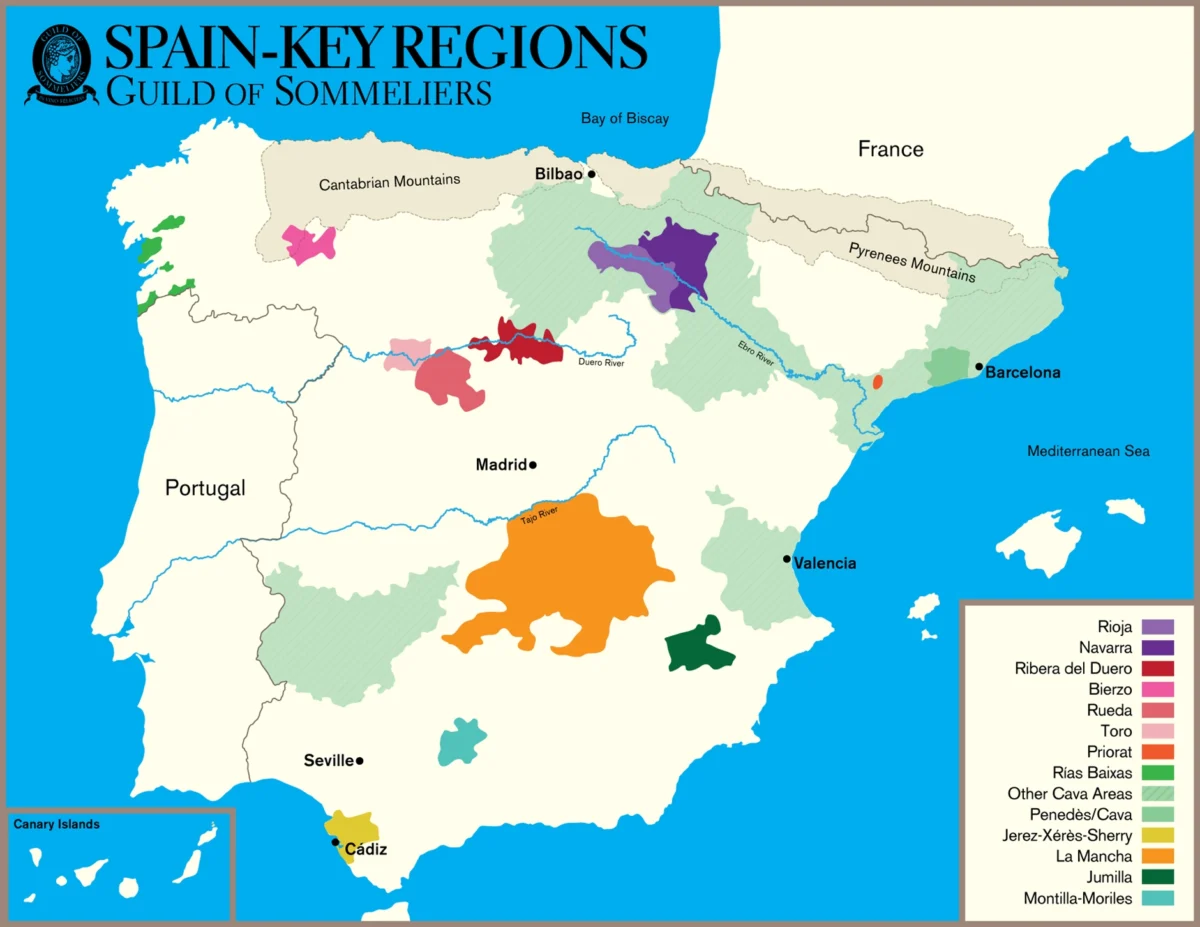
Introduction: The Cradle of the Mediterranean Vine
Spain’s relationship with the grape is not merely an agricultural pursuit; it is a fundamental pillar of its cultural identity and a testament to three millennia of human migration, trade, and adaptation. From the rugged coastlines of Andalusia to the high-altitude plateaus of the interior, Spanish viticulture represents a historical tapestry woven by Phoenician merchants, Roman engineers, Islamic scholars, and the explorers of the Age of Discovery. Today, as Spain stands as one of the world’s leading wine producers, it is essential to look back at the origins of this industry, which survived empires, religious prohibitions, and global economic shifts to become the powerhouse it is today.
Main Facts: The Foundations of an Industry
The history of Spanish wine is anchored in the arrival of the Phoenicians around 1100 BCE. When these ancient mariners established the colony of Gadir—known today as Cádiz—they brought with them more than just commercial goods; they introduced the technical expertise of systematic viticulture.
- Genetic Ancestry: The Phoenician ships that traversed the Mediterranean acted as ancient laboratories, carrying grape varieties from the Middle East to North Africa and the Iberian Peninsula. These varieties remain the genetic backbone of many modern Spanish grapes.
- Prehistoric Roots: While the Phoenicians professionalized the craft, archaeological evidence confirms that wild grapevines (Vitis vinifera sylvestris) existed in the Iberian Peninsula long before human civilization. Humans merely refined the cultivation of a plant that was already native to the landscape.
- The Commodity Shift: The shift from subsistence foraging to large-scale viticulture was driven by the necessity of trade. Wine was a durable, transportable commodity, making it the ideal currency for the Phoenician maritime empire.
Chronology: A Timeline of Transformation
1. The Phoenician Dawn (1100 BCE – 200 BCE)
The Phoenician influence transformed the southern coast of Spain into a bustling hub of agricultural activity. They established trade routes that linked the Iberian Peninsula to the broader Mediterranean, ensuring that the wines of Gadir were sought after by elites in distant lands.
2. The Roman Imperial Era (200 BCE – 400 CE)
The Romans recognized the potential of Spanish terroir. They industrialized the process, replacing the fragile, porous amphorae used by their predecessors with more durable storage vessels and implementing advanced irrigation and soil management techniques. Under Rome, Spanish wine became a staple of the imperial diet.
3. The Moorish Interregnum (711 CE – 1492 CE)
The arrival of the Moors introduced a significant challenge: Islamic law forbids the consumption of alcohol. However, the history of Spanish viticulture during this era is nuanced. While the commercial production of wine for consumption was suppressed, the cultivation of grapes persisted for other purposes:
- Raisin production: A primary food source.
- Distillation: Used for medicinal purposes and the creation of perfumes.
- Tolerance: Historical records suggest that in many regions, the production of wine for local, non-Muslim populations was often ignored by authorities, allowing the viticultural tradition to survive in a state of "permitted shadow."
4. The Age of Discovery and the Global Expansion (1492 – 1800)
1492 was a watershed year. With the fall of Granada and the voyages of Christopher Columbus, the Catholic Church and the Spanish Crown consolidated power. This led to a resurgence of winemaking. As Spanish ships crossed the Atlantic, they carried barrels of wine to the New World. It was during these long sea voyages that the "rancio" style of wine—characterized by oxidation and heat exposure—became a deliberate, prized style of export, particularly with the rise of Sherry.
Supporting Data: Economic and Technical Evolution
The evolution of the Spanish wine industry has always been dictated by its ability to adapt to climate and international demand.
- The "Rancio" Phenomenon: The oxidation of wine during long sea voyages to the West Indies changed the flavor profile of Spanish exports. This "accidental" aging process became the gold standard for fortified wines, cementing the reputation of Spanish Sherry (Jerez) as the first global wine export.
- Blending Powerhouse: During the middle ages, when Spanish wine was restricted domestically, it played a secret role in the global market. Its high alcohol content and robust structure made it the preferred blending component for producers in France and Italy, who used it to "fortify" their own, often thinner, vintages.
- Modern Varieties: Genomic studies conducted by Spanish universities have linked contemporary varieties like Airén and Tempranillo to the ancient lineages brought by the Phoenicians, proving that the resilience of the plant mirrors the resilience of the culture.
Official Responses and Cultural Perspectives
Historically, the Spanish state and the Catholic Church have viewed viticulture with a dual lens: as a source of taxation and as a religious necessity.
During the post-Reconquista period, the Church became the primary steward of vineyards. Wine was not only a commercial product but a liturgical requirement for the Eucharist. The Church provided the administrative structure necessary to preserve viticultural knowledge during times of economic instability.
In recent years, the Spanish Ministry of Agriculture and the Instituto Español de Comercio Exterior (ICEX) have emphasized the importance of historical branding. By promoting the "Ancient Roots" of Spanish wine, these organizations aim to differentiate Spanish products from newer-world competitors. Their official position is that Spanish wine is a "living history," where every bottle reflects a terroir that has been cultivated for three millennia.
Implications for the Modern Industry
The historical narrative of Spanish wine holds significant implications for the industry today:
- Sustainability and Heritage: By focusing on the historical, drought-resistant varieties introduced by the Phoenicians, modern Spanish vintners are better positioned to deal with climate change. These ancient vines are inherently adapted to the harsh, arid conditions of the Iberian interior.
- Global Branding: The story of the "Rancio" style and the discovery of the New World provides a powerful marketing narrative. It frames Spanish wine as the original global brand, predating the modern concept of international trade by centuries.
- Preservation of Terroir: The resilience of the industry during the Moorish period serves as a lesson in preservation. It highlights that the survival of viticulture depends on the local farmers and the cultural integration of the grape into daily life, rather than just state-sponsored support.
Looking Forward
As the industry moves into the third decade of the 21st century, the lessons of the past remain vital. The integration of ancient viticultural wisdom with modern precision technology is allowing Spain to produce wines that are more complex and expressive than ever before. Whether it is the world-renowned Sherries of the south or the bold reds of the Rioja and Ribera del Duero regions, the Spanish wine industry continues to honor its Phoenician ancestors while charting a course for the future of global oenology.
In summary, Spain is not just a producer of wine; it is a witness to the evolution of human civilization through the lens of the vine. From the first Phoenician amphorae landed at Gadir to the sophisticated distribution networks of today, the history of Spanish wine is the history of the Mediterranean itself—a story of trade, endurance, and the relentless pursuit of the perfect grape.

 Iffa Jayyana