 Dwi Wanna
 Nana Wu
 Muslim
 Reynand Wu
 Ammar Sabilarrohman
 Lina Irawan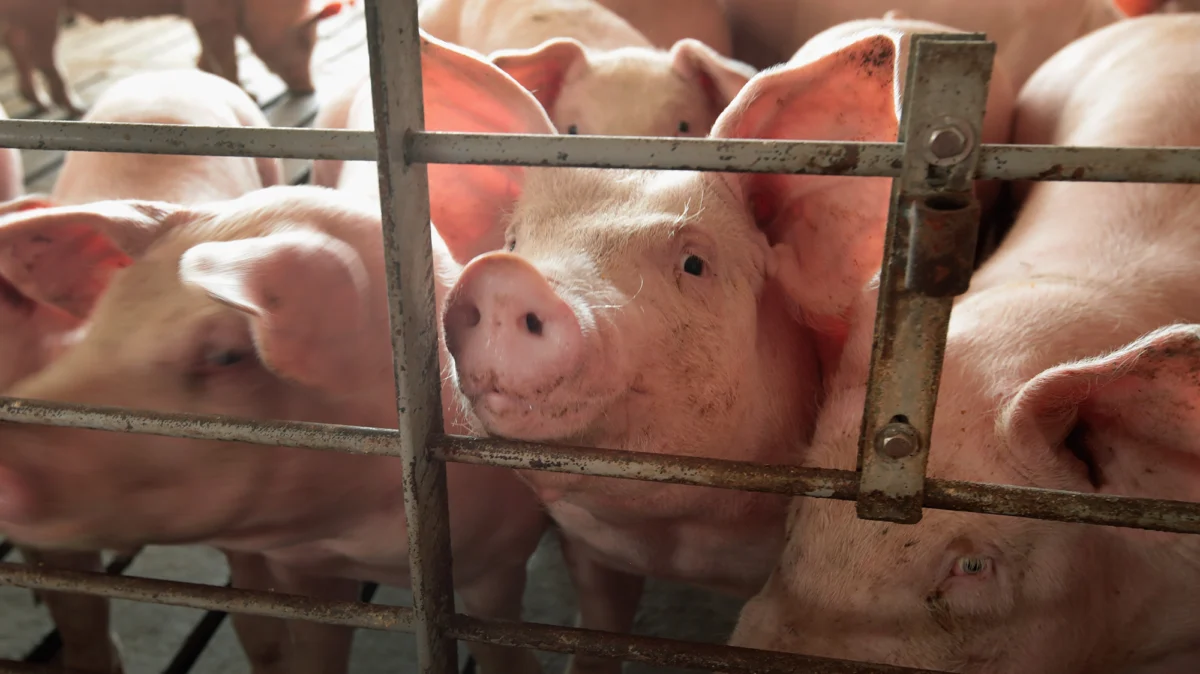
For nearly eight years, the United States agricultural landscape has existed in a state of legislative purgatory. The Farm Bill—a massive, multi-billion-dollar omnibus package that dictates everything from federal nutrition assistance and crop insurance to rural development and climate-smart conservation practices—has been stuck in a cycle of stop-gap measures and one-year extensions.
While the failure to pass a comprehensive, long-term Farm Bill is causing systemic anxiety across the American heartland, a new, volatile schism has emerged between the House and the Senate. At the heart of this conflict is a controversial provision known as the "Save Our Bacon" (SOB) Act. This measure, championed by House Agriculture Committee Chair Rep. G.T. Thompson (R-Penn.), is designed to override state-level animal welfare laws, most notably California’s Proposition 12. As the two chambers of Congress clash, the fight has morphed from a debate over agriculture into a broader "civil war" concerning federal overreach, the rights of states, and the future of industrial livestock production.
The Core Conflict: What is the ‘Save Our Bacon’ Act?
The "Save Our Bacon" Act is, in essence, a preemptive strike against state-level regulations that mandate minimum space requirements for farm animals. Proponents of the measure, largely backed by powerful industrial agricultural lobbying groups, argue that a patchwork of state laws creates an unworkable economic environment for interstate commerce.
Specifically, the SOB Act seeks to neutralize laws like California’s Proposition 12, which bans the sale of pork, chicken, and veal products derived from animals kept in extreme confinement. Under Prop 12, sows must have enough space to turn around, lie down, and stand up—a standard that requires many factory farms to abandon the use of restrictive "gestation crates."
For industrial operations, these crates have been a hallmark of efficiency for decades. However, critics, animal welfare advocates, and a growing segment of independent farmers argue that these practices are inhumane and environmentally hazardous. By forcing a federal override, the SOB Act would effectively strip states of their right to regulate the products sold within their borders, prioritizing the interests of large-scale industrial producers over the democratic will of state voters.
Chronology of a Legislative Impasse
To understand how we reached this point, one must look at the slow degradation of the Farm Bill’s typical five-year legislative cycle.
- 2018: The last comprehensive Farm Bill was passed. It was designed to provide stability through 2023.
- 2023: As the expiration date approached, political polarization—compounded by disputes over nutrition assistance funding and climate mandates—led to the first of several one-year extensions.
- Early 2024: Negotiations for a new five-year bill began in earnest. However, deep divisions emerged regarding the scope of climate-smart agriculture programs.
- Mid-2024: The House Agriculture Committee, led by Rep. Thompson, signaled its intent to include the "Save Our Bacon" Act in its draft of the Farm Bill, positioning it as a remedy for the "economic chaos" caused by state-level mandates.
- Current Status: The Senate Agricultural Committee, led by ranking member Sen. John Boozman, recently released its own draft. Notably, the Senate version excludes the SOB Act, creating a direct conflict with the House. This omission has effectively brought negotiations to a grinding halt, with neither side showing an immediate willingness to fold.
Supporting Data: The Reality of the Pork Industry
The push for the SOB Act is often framed by its supporters as a defense of the small family farmer. However, the data paints a more nuanced picture of an industry in the midst of a fundamental, and often painful, transformation.
According to a recent analysis by the U.S. Department of Agriculture (USDA), approximately 27 percent—or one in four—hog farmers are already compliant with the standards set by California’s Proposition 12. This suggests that the transition toward less restrictive confinement is not a theoretical exercise, but an active market shift.
Furthermore, the industry is far from a monolith. The American Meat Producers Association (AMPA), a group representing farmers who are increasingly frustrated by the dominance of industrial-scale operations, has emerged as a vocal opponent of the SOB Act. For these farmers, the transition to crate-free operations has become a business survival strategy. By investing in higher-welfare facilities, they are able to capture a premium market price, allowing them to remain competitive in an environment where industrial consolidation would otherwise force them out of business.
Official Responses and Stakeholder Perspectives
The rhetoric surrounding the SOB Act has been sharp, with both sides accusing the other of threatening the integrity of American food production.
The Case Against SOB
Molly Armus, who leads animal agricultural policy at the environmental nonprofit Friends of the Earth, views the inclusion of the SOB Act as a betrayal of the Farm Bill’s original purpose. "The Farm Bill should be about supporting sustainable farming, healthy food, and food security," Armus said. "It should not be a way for large industry groups to overturn the will of voters."
Environmental experts also highlight the long-term dangers of such legislation. J.W. Glass, a senior policy specialist at the Center for Biological Diversity, warns that allowing the federal government to override state laws in this manner creates a dangerous precedent. "When you’re doing something that, in a macro sense, erodes states’ abilities to roll back some of the more harmful aspects of massive commercial agricultural operations, how does that impact any law that could impact agriculture?" Glass asked, noting that similar arguments could eventually be used to undermine state-level restrictions on hazardous pesticide use.
The Internal Schism
Perhaps the most telling opposition comes from within the industry itself. Brent Hershey, a Pennsylvania hog farmer, describes the current climate as a "civil war." Hershey, who initially resisted the transition away from gestation crates, changed his business model after years of feedback from consumers and retailers.
"The industry is completely divided on this," Hershey stated. Having spent significant capital to renovate his farm into a crate-free operation, he views the potential passage of the SOB Act as an existential threat to his livelihood. "It would be devastating for producers like me who invested time and money into improving our operations."
The Implications: A Gridlock with Consequences
The standoff over the "Save Our Bacon" Act represents more than just a dispute over pork production; it is a battle for the soul of federal agricultural policy. If the House persists in its demand to include the provision, the Farm Bill may face a level of gridlock that carries over into the next legislative session.
Public Health and Environmental Impact
The implications for public health are significant. Factory farms that rely on extreme confinement typically consolidate manure in massive lagoons. These facilities are frequently associated with water and air pollution that disproportionately affects rural communities. By protecting the status quo, the SOB Act risks codifying the environmental externalities of industrial agriculture into federal law, making it increasingly difficult for local communities to protect their own natural resources.
The Political Calculus
In the Senate, the SOB Act is currently viewed as a nonstarter. Sen. Boozman’s decision to exclude the measure from the Senate draft is widely seen as an acknowledgment that the political appetite for such a controversial provision does not exist in the upper chamber. Sara Amundson, president of the Humane World Action Fund, believes the Senate’s stance is the result of sustained public pressure. "That is why Boozman did not put this in his bill," Amundson said. "He knew it. And that’s why it’s critical to keep up the noise on it."
The Road Ahead
As the deadline for a new Farm Bill looms, the path forward remains murky. If the House refuses to move, the federal government may be forced to pass yet another short-term extension. Such a result would satisfy neither the proponents of industrial reform nor those seeking to protect the current, consolidated status quo.
Ultimately, the fight over the "Save Our Bacon" Act underscores a critical shift in the American agricultural paradigm. Voters and consumers are increasingly demanding transparency and higher welfare standards, and the legislative system is struggling to reconcile these demands with the interests of a powerful, entrenched industrial sector. Whether the Farm Bill ultimately evolves to reflect these new realities or remains a tool for protecting the status quo will depend on which side of the "civil war" prevails in the halls of Congress.

 Azzam Bilal Chamdy
 Ali Ikhwan