

 Nana Wu

 Dwi Wanna
 Suro Senen

 Evan Lee Salim
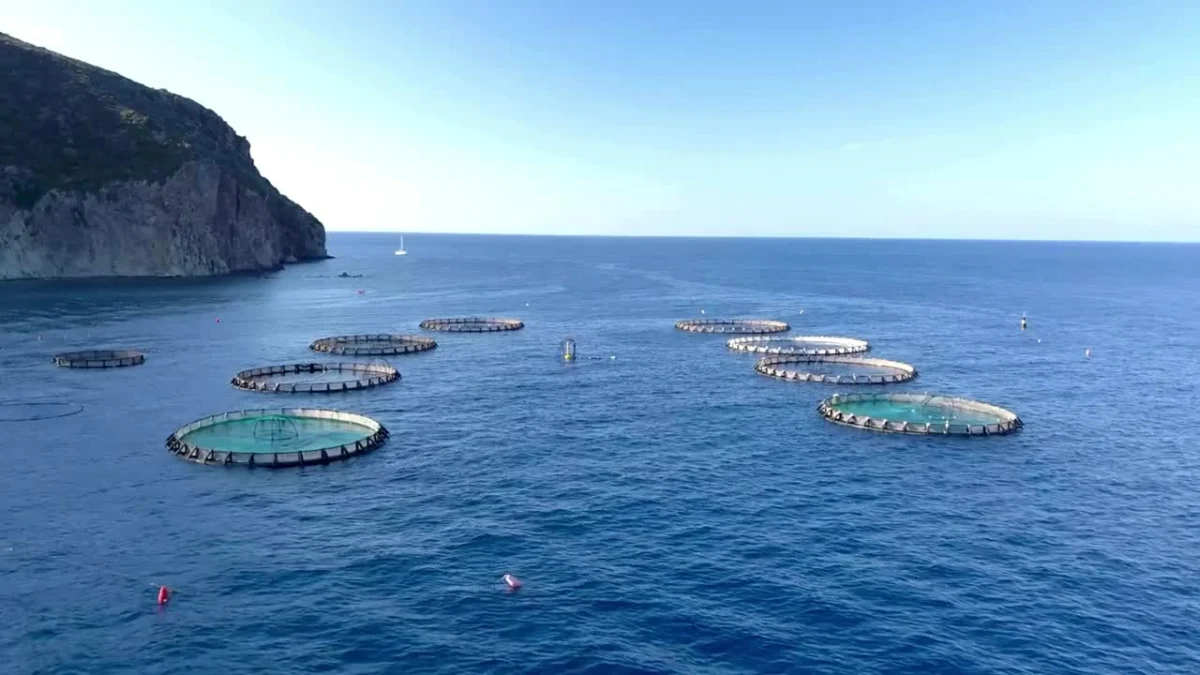
Despite boasting a vast coastline, world-class research institutions, and a sophisticated agrifoodtech ecosystem, the United States remains a paradox in the global aquaculture landscape. While the U.S. continues to dominate international investment in broader agrifoodtech, its domestic aquaculture sector—often described as a sleeping giant—remains fragmented, undercapitalized, and perpetually stuck in a cycle of regulatory stagnation.
A groundbreaking new report from the investment firm Hatch Blue, Unlocking Investment in U.S. Aquaculture, suggests that the hurdles preventing the industry from reaching its potential are not merely a matter of missing dollars. Instead, the sector is trapped in a complex web of "chicken-and-egg" dynamics, regulatory gridlock, and a fundamental misalignment between the nature of capital and the biological realities of fish farming.
The Main Facts: An Industry at a Crossroads
At its core, the U.S. aquaculture sector possesses all the fundamental "ingredients" for success: a massive internal market, technological innovation, and a growing consumer demand for sustainable, locally sourced protein. Yet, according to Hatch Blue, the sector "remains relatively small and attracts limited investment" compared to its potential.
The report dismantles the popular narrative that a simple injection of venture capital would solve the industry’s woes. Instead, the primary barrier is the "difficulty of presenting investors with opportunities that can deliver the required returns within an acceptable time frame while navigating a complex regulatory environment."
For investors, the math is simple: they seek large addressable markets, rapid scalability, and manageable risk. For aquaculture producers, the reality is often the opposite: long, capital-intensive development phases, significant biological risk, and a regulatory process that can stretch for years—or even decades—before a single fish is harvested.
Chronology: The "Murky Waters" of Recent Years
The current state of the industry is heavily colored by a recent string of high-profile failures. The last decade has seen several major aquaculture projects—ranging from land-based recirculating aquaculture systems (RAS) to offshore ventures—shutter their doors after failing to reach commercial viability.
A Timeline of Volatility
- The Boom Years (2015–2019): A wave of optimism swept through the sector as investors poured money into "disruptive" land-based aquaculture startups, betting on the potential to produce salmon and other high-value species closer to urban centers.
- The Correction (2020–2023): As the initial hype faded, several flagship companies encountered "biological, technical, and financial headwinds." Bankruptcy filings and project cancellations, such as the well-publicized struggles of entities like American Unagi, began to haunt the sector’s reputation.
- The Current Stagnation (2024–2025): The sector is now caught in a "murky water" phase. Policy experts note that these high-profile failures have created a chilling effect, making it exponentially harder to build public acceptance and political will for new, large-scale projects.
This cyclical instability has created a "trust deficit" with the investment community. When a major project fails, it doesn’t just lose money; it erodes the regulatory goodwill required to streamline permitting for the next generation of innovators.
Supporting Data: Why Capital Doesn’t Always Flow
While the U.S. leads the world in total agrifoodtech funding, aquaculture receives only a marginal fraction of that capital. To understand why, one must look at the structural mismatch between the business models.
The Capital-Tech Misalignment
Hatch Blue’s analysis highlights a critical distinction between "enabling technologies" and "production assets":
- Software and Biotech: Platforms that provide monitoring, data analytics, or genetic improvements for fish are viewed as "venture-ready." They can scale rapidly, have low infrastructure costs, and often serve broader markets beyond aquaculture.
- Production Assets: Physical farms—the actual act of raising fish—are capital-intensive. They require significant upfront investment in hardware, water treatment systems, and site development.
The data shows that traditional venture capital (VC) is inherently "impatient." VC funds typically operate on a 7-to-10-year cycle, expecting exponential growth. However, building an offshore finfish farm or a large-scale land-based facility often takes longer to reach profitability than a standard VC fund allows. This "messy middle"—the gap between a successful pilot project and full-scale commercial operation—is where most U.S. aquaculture projects currently fail.
Official Responses and Regulatory Gridlock
Perhaps the most significant finding in the Hatch Blue report is the persistent indictment of the U.S. regulatory framework. There is no singular, clear path for offshore aquaculture. Currently, developers are forced to navigate a patchwork of state-by-state permitting requirements, a process that is as expensive as it is unpredictable.
The Legislative Impasse
The industry has long lobbied for federal legislation that would designate a "lead agency" to oversee permitting, providing a "one-stop-shop" approach. However, these efforts remain firmly in "legislative gridlock." In Congress, the debate over environmental oversight, indigenous fishing rights, and coastal management has prevented any comprehensive bill from passing.
According to the report, this "lack of clear regulatory paths" was the most consistently cited barrier to development. Investors are not necessarily afraid of strict regulations, but they are terrified of uncertainty. When a project cannot predict whether it will receive approval in three years or ten, the financial risk becomes unquantifiable, and the capital simply flows elsewhere.
Implications: A Path Forward
If the U.S. is to unlock its aquaculture potential, the industry and its financiers must change their strategy. The report suggests a transition toward a "structured financing path" that acknowledges the different risks at each stage of a company’s lifecycle.
1. The Capital Ladder
- Early Stage: Rely on non-dilutive, public-sector grants and catalytic capital. This de-risks the technology before private capital enters.
- The "Messy Middle": Utilize loan guarantees and concessional debt. These tools help bridge the gap between pilot-scale demonstration and commercial feasibility.
- Growth Stage: Only once the asset has a proven operating history and a predictable revenue stream should commercial debt and growth equity be introduced.
2. Matching Expectations to Reality
The report concludes that "the objective is not to subsidize every stage, but to use more patient or risk-tolerant capital where it can help a business reach a milestone." Investors must stop viewing aquaculture as a monolithic sector. A seaweed farm has a fundamentally different risk profile than a high-tech RAS salmon facility. Tailoring the investment instrument to the biological and operational reality of the specific sub-sector is essential for long-term viability.
3. The Need for "Social License"
Finally, the industry must address its public reputation. The "murky waters" of failed projects have made the general public and local coastal communities skeptical. Building a sustainable industry requires more than just capital; it requires building a "social license to operate." Transparent communication about environmental impacts, a commitment to local job creation, and a rigorous adherence to sustainability standards are not just PR efforts—they are economic imperatives.
Conclusion
The U.S. aquaculture sector is currently a victim of its own potential. It has the technology to feed the world and the coastline to support massive production, yet it remains hindered by a mismatch of capital and a regulatory environment that prioritizes process over progress.
The Hatch Blue report serves as a wake-up call: until the industry can align its financial requirements with the realities of biological infrastructure and until policymakers can provide a clear, unified regulatory roadmap, the U.S. will continue to lag behind its global peers. The "ingredients" are all there, but the recipe for success requires a fundamental shift in how the nation views, regulates, and funds the future of its food.


 Pevita Pearce