 Nana Wu
 Dwi Wanna
 Suro Senen

 Evan Lee Salim
 Layla Zulfa
By [Your Publication Name] Staff Writers
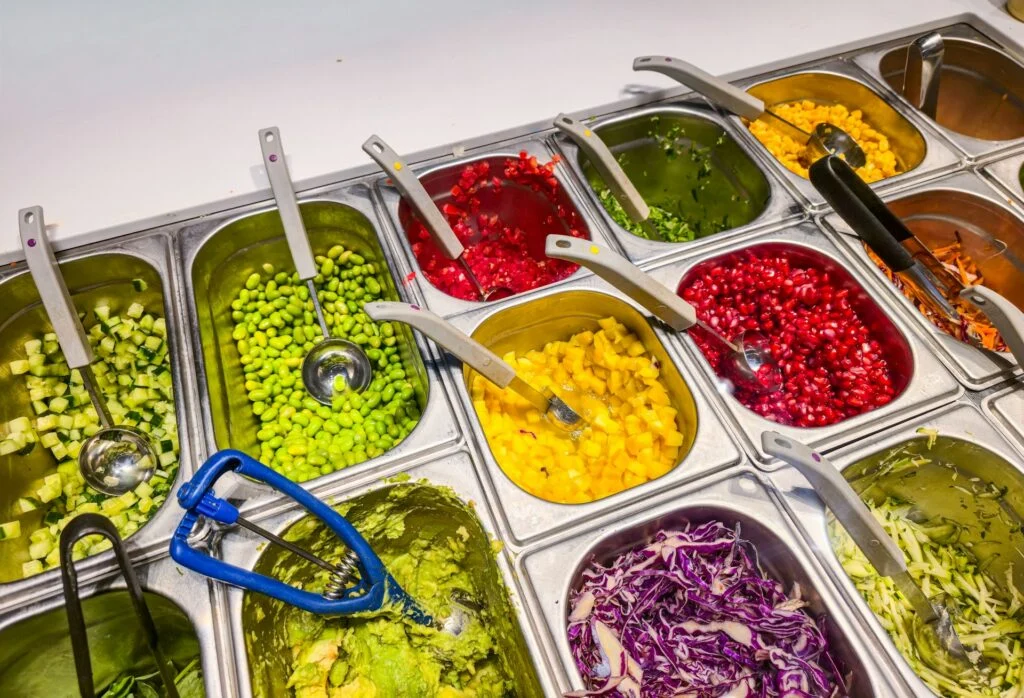
The modern American dining landscape is currently dominated by a singular silhouette: the customizable bowl. Whether it is filled with Mediterranean grains, deconstructed sushi, Indian curries, or Mexican proteins, the "build-your-own" (BYO) format has become the default architecture of the fast-casual industry. However, a growing chorus of skeptics—ranging from disillusioned investors to fatigued analysts—has begun to sound the alarm. The prevailing narrative suggests that the category has reached its "ceiling," citing a landscape crowded with look-alike concepts and a perceived cooling of consumer interest.
Yet, according to industry veterans and recent market data, this diagnosis may be fundamentally flawed. Somia Farid Silber, CEO of Edible Brands, argues that the industry is not facing a saturation problem, but rather a fragmentation challenge. As the sector matures, the distinction between a "successful restaurant concept" and a "scalable restaurant business" is becoming the primary driver of survival.
Main Facts: The $77 Billion Market Reality
Despite the whispers of a "bowl bubble," the financial data paints a picture of a robust, expanding sector. According to the latest Top 500 report from Technomic, fast-casual chain sales surged by approximately 6 percent in 2025, reaching a staggering $77 billion across the top 500 restaurant chains.
Key market indicators include:
- Leading Segments: Mediterranean and sandwich-based brands are currently outpacing other sub-sectors within the fast-casual space.
- Consumer Demand: Demand for customizable, high-quality, and rapid-service food remains at an all-time high, even as inflation pressures discretionary spending.
- The Barrier to Entry: The BYO format remains attractive to new operators due to its relatively low barrier to entry compared to full-service dining, leading to a proliferation of independent and regional players.
- The Scalability Gap: While thousands of "mom-and-pop" or small-chain bowl concepts exist, only a fraction possess the infrastructure (tech, supply chain, and training) to scale beyond their local markets.
The central tension in the industry today is not a lack of hungry customers, but a surplus of small-scale operators competing for the same market share without the operational discipline required to achieve institutional scale.
Chronology: From Innovation to Fragmentation
To understand the current state of the fast-casual bowl, one must look at the evolution of the format over the last two decades.
The Early 2000s: The Chipotle Blueprint
The rise of the "assembly line" format was pioneered by brands like Chipotle and Panera Bread. They proved that consumers were willing to pay a premium for "better-than-fast-food" quality if it was delivered with speed and a degree of personalization. This era established the foundational economics of the category.
2015–2022: The Explosion of Variety
Following the success of Mexican-themed BYO, entrepreneurs began applying the assembly-line logic to every global cuisine. This period saw the meteoric rise of Sweetgreen (salads), CAVA (Mediterranean), and Poke Bar concepts. Investors flooded the space with venture capital, betting on the "next Chipotle."
2023–2024: The Quality and Consistency Crisis
As the market became crowded, the limits of the model began to show. In 2024, the industry faced a PR reckoning regarding portion sizes. A notable Wells Fargo analysis of Chipotle found significant weight variations in burrito bowls across different locations. This highlighted a systemic issue: as concepts grow, maintaining consistency becomes exponentially harder.
2025 and Beyond: The Shift to Fragmentation
The current phase is defined by "fragmentation." The market is filled with "copycat" concepts that offer great food but lack the back-end systems to survive a tightening economy. The industry is now entering a period of consolidation, where the "strongest" operating systems will begin to absorb the "best" food concepts.
Supporting Data: The Economics of the "Slop Bowl"
The primary challenge facing the BYO sector is the management of complexity. In a professional kitchen, a chef controls the flavor profile. In a fast-casual bowl shop, the customer is the "chef," which leads to what industry insiders call the "slop bowl" phenomenon.
The Customization Trap
When a guest adds an excessive number of toppings, sauces, and dips, the individual ingredients lose their purpose, and the brand’s culinary identity is erased. For the operator, every additional ingredient on the line represents:
- Inventory Complexity: More items to purchase, store, and track.
- Labor Pressure: Increased prep time and training requirements.
- Waste Potential: Higher likelihood of spoilage for niche ingredients.
The Consistency Gap
The 2024 Wells Fargo study, which weighed 75 burrito bowls, was a watershed moment for the industry. It revealed that even a titan like Chipotle struggled with consistency, with the company later acknowledging that 10% of its restaurants required "additional coaching" on portions. For smaller, less-resourced chains, this inconsistency is often the death knell for customer loyalty.
Profitability vs. Sales
While sales growth is often the metric used to court investors, Somia Farid Silber emphasizes that "sales do not build the next store; profitability does." In an era of rising food and labor costs, operators who attempt to protect margins by quietly reducing portion sizes often see a "value erosion" that eventually drives customers away.
Official Responses: Insights from Industry Leadership
Somia Farid Silber, CEO of Edible Brands (which oversees Roti Modern Mediterranean), offers a counter-perspective to the "saturation" narrative. Her leadership focuses on bridging the gap between a "good idea" and a "scalable business."
"What appears to be saturation may be better understood as fragmentation," Silber notes. "In a saturated category, demand has largely been claimed. A fragmented category looks different because healthy demand is spread across independents and regional chains that have yet to achieve meaningful scale."
Silber argues that the next phase of the category will be defined by Operational Discipline. According to her strategy at Edible Brands, the path forward involves:
- Menu Architecture: Designing menus that guide guests toward combinations that make sense, protecting both the culinary brand and the restaurant’s margins.
- Purchasing Power: Using scale to concentrate purchasing volume and simplify inventory, which is nearly impossible for single-unit operators.
- Technology Integration: Leveraging digital transformation to handle the complexities of e-commerce and loyalty programs.
"The concepts positioned to gain ground will preserve what customers value about the format—customization, convenience, quality, and value—while maintaining the operational discipline required to replicate the experience across a larger system," Silber asserts.
Implications: The Future of the Fast-Casual Landscape
The shift from fragmentation to consolidation has several major implications for the future of dining, investors, and consumers.
1. A Wave of Consolidation
Expect to see larger "operating platforms" (like Edible Brands or Inspire Brands) acquire smaller, successful regional concepts. These "concept-only" brands will benefit from the parent company’s existing infrastructure in real estate, supply chain, and technology, allowing them to scale much faster than they could independently.
2. The Death of the "Infinite Topping" Model
To preserve margins and culinary integrity, successful brands will likely move toward a "guided customization" model. This means fewer, higher-quality ingredients and "signature" builds that encourage customers to trust the brand’s expertise rather than creating their own "slop bowls."
3. Focus on "Four-Wall" Economics
For franchisees and developers, the "hype" of a new brand will take a backseat to "four-wall economics"—the actual profitability of a single location after all costs are considered. Investors are becoming more cautious, looking for concepts that can demonstrate a healthy return at the restaurant level before committing to 50-unit development deals.
4. Technology as a Differentiator
As the barrier to entry remains low, the barrier to success will rise. Brands that invest in proprietary kitchen display systems (KDS), automated inventory management, and sophisticated labor-scheduling AI will be the ones that survive the fragmentation.
Conclusion
The build-your-own bowl is not a fad that has run its course; it is a service model that has reached a level of maturity where "being new" is no longer enough. The $77 billion in sales proves that the American consumer’s appetite for customizable, high-quality food is not waning. However, the era of the "casual operator" is ending.
The next phase of fast-casual dominance will belong to those who can bridge the gap between a compelling culinary concept and a disciplined, repeatable business system. In the words of Somia Farid Silber, "Fast casual has no shortage of ideas. Its next opportunity lies in building the operating systems that allow the strongest concepts to scale." For the industry, the "ceiling" is nowhere in sight; the floor is simply being rebuilt.



 Pevita Pearce