
 Ammar Sabilarrohman
 Laily UPN

 Evan Lee Salim
 Jia Lissa
 Layla Zulfa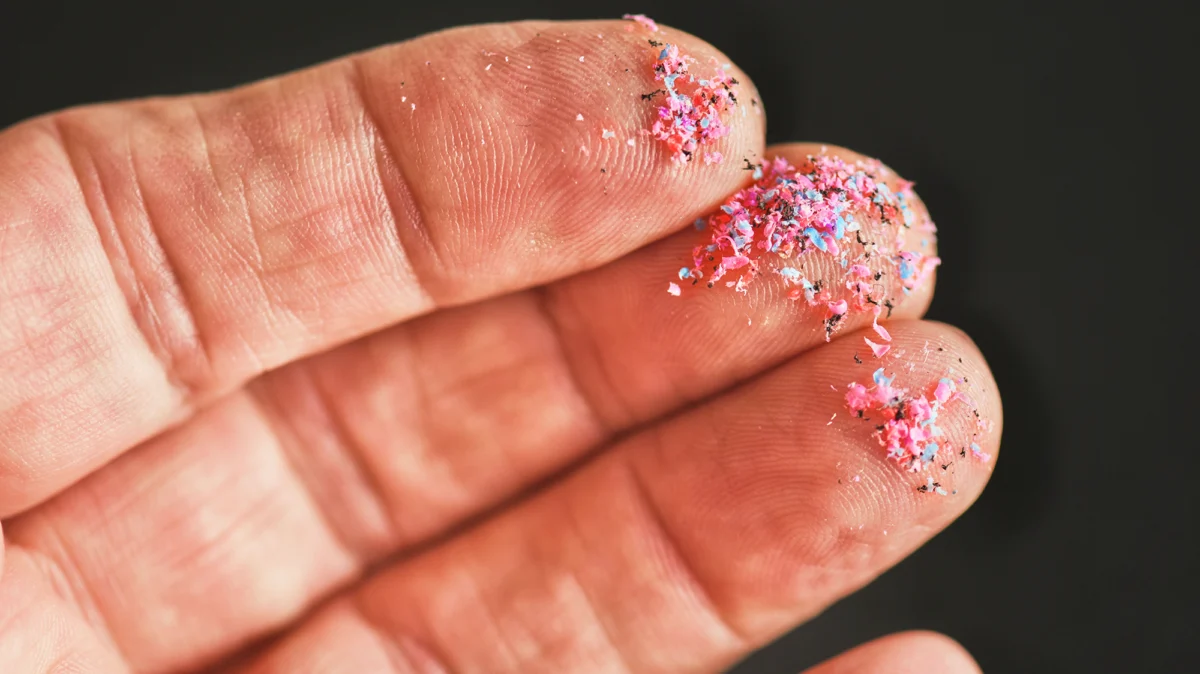
For more than a decade, the narrative surrounding microplastics has been one of pervasive environmental degradation. We have seen the haunting images of plastic-choked oceans, soil riddled with synthetic debris, and reports of airborne particles settling in the most remote corners of the globe. More recently, the focus of this crisis has shifted from the ecosystem to the individual, with peer-reviewed studies identifying microplastics in human blood, lungs, and tissue.
Yet, despite the alarm, a fundamental question remains unanswered: How much plastic are we actually consuming, and what is the biological cost of this silent, internal exposure?
Cassandra Rauert, an environmental chemist at the University of Queensland, is one of the few researchers working to cut through the noise. Her work suggests that the scientific community may have been looking at the problem through a distorted lens. By revealing that current diagnostic techniques are prone to massive laboratory contamination and that common blood lipids can trigger "false positives" for plastic, Rauert has challenged the foundational data of the entire field.
The Genesis of a Scientific Correction: A Chronology of Discovery
The scientific journey to understand human microplastic ingestion has been fraught with methodological hurdles.
- The Early Years (2010s): Research primarily focused on marine environments. Scientists documented the ingestion of plastic by fish and seabirds, establishing that microplastics were entering the food chain.
- The Human Pivot (2020–2022): As analytical instruments became more sensitive, researchers began testing human samples. Initial findings were startling, claiming high concentrations of polymers in human blood and organs.
- The "Credit Card" Myth: During this period, a viral claim circulated that the average human consumes a "credit card’s worth" of plastic every week. This figure, while effective for public awareness, lacked rigorous, peer-reviewed backing.
- The 2024 Breakthrough: Cassandra Rauert published a landmark paper in Environmental Science & Technology, which analyzed 18 previous studies on microplastics in human blood. She discovered that many of these studies failed to account for natural human blood lipids, which mimic the chemical signature of polyethylene—the most common plastic on Earth.
- The Lab Overhaul (2025–Present): Recognizing that traditional laboratory environments were themselves "plastic-polluted," Rauert led an effort to build a specialized, stainless-steel-based clean room designed to isolate samples from the pervasive airborne fibers found in modern architecture.
The Analytical Dilemma: Why Current Data Is Flawed
The central issue, according to Rauert, is that we are attempting to measure a modern, man-made contaminant using tools and environments that are fundamentally incompatible with a plastic-free reality.
The Problem of False Positives
Analytical instruments, such as those used in infrared spectroscopy, identify plastics based on their chemical "fingerprint." However, human blood contains fatty acids and lipids that share identical building blocks with polymers like polyethylene. If a researcher does not perform a specific, rigorous filtration process to isolate these lipids, the machine will misidentify natural body fat as plastic. Rauert’s meta-analysis of 18 studies revealed that this error was widespread, calling into question the previously reported "high levels" of human microplastic contamination.
The Ubiquity of Lab Contamination
Beyond the machine, the environment itself is a source of error. Standard chemistry labs are built using plastic piping, plastic petri dishes, and synthetic sealants. In an environment where researchers are looking for particles as small as a few micrometers, the "background noise" of the room—shedding synthetic fibers from clothing, carpet, or air conditioning vents—can infiltrate a sample.
Rauert’s solution was extreme: "We worked with an architect and built the lab from scratch," she notes. The team tested over 30 construction materials to find components free of plastics or phthalates, eventually opting for a minimalist, stainless-steel, positive-pressure environment. The result? Plastic concentrations in their new lab are 100 times lower than in their previous facility.
The Home Front: Where Do These Particles Come From?
While scientists work to refine their instruments, the public remains concerned about daily exposure. Rauert emphasizes that while we lack the "final" word on toxicity, the sources of exposure are increasingly clear.
Indoor Environments and Dust
The home is a primary reservoir for microplastics. Synthetic textiles, such as polyester or nylon curtains and upholstery, act as "fiber factories." When these items degrade or are processed through a clothes dryer, they release vast quantities of airborne microfibers.
Dietary Vectors
Kitchen habits are a major contributor to ingestion. Plastic chopping boards, when scored by a knife, deposit thousands of microscopic plastic shards into the food being prepared. Similarly, heating food in plastic containers—a common practice in modern kitchens—facilitates the migration of additives and particles into the meal.
The Tire Factor
Recent research on residential balconies and urban air quality has highlighted the role of tire wear. As vehicles traverse roads, tires—which contain complex synthetic polymers—shed particles that enter the atmosphere and eventually settle into the dust within our homes.
Implications: The Missing Link in Toxicology
While the public often conflates "microplastics" with the chemicals found within them (such as phthalates or bisphenols), they are, scientifically, two different issues.
The Chemical vs. The Particle
We have known for decades that chemicals added to plastic, such as endocrine-disrupting phthalates, have negative health outcomes, including impacts on fertility and metabolic health. However, the physical particle—the shard of plastic itself—is a different entity.
"I don’t think we’ve got really good evidence at all for what effects [microplastics] might be having," Rauert admits. The key question is bioavailability: Can these particles cross the gut-blood barrier? Current evidence suggests that the majority of particles we ingest are too large to cross that barrier and are simply excreted. However, we have almost zero data on the "smallest of the small"—the nanoplastics that may be small enough to pass into the bloodstream and lodge in tissues.
The Failure of Representative Models
A major impediment to progress has been the reliance on "perfect" lab-grade polystyrene spheres in toxicology studies. These spherical, uniform particles do not exist in the real world. In reality, humans are exposed to jagged, weathered, irregular shards and fibers. Using uniform spheres as a proxy for environmental pollution has likely led to inaccurate toxicological models.
Official Responses and the Path Forward
The scientific community is currently undergoing a painful but necessary period of "de-hyping." The debunking of the "credit card per week" statistic is a sign of a maturing field that is moving from alarmism to clinical rigor.
However, critics of the status quo argue that waiting for perfect data is a dangerous strategy. Industry groups have historically used the "uncertainty of science" as a shield to delay regulation. Rauert acknowledges this risk but pushes for a pragmatic approach: "We know that plastic is horrendous in terms of pollution, and it just keeps building up. We need to stop using so much single-use plastic."
Recommendations for Public Safety:
- Modify Laundry Habits: Avoid using dryers for synthetic fabrics when possible, or use lint-catching filters to prevent the release of microfibers into the air and water.
- Upgrade Kitchenware: Transition away from plastic chopping boards and utensils toward wood, bamboo, or stainless steel.
- Heat Management: Never heat food in plastic containers. If microwave use is necessary, transfer food to glass or ceramic vessels.
- Domestic Hygiene: Increase the frequency of vacuuming to reduce the accumulation of synthetic dust particles in the home environment.
Conclusion
The story of microplastics is one of a transition from panic to precision. While it is clear that the human body is interacting with synthetic materials on an unprecedented scale, the "how" and "why" of that interaction are still in the early stages of being understood. By acknowledging the flaws in previous research and committing to the development of rigorous, contamination-free methodologies, scientists like Cassandra Rauert are finally setting the stage to answer the most important question: Is our reliance on plastic fundamentally altering human biology, or is it merely a ubiquitous, albeit messy, background noise of modern existence? Until that is known, the precautionary principle—reducing exposure where possible—remains the only logical course of action.


 Reynand Wu