

 Nana Wu

 Dwi Wanna

 Suro Senen

 Evan Lee Salim

 Azzam Bilal Chamdy
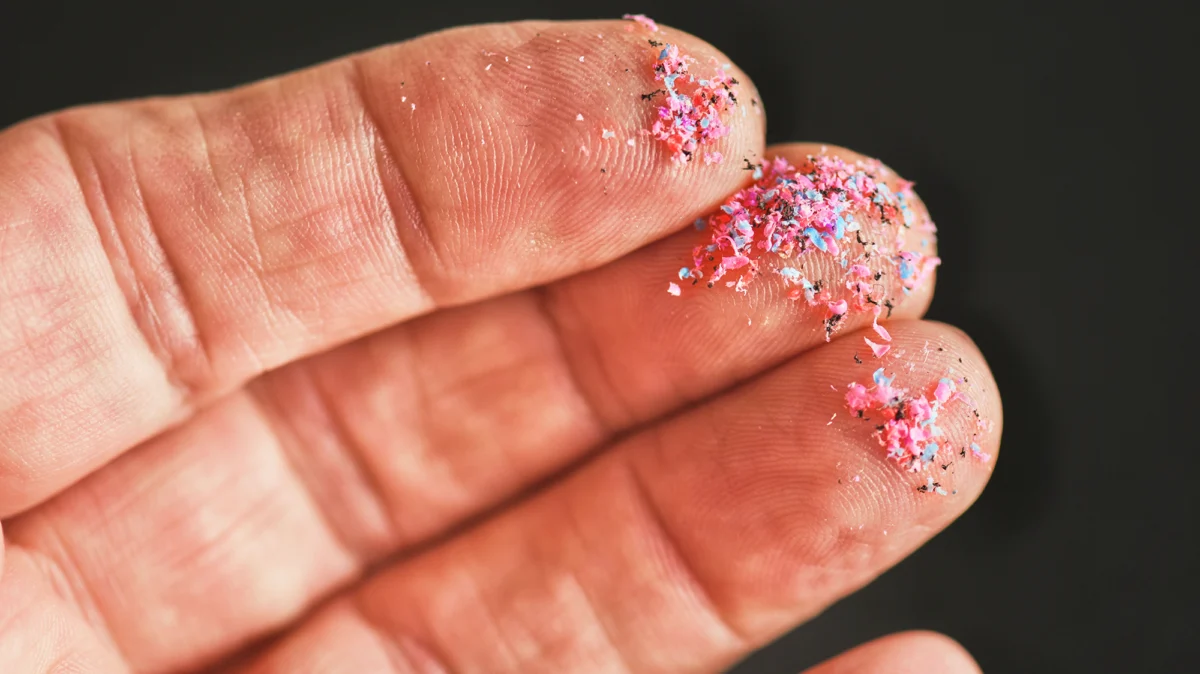
For over a decade, scientists have tracked the migration of microplastics—tiny particles often smaller than a human hair—into our oceans, our soils, our drinking water, and even the air we inhale. As our global dependence on synthetic polymers has surged, so too has the reach of these materials. Recently, the narrative has shifted from environmental concern to personal health, with peer-reviewed studies identifying microplastic presence within human blood and tissue.
However, the scientific community is currently grappling with a significant reality: much of what we think we know about the "plastic burden" inside our bodies may be built on flawed data. As researchers refine their methodologies, a clearer, albeit more complex, picture of our exposure to microplastics is beginning to emerge.
The Problem of Precision: Why Measurement Is Failing
At the forefront of this inquiry is Cassandra Rauert, an environmental chemist at the University of Queensland. Her research has recently cast a spotlight on the inherent vulnerabilities of modern detection methods. In a field defined by its novelty, scientists have often repurposed analytical instruments intended for other uses, leading to a phenomenon of "false positives."
Rauert’s work suggests that many previous studies, which purportedly found alarming levels of polyethylene in human blood, were actually misinterpreting biological markers. Specifically, lipids (fats) in human blood share a similar chemical building block structure to polyethylene. When analyzed by standard equipment without rigorous purification, these fats can register as plastic, leading to an overestimation of the contamination levels in the human body.
"We were putting the study out there to say that you need to think about the data that’s coming out of your instrument," Rauert explains. "To our knowledge, these previous studies didn’t know about this issue and haven’t considered it, and future studies really should."
A Chronology of Discovery and Skepticism
The evolution of microplastic research has moved from broad environmental observation to the intimate, biological scale:
- 2010s (The Discovery Phase): Researchers confirm that microplastics are ubiquitous in marine environments and the global food chain.
- 2020-2022 (The Human Turn): A series of studies report the discovery of microplastics in human blood, placentas, and lung tissue. Media outlets worldwide seize upon the narrative that humans are ingesting a "credit card’s worth of plastic per week."
- 2023-2024 (The Calibration Phase): Environmental chemists, including Rauert, begin to challenge the methodology of these findings. They identify that the ubiquity of plastic in laboratory environments—from pipette tips to air filtration—is causing cross-contamination.
- 2025-2026 (The Current Frontier): Research centers now move toward "clean-room" methodologies, abandoning traditional plastics in lab equipment in favor of stainless steel and glass to ensure that the data collected is actually human-sourced rather than lab-sourced.
The Architecture of Accuracy: Rebuilding the Lab
To address the contamination crisis, Rauert and her team took the extreme step of designing a laboratory from the ground up. The process revealed just how difficult it is to escape the plastic age.
"We tested about 30 different construction materials trying to find some that didn’t contain plastics, but also didn’t contain plastic additives such as phthalates," says Rauert. "We couldn’t find any."
The resulting facility, built largely of stainless steel, utilizes positive-pressure rooms to ensure that air, which is saturated with microscopic synthetic fibers, is pushed out rather than drawn in. By eliminating wood, cardboard, and synthetic sealants, the researchers were able to reduce background plastic contamination by a factor of 100 compared to a standard laboratory. This effort highlights a grim reality: we live in an environment so saturated with synthetics that one must build a bunker to accurately study the material.
Understanding Our Daily Exposure
While the "credit card per week" claim has been widely debunked as a hyperbolic misinterpretation of data, the reality of human exposure remains significant. Plastics do not simply exist; they migrate.
Sources of Indoor Contamination
- Household Dust: A primary repository for microplastics. Simple, frequent vacuuming is noted as one of the most effective, albeit modest, ways to lower exposure.
- Synthetic Textiles: Clothes made of polyester and nylon shed thousands of fibers during the drying process. Rauert advises hanging these items to dry to mitigate the release of micro-fibers into the air.
- Kitchenware: Plastic chopping boards and utensils are significant sources of mechanical shedding. As these items are scored by knives or exposed to heat, microscopic fragments are transferred directly into food.
- Tire Wear: Research into residential balconies suggests that synthetic polymers from vehicle tires infiltrate indoor dust, though the precise mechanism of this exposure is still being studied.
The Toxicology Gap: What Are These Particles Doing?
The most pressing question remains: what does the presence of these particles mean for human health? Currently, we have extensive data on the chemicals added to plastics—such as phthalates (endocrine disruptors) and bisphenols (linked to metabolic issues like Type 2 diabetes)—but we lack a firm understanding of the physical impact of the plastic particles themselves.
Toxicology studies have historically used uniform, lab-grade polystyrene spheres as a proxy for microplastics. However, this is fundamentally unrepresentative of real-world exposure. In nature, plastics exist as irregular shards and jagged fragments. Using perfect spheres in a lab setting does not replicate how a jagged piece of plastic might interact with the lining of the gut or the respiratory system.
Furthermore, there is a fundamental biological barrier: size. Most plastic particles are too large to cross the intestinal wall into the bloodstream. They are processed and excreted. The danger, theoretically, lies in the "nano-scale" particles—those so small they might bypass the body’s natural filtration systems. Currently, we lack the technology to accurately track how many of these particles are excreted versus how many might be accumulating in organs.
Implications and the Path Forward
The scientific community is now at a crossroads. While the panic surrounding current statistics may be premature, the fundamental concern remains valid: we are introducing massive amounts of synthetic material into the environment, and it is inevitably making its way into our bodies.
The Corporate and Regulatory Nexus
Corporations have historically used the "scientific uncertainty" argument to delay regulation, claiming that because the health risks are not yet fully proven, restrictive policy is premature. Rauert pushes back against this logic, noting that even if we are unsure about the long-term physical impact of a microplastic particle, we already possess sufficient evidence regarding the toxicity of the chemical additives—the phthalates and bisphenols—leaching from those very same products.
"We need to stop using so much plastic and so much single-use plastic," Rauert asserts. "I know it is easy to say we don’t have enough information yet, but we do know about [the health risks from] these chemicals that are in all the plastics that your food is wrapped in."
Conclusion: A Call for Transparency and Reduction
As we move toward a more sophisticated understanding of microplastics, the focus must shift from sensationalism to rigorous, contamination-free science. We need longitudinal studies that account for the reality of human exposure, not just the convenience of laboratory standards.
Until such evidence is available, the precautionary principle—reducing exposure to materials that are known to be persistent and chemically complex—remains the most rational approach. We may not yet be eating a credit card’s worth of plastic every week, but the fact that we have to build dedicated clean-rooms to prove it is a sobering indictment of our current material culture. The task for the next decade is clear: we must refine our detection, identify the true health risks, and drastically rethink our reliance on the synthetic materials that have come to define our modern existence.


 Asep Darmawan
 Layla Zulfa

