

 Nana Wu

 Dwi Wanna

 Suro Senen

 Evan Lee Salim

 Asro
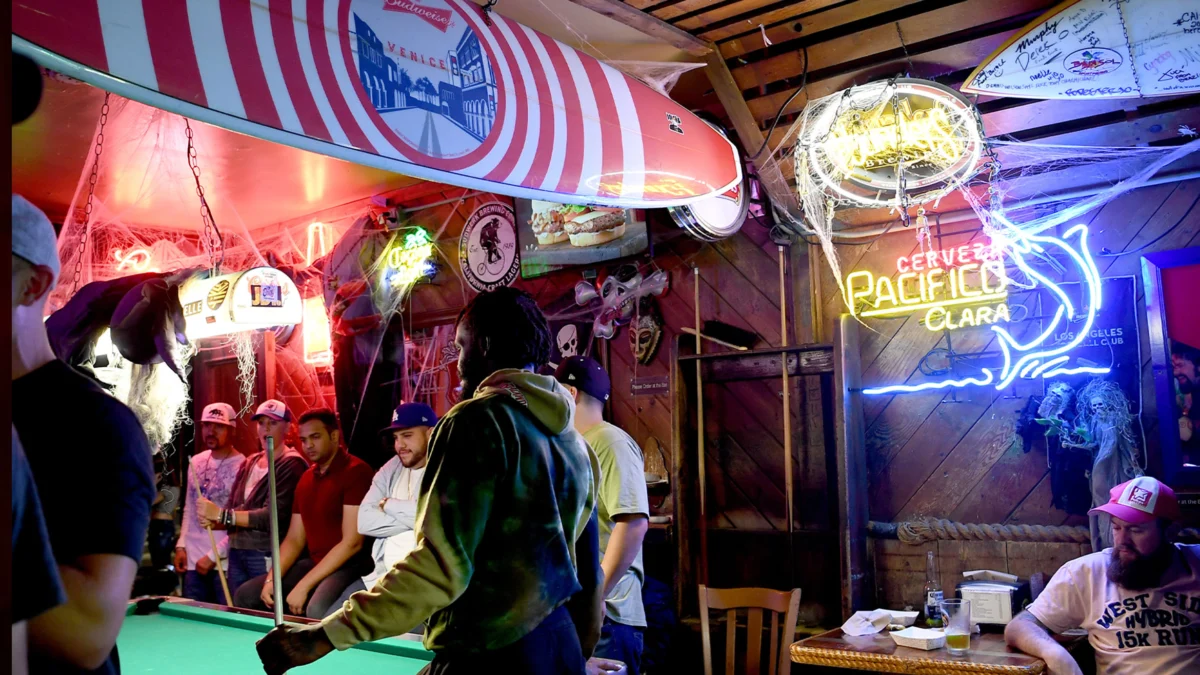
In the sprawling, often impersonal megalopolis of Los Angeles and its surrounding coastal counties, the landscape is shifting at a dizzying pace. The artistic and financial center of Southern California—once the undisputed capital of global entertainment—is grappling with a profound crisis of identity. The exodus of film and television production, which began in the late 1990s, has accelerated, leaving vast, hollowed-out studio lots in its wake. Simultaneously, the region faces a mounting existential threat: wildfires have increased 30-fold over the last four decades, and the once-touted "perfect Mediterranean weather" has succumbed to a humid, unpredictable volatility.
Yet, amidst this erosion of local character and the rapid gentrification that has turned once-sleepy beach towns into gated enclaves of immense wealth, a resilient relic survives. The Southern California Beach Dive Bar remains the region’s last authentic sanctuary—a place where the salt air meets the scent of stale beer and history.
The Anatomy of a Coastal Institution
What defines a true SoCal Beach Dive Bar? It is rarely the view itself, though the Pacific Ocean is never far. Due to the astronomical escalation of coastal land values, these establishments are frequently found a few minutes’ walk from the shoreline rather than directly on the sand. They are "briny" in spirit: places for those who seek to remain in the orbit of the ocean, even if they haven’t waded into the surf in years.
The aesthetic is almost always consistent: a cocktail of tiki-adjacent kitsch and nautical nostalgia. Many feature interiors that evoke the belly of a weathered wooden ship, adorned with maritime relics, flickering neon beer signs, and the comforting, sticky patina of decades of service. These are not curated "concepts"; they are living rooms for the community, often devoid of the modern trappings of credit card machines or craft cocktail menus, serving instead as bastions of domestic beer and flat-top grilled burgers.
A Chronology of Survival
The history of these bars is inextricably linked to the development of the California coast itself.
- The 1920s–1940s: Establishments like Ercole’s in Manhattan Beach were born during the Prohibition era, often operating as humble ice cream parlors or sandwich shops to mask their true trade. These were the foundational years, establishing the "public house" model that would survive the subsequent decades.
- The 1950s–1960s: The post-war boom saw the formalization of the "beach bum" culture. Prince O’ Whales in Playa del Rey, opened in 1955 as The Bowspirit, emerged during this period, capturing the spirit of a transient, coastal workforce.
- The 1970s: This decade marked the true solidification of the dive bar as a cultural archetype. The Beach Ball in Newport Beach (established 1969, reaching its stride in the 70s) and The Harbor Room (1978) codified the "stiff drink" culture, catering to a clientele that prioritized consistency over luxury.
- The 1980s–Present: While the surrounding neighborhoods transformed into high-priced real estate markets, these bars maintained a stubborn refusal to change. They survived the shift from sleepy surf towns to luxury enclaves, serving as the rare points of intersection where economic standing matters less than the person sitting on the stool next to you.
Supporting Data: The Economic and Cultural Landscape
The survival of these institutions is an anomaly in an era of commercial homogenization. According to urban preservationists, the survival of "Googie" architecture and local dive bars is essential to maintaining the "urban fabric" of Los Angeles.
- Land Value Pressure: In areas like Manhattan Beach, median home prices have skyrocketed, putting immense pressure on small-business commercial leases. Yet, businesses like Ercole’s have managed to secure long-term stability by operating as the "community anchor," a status that provides a modicum of immunity from the rapid-fire turnover seen in more commercial districts.
- The "Playa del Rey" Pocket: This neighborhood represents a unique case study in urban preservation. Bordered by LAX, the marina, and a protected wetland, it is physically isolated from the aggressive development seen in Santa Monica or Venice. On a stretch of Culver Boulevard measuring just 0.2 miles, three iconic bars—Prince O’ Whales, The Harbor Room, and The Shack—coexist, creating a density of "old-school" culture that is virtually non-existent elsewhere in the county.
Official Responses and Preservation Challenges
While there is no formal government protection for these "briny watering holes," there has been a shift in how city planners and cultural historians view them. Preservation groups are increasingly highlighting these bars not just as businesses, but as cultural heritage sites.
"When you lose a place like The Galley in Santa Monica," notes one local historian, "you aren’t just losing a restaurant; you’re losing a repository of neighborhood memory. These bars are the only spaces left in SoCal where the barrier to entry is just the price of a pint."
However, the challenges are significant. The primary hurdle remains the "triple net lease" and the rising cost of liquor liability insurance. Many of these bars operate on thin margins, and the death of a long-term owner often leads to the sale of the building to developers who view the property as a "tear-down" opportunity.
The Socio-Economic Implications of the "Dive"
The decline of the "third space"—places outside of work and home where people can gather—has been well-documented in sociological literature. The SoCal Beach Dive Bar serves as a vital third space for a diverse demographic.
- The Great Equalizer: In these bars, one finds a collision of the local working class, aging surfers, airport workers, and the occasional curious millennial. They are the only places where a high-tech entrepreneur and a longshoreman might share a booth without irony.
- A Counter-Narrative to Gentrification: As Southern California continues to trend toward polished, sterile, and expensive social spaces, these dive bars act as a counter-narrative. They remind the public that "California dreaming" does not have to be an expensive, curated experience.
- Community Anchors: For the regulars, these bars provide a sense of continuity. Whether it’s the 6 a.m. opening of the Beach Ball or the specific, unchangeable recipe of a burger at The Shack, these rituals provide a psychological anchor in a city that often feels like it is being torn down and rebuilt overnight.
Conclusion: A Toast to the Enduring Salt
As the sun sets over the Pacific, the interior of a place like Prince O’ Whales begins to glow with the warm, amber light of neon beer signs. A gust of brackish air swirls through the door, carrying the scent of the tide. It is a moment that has repeated itself for over half a century.
These bars are more than just venues for alcohol; they are essential components of the Southern California landscape. They represent a stubborn, beautiful, and necessary refusal to disappear. As long as these watering holes remain, the region retains a vital link to its past—a place for the delirious day-drinker, the bitter bartender, and the curious stranger to sit, listen to the same stories, and watch the waves crash, just a few blocks away, against a coast that is constantly changing, even if the bars themselves never do.

 Basiran

