

 Nana Wu

 Dwi Wanna

 Suro Senen

 Evan Lee Salim

 Rifan Muazin
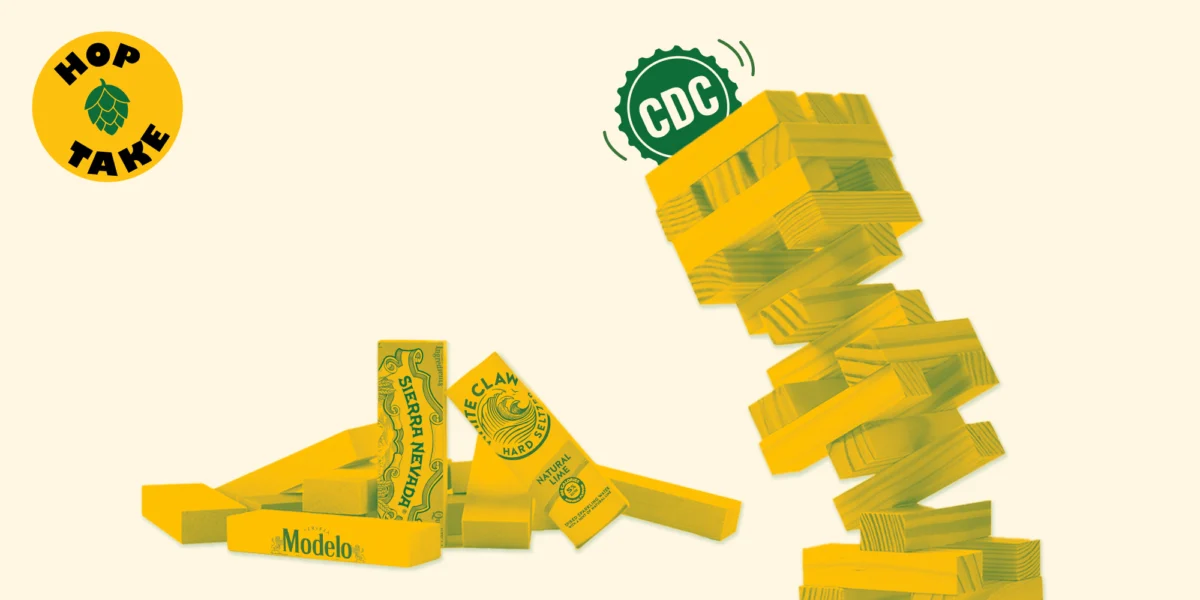
In the high-stakes world of beverage distribution, the "middle tier"—the vast, often invisible network of wholesalers that bridge the gap between manufacturers and retailers—is the lifeblood of the American drinking economy. But in Denver, Colorado, that lifeblood is currently being drained in a trench war that threatens to rewrite the rules of the three-tier system.
The "Mile High City" has become the epicenter of a corporate exodus. In a span of just weeks, Coors Distributing Company (CDC)—a powerhouse wholesaler and a wholly-owned subsidiary of Molson Coors Beverage Co.—has found itself under siege. Major beverage giants, including Constellation Brands, Mark Anthony Group, and Sierra Nevada Brewing Company, have simultaneously moved to terminate their long-standing partnerships with the distributor.
This isn’t just a business disagreement; it is a full-blown existential crisis for a distribution model that has relied on legislative protections for over half a century. As the dominoes fall, industry insiders are left to wonder: Is this a localized business failure, or the opening salvo in a national campaign to erode the regulatory moats that have defined the U.S. alcohol industry since the repeal of Prohibition?
The Chronology of a Collapse
The trouble began in early September, when Constellation Brands—the titan behind Modelo and Corona—abruptly notified CDC of its intent to terminate their distribution arrangement within 30 days. The move sent shockwaves through the Denver market, as Constellation is a cornerstone of any wholesaler’s portfolio.
Less than two weeks later, the Mark Anthony Group, the power behind White Claw and a massive force in off-premise sales, followed suit. Then, in early October, Sierra Nevada Brewing Company—the second-largest craft brewer in the U.S. by volume—confirmed it was also exiting the CDC fold.
To the seasoned observer, the speed and clinical nature of these exits bear a chilling resemblance to the disintegration of Republic National Distributing Company (RNDC) in California earlier this year. In that instance, a cascade of supplier departures eventually led to the distributor’s de facto collapse. Was this a social contagion? A strategic move by suppliers to consolidate power? Or a calculated attempt to exploit a weakness in Colorado’s legal infrastructure?
The "Casus Belli": Why the Silence?
Despite the seismic shifts in the market, the militants behind these terminations are saying very little. When pressed for comment, major suppliers have remained tight-lipped, citing the ongoing litigation as a shield.
CDC, however, is not remaining silent. In an email to Hop Take, the company did not mince words: "We’re exploring all legal and commercial options. None of the parties provided any reason for their termination, and doing so without cause is a direct violation of the Colorado beer franchise law."
The irony of the timing is palpable. CDC had only recently celebrated the opening of a state-of-the-art, 70,000-square-foot warehouse in late August—a massive capital investment intended to solidify its position in the market. Two weeks later, the pink slips began to arrive. This suggests that the decision to leave was not born of dissatisfaction with facilities or service, but rather a strategic shift in how these suppliers view their route-to-market.
The Shadow of Reyes Beverage Group
If you want to understand where the volume is going, look at the map. In California, the suppliers who fled RNDC overwhelmingly flocked to the Reyes Beverage Group (RBG). Now, history is rhyming in the Rockies.
RBG entered the Colorado market this year through the acquisition of operations formerly held by RNDC. Along with Southern Glazer’s Wine & Spirits’ acquisition of Eagle Rock Distributing Co., the Colorado distribution landscape has been radically reshaped.
Suppliers are not just leaving CDC; they are attempting to consolidate their volume into the hands of a few "total beverage" behemoths. While Constellation Brands has been coy about its destination, it is mathematically and logistically improbable that it would move to any house other than a titan like Reyes. By stripping CDC of its key volume, these suppliers are effectively turning a once-mighty distributor into a shell of its former self, paving the way for a market dominated by massive, national-scale players.
The Franchise Law Conundrum
At the heart of this conflict lies the "franchise law"—a collection of state statutes designed to protect wholesalers from being bullied or arbitrarily dropped by powerful brewers. Central to these laws is the "just cause" provision, which mandates that a supplier must cite a legally defensible reason for terminating a distributor.
Colorado’s version of this law, found in C.R.S. § 44-3-408, is, by all accounts, a disaster of legislative drafting. Subsection one requires a supplier to cite "noncompliance" and provides the distributor with a 60-day "cure period" to fix the issue. However, subsection three contains a contradictory clause: "The supplier shall have the right to terminate an agreement with a wholesaler at any time by giving the wholesaler at least ninety days’ written notice."
To a layman, this is a glaring contradiction. To a corporate legal team, it is a loophole the size of a mountain.
Constellation Brands is betting that the 90-day "no-cause" termination right overrides the 60-day "cure" requirement. CDC’s legal team, in a filing dated September 25, argued that this "novel interpretation" is an existential threat. If a supplier can simply bypass the "cure" process by waiting an extra 30 days, the entire purpose of the franchise law is rendered moot.
Legal experts like Ashley Brandt of the Libation Law Blog have pointed out the absurdity of the current situation. "What good is a statutory right to cure a breach if a supplier can bypass it simply by waiting another thirty days?" Brandt asks. "A supplier that cannot establish a breach—or knows the distributor will fix it—could simply choose the ninety-day route."
Implications for the Three-Tier System
The implications of this fight reach far beyond Denver. The National Beer Wholesalers Association (NBWA) is treating this as a five-alarm fire. During their annual conference in Orlando, NBWA president Craig Purser issued a stark warning: "The efforts to weaken the three-tier system are going to keep coming, and that’s why we need you to double down on your support."
If Colorado courts rule in favor of the suppliers, it could set a dangerous precedent for wholesalers nationwide. It would signal that "just cause" is no longer a requirement for termination, but rather a suggestion that can be circumvented by a sufficiently patient and well-funded supplier.
This power shift towards large suppliers is not happening in a vacuum. It follows a period of "institutional arrogance" and "infrastructural rot" that has plagued several major distributors, mirroring the downfall of RNDC in California. Yet, even where a distributor is performing well, the ability of a massive supplier to pull their volume creates an environment of permanent instability.
The Road Ahead
As the legal battle between CDC, Constellation, and others moves through the district courts, the entire industry is watching. The outcome will dictate whether the middle tier remains a stable, protected ecosystem or if it descends into a "survival of the fittest" landscape dominated by national consolidation.
For now, the employees of CDC, the local retailers who rely on their service, and the independent brewers who depend on the middle tier for survival, are left in a state of suspended animation. The "Mile High City" has become a testing ground for the future of alcohol distribution in America. If the 90-day loophole is upheld, we may be witnessing the final days of the traditional wholesaler-supplier relationship, replaced by a model where the biggest players dictate the terms, and the middle tier is forced to scramble for scraps.
The question is no longer whether the system is broken; it is who will survive the wreckage. For Coors Distributing Company, the fight is for its life. For the rest of the industry, it is a warning: the ground is shifting, and in the world of big alcohol, nobody is too big to be liquidated.
Quick Hits: The Industry Pulse
- Stone Brewing: Co-founders Greg Koch and Steve Wagner are reclaiming the brand’s soul, taking over the recently shuttered World Bistro & Gardens in Escondido.
- The Hard Sports Drink Wave: Deschutes is entering the fray with Firelyte, a malt-based sports drink, while Constellation and Mark Anthony are chasing the trend with vodka-based offerings.
- Corporate Moves: Sapporo USA is projecting a doubling of its U.S. volume by 2027, signaling that despite the turmoil in distribution, the thirst for global brands remains a dominant force.
- The "Woke-Free" Fallout: The saga of "Ultra Right" beer continues to yield comedy, as the Georgia Attorney General investigates why customers who paid for the "woke-free" beer have yet to receive their shipments.
This report is part of our ongoing coverage of the beverage-alcohol industry, provided to professionals navigating these volatile times. For more deep dives into the mechanics of the trade, subscribe to our newsletter.

 Basiran

