Nana Wu

 Dwi Wanna

 Suro Senen

 Evan Lee Salim

 Pevita Pearce
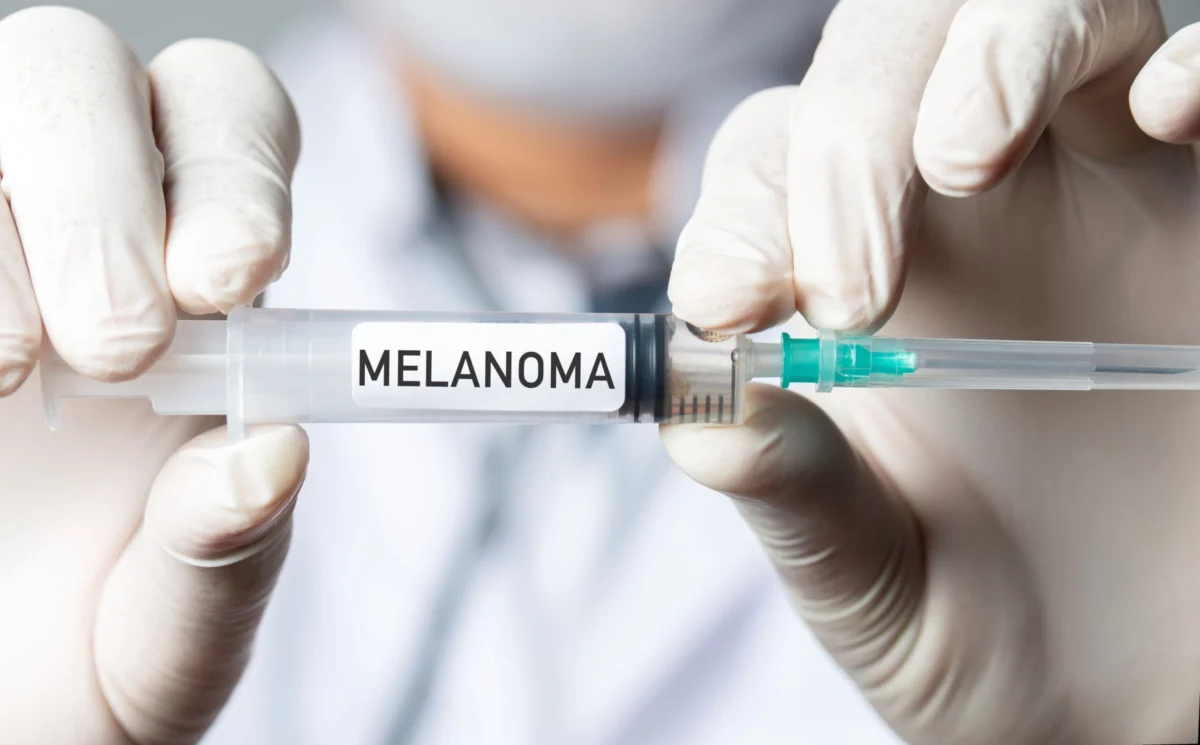
In the landscape of modern oncology, few developments have generated as much cautious optimism as the emergence of personalized mRNA vaccines. A landmark Phase 3 clinical trial, known as INTerpath-001, has provided compelling evidence that a bespoke vaccine, when paired with standard immunotherapy, can significantly slash the risk of recurrence and death in patients battling high-risk melanoma. This breakthrough, spearheaded by pharmaceutical giants Merck and Moderna, marks a pivotal shift toward a future where cancer treatments are as unique as the genetic profiles of the tumors they target.
The Core Breakthrough: A Synergy of Science
Melanoma remains one of the most aggressive and lethal forms of skin cancer. While survival rates are high when detected at an early stage, the threat of recurrence haunts many patients even after their tumors have been surgically excised. The INTerpath-001 trial aimed to address this lingering danger by testing a novel mRNA vaccine, Intismeran Autogene, in combination with the immunotherapy drug Pembrolizumab (Keytruda).
The results, unveiled by the collaborating companies, are nothing short of transformative. Patients who received both the personalized vaccine and Pembrolizumab saw a 42 percent reduction in the risk of disease recurrence or death compared to those treated with Pembrolizumab alone. Furthermore, the combination therapy reduced the risk of the cancer spreading to distant parts of the body—a process known as metastasis—by 38 percent. After a median follow-up period of nearly 25 months, 82.2 percent of the combination-therapy group remained recurrence-free, compared to 70 percent in the monotherapy group.
Chronology of a Medical Milestone
The journey to these findings did not happen overnight. It is the culmination of years of research into messenger RNA (mRNA) technology, which gained global recognition during the COVID-19 pandemic but had long been studied for its potential in oncology.
- Early Development: Scientists focused on isolating tumor samples from individual patients. By sequencing the DNA of these tumors, researchers identified unique "neoantigens"—mutated proteins that are present on the surface of cancer cells but absent in healthy cells.
- Vaccine Engineering: Using these specific molecular signatures, Moderna developed a "bespoke" mRNA vaccine. Each dose is a tailor-made instruction manual for the patient’s immune system, teaching it to recognize and eliminate cells carrying those exact mutations.
- The Trial Enrollment: The INTerpath-001 trial recruited 1,137 participants, all of whom had been diagnosed with high-risk melanoma and had undergone surgery to remove their primary tumors.
- The Study Execution: Participants were randomized into two cohorts. One received the standard-of-care immunotherapy (Pembrolizumab), while the second received the immunotherapy plus the Intismeran Autogene vaccine.
- Data Analysis: Over the course of the study, the investigators meticulously monitored the recurrence rates, safety profiles, and overall survival metrics, leading to the positive outcomes recently presented to the medical community.
Supporting Data and Clinical Efficacy
The strength of the INTerpath-001 trial lies in its statistical significance and the robustness of its methodology. By using a patient’s own tumor tissue to manufacture the vaccine, the treatment effectively turns the patient’s immune system into a highly specialized hunting force.
The primary endpoint of the study—recurrence-free survival—highlights the superiority of the combination therapy. In oncology, "recurrence-free" is a critical metric; it indicates that the cancer has not returned, which is the primary goal for patients who have already undergone surgery. The 12.2 percentage point difference in recurrence-free status between the two groups (82.2% vs 70%) serves as a beacon of hope for patients who previously had few options beyond standard immunotherapy.
Safety, too, has been a key focus. Throughout the trial, participants reported side effects such as fatigue, fever, and localized pain at the injection site. These side effects were consistent with findings from earlier, smaller-scale trials, suggesting that the addition of the mRNA vaccine does not introduce dangerous new toxicity levels, making the combination a viable long-term treatment strategy.
Official Responses and Expert Analysis
The medical community has greeted these findings with a mix of excitement and measured professional enthusiasm.
Georgina Long, medical director of the Australian Melanoma Institute and the study’s principal investigator, did not mince words, describing the results as "transformative." According to Long, the data possesses the potential to force a foundational shift in how clinicians manage patients with earlier-stage melanoma, moving away from a "one-size-fits-all" approach toward individualized medicine.
Eva Muñoz Couselo, who leads a melanoma research group at the Vall d’Hebron Institute of Oncology in Barcelona, echoed these sentiments. "For the first time, a Phase III trial has demonstrated that an individualized therapeutic vaccine, designed on the basis of the molecular characteristics of each patient’s tumor, can significantly improve the outcomes of conventional immunotherapy," she noted in a statement to SMC Spain.
Stéphane Bancel, CEO of Moderna, emphasized that the data reinforces the company’s belief in the versatility of mRNA. "These results reinforce our conviction that mRNA has the potential to fundamentally change how we treat cancer," Bancel stated, signaling that the company plans to push forward with further research and regulatory applications.
Implications for Future Cancer Treatment
While the current success is centered on melanoma, the broader implications of the INTerpath-001 trial are profound. The underlying technology is conceptually platform-based, meaning that once the process for creating a personalized vaccine is perfected, it could be adapted for a wide range of other malignancies.
Beyond Melanoma: A Universal Approach?
The scientific community is already looking toward other cancers that have historically been difficult to treat. Earlier this year, separate trials indicated that personalized mRNA vaccines could improve survival rates in pancreatic cancer, one of the most lethal and resistant forms of tumor. Marisol Soengas, a leading researcher at Spain’s National Cancer Research Center, points out that the success in melanoma provides a conceptual roadmap for other cancers where the immune system can be "reactivated" or "retrained."
By focusing on the unique mutations of a patient’s tumor, researchers are essentially bypasses the "cloaking" mechanisms that many cancers use to evade detection by the immune system. This could revolutionize treatments for lung, breast, and colon cancers in the coming decades.
The Challenges of Scalability and Cost
Despite the scientific triumph, experts warn that the path to widespread clinical use is not without hurdles. The primary challenge, as noted by researchers like Soengas, is logistics. Because each vaccine is "bespoke"—manufactured specifically for one individual based on their unique tumor biopsy—the production process is complex, time-consuming, and currently very expensive.
For healthcare systems to adopt this on a mass scale, there must be a significant investment in manufacturing infrastructure. Ensuring that this technology is affordable and accessible to patients regardless of their geographical location or economic status remains the next great challenge. Furthermore, the vaccine is currently designed to treat existing cancer by preventing recurrence; it is not a prophylactic vaccine, meaning it cannot be used to prevent the initial development of melanoma in the general population.
Conclusion: A New Chapter in Oncology
The INTerpath-001 trial serves as a landmark moment in the history of immunotherapy. By blending the precision of genetic sequencing with the power of mRNA technology, Merck and Moderna have proven that the immune system can be effectively taught to fight cancer on a personalized basis.
While we are not yet at the stage where "a cure for cancer" is a reality in every doctor’s office, the data provides a clear trajectory toward more effective, less toxic, and highly specific treatments. As health authorities review the findings for regulatory approval, the medical community remains hopeful that this breakthrough will soon transition from experimental trials to standard clinical practice, offering a new lease on life for thousands of patients worldwide.
The era of personalized oncology has arrived, and with it, the hope that the most aggressive diseases may finally meet their match in the body’s own defenses.