

 Dwi Wanna
 Nana Wu
 Muslim
 Reynand Wu
 Ammar Sabilarrohman
 Lina Irawan
Do you find yourself dissecting the balance of a sauce, critiquing the pacing of a dinner service, or obsessively researching the latest restaurant openings in your city? For many, dining is a hobby, but for a select few, it is a profession. Becoming a food critic is a dream for many culinary enthusiasts, but it is a career path that demands more than just a healthy appetite. It requires a unique synthesis of journalistic rigor, sensory discernment, and a commitment to professional integrity.
While the rise of social media and the "influencer" economy have changed how we consume food media, the role of the professional food critic remains a pillar of the hospitality industry. As a bridge between the kitchen and the public, the critic holds the power to shape reputations and guide diners.
Defining the Modern Food Critic: More Than Just a Reviewer
At its core, a food critic is a culinary journalist—a writer tasked with providing a thoughtful, analytical, and, most importantly, unbiased evaluation of a dining experience. Unlike an influencer, who may be incentivized by partnerships or perks, the professional critic acts as a consumer advocate. Their primary mandate is to provide an objective, high-quality assessment of a restaurant, encompassing everything from the nuance of the seasoning to the attentiveness of the service and the atmosphere of the room.
The Evolution of Anonymity
Traditionally, anonymity was the gold standard of the industry. Critics would dine in disguise to ensure they received the same experience as any other paying customer, preventing restaurants from "padding" the meal with extra attention or complimentary dishes.
In today’s hyper-connected, image-heavy landscape, maintaining total anonymity is increasingly difficult. Many modern critics have public personas, yet they preserve their professional standing by remaining strategic. They prioritize objective, data-driven reporting over celebrity, ensuring that their work remains focused on the food and the craft rather than their own presence.

The Professional Landscape: Data and Economics
Understanding the financial realities of the industry is essential for those looking to build a sustainable career.
Salary Expectations
The path to becoming a food critic is rarely a straight line to a high-salaried position at a major newspaper. According to data from ZipRecruiter, the median salary for a dedicated food critic sits at approximately $32,570. However, this number is a narrow view of a broader field. The U.S. Bureau of Labor Statistics (BLS) classifies critics under the broader umbrella of "writers and authors," which reported a median salary of $72,270 in 2024.
The discrepancy exists because many successful critics do not rely on a single source of income. They diversify their revenue streams by combining restaurant reviews with food journalism, consultancy, recipe development, and long-form editorial work.
Market Impact
The critic serves a dual purpose:
- For the Consumer: They offer a roadmap of the culinary landscape, helping readers make informed choices and stay updated on shifting trends.
- For the Industry: They act as a mirror for the culinary world. By highlighting excellence and calling out failures, they keep establishments accountable and drive the overall standard of the restaurant industry upward.
A Chronological Guide to Building Your Career
There is no singular, prescribed roadmap to becoming a food critic. However, most successful professionals follow a trajectory that builds credibility, skill, and an audience over time.
1. The Foundation: Education and Training
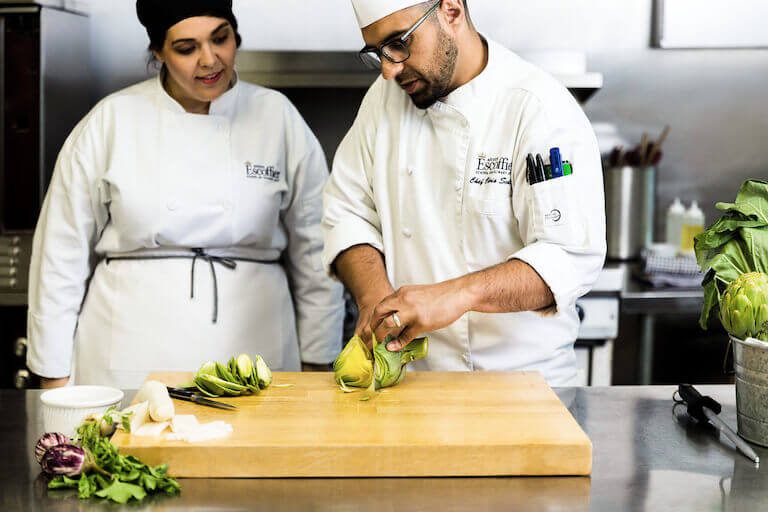
Formal training is not a legal requirement, but it is a massive competitive advantage. Degrees in journalism or English hone your ability to tell a compelling story, while an education in the culinary arts provides the technical vocabulary necessary to describe flavor profiles, kitchen hierarchies, and cooking techniques. Culinary school—such as the programs offered by the Auguste Escoffier School of Culinary Arts—can provide a "behind-the-scenes" understanding of how a restaurant operates, which is invaluable when critiquing the execution of a menu.
2. The Portfolio: Creating Your Voice
Content creation is your audition. Start a blog, a newsletter, or a dedicated review column. The goal is to develop a consistent voice. As veteran food journalist John Lehndorff has noted, the most impactful writing is often personal—it isn’t just about what is on the plate, but how the experience feels to the human behind the fork. By writing for anyone who will publish your work, you begin to build a name for yourself and a portfolio that demonstrates your range.
3. Professional Integration
Once your portfolio is established, it is time to pivot toward professional outlets. Reach out to local newspapers, city magazines, and digital food publications. Even if you start with unpaid or low-paid freelance assignments, these roles are essential for networking. Landing a staff position—even if it starts in a non-food-specific role—can provide the internal leverage needed to transition into the "critic" chair when a vacancy arises.
4. Embracing the Multi-Platform Strategy
The modern critic must be a media polymath. Print is no longer the sole medium for review. Today, editors look for contributors who can produce a "multi-platform" package: a well-written article for the publication, high-quality imagery, and potentially a short-form video or social media component. As Lehndorff observes, video content often generates exponentially more engagement than text alone. The successful critic uses these tools to supplement their writing, not to replace it.
5. Lifelong Learning and Networking
The industry moves at a blistering pace. Trends in fusion, sustainability, and regional cuisine are constantly evolving. A critic must remain a student of their craft. This involves attending industry seminars, listening to culinary podcasts, and, perhaps most importantly, cultivating a robust network of chefs, front-of-house managers, and fellow journalists.
Essential Attributes: The Anatomy of a Critic
Beyond technical skills, the temperament of a food critic is defined by several non-negotiable traits:
- The "Broad Palate" Requirement: You must be willing to eat anything. A critic who refuses to try adventurous or unfamiliar foods will struggle to provide relevant commentary.
- Storytelling Proficiency: Food is an experience, and your job is to transport the reader to the table. If you cannot describe the "why" behind the "what," you are merely a menu-reader, not a critic.
- Impeccable Integrity: Your credibility is your currency. If a restaurant knows you have been swayed by a free meal or a personal relationship, your review loses its value. You must maintain a "firewall" between your social life and your professional assessments.
- Intellectual Curiosity: A great critic is a researcher. They look into the history of a dish, the sourcing of the ingredients, and the philosophy of the chef.
Implications: The Responsibility of the Platform
The most important takeaway for any aspiring critic is that your words have weight. A glowing review can fill a restaurant’s reservation book for months; a scathing one can lead to real economic hardship for small business owners. This power necessitates a sense of responsibility.
As Escoffier Chef Instructor Pietro Vitelli advises, "Taste everything. Taste everything you can—whether you like it or not… The importance of that is, you can understand textures and flavors—things that you’ve never tasted."
Conclusion: The Path Forward
The journey to becoming a food critic is a marathon, not a sprint. It requires a rare combination of grit, linguistic talent, and an insatiable curiosity about the world of food. By pursuing formal culinary training, building a diverse professional portfolio, and committing to the highest standards of journalistic integrity, you can turn a passion for dining into a lifelong, meaningful career.
Whether you are just starting your first blog or looking to transition into full-time food journalism, the table is set. The only question remains: are you ready to document the experience?

Frequently Asked Questions (FAQs)
What exactly does a food critic do on a daily basis?
A food critic researches upcoming openings, visits restaurants to dine, takes detailed notes on the service and food, and crafts narratives that analyze the dining experience. They also stay current on industry trends and maintain a professional network within the culinary community.
Is a culinary degree necessary for this career?
While not strictly required, a culinary education offers a significant edge. It provides a deep understanding of ingredients, techniques, and kitchen operations that allow a critic to write with greater authority and nuance.
How does a critic maintain anonymity?
Critics use various strategies, such as booking reservations under different names, visiting during off-peak hours, and keeping their personal identity off social media platforms. While total anonymity is increasingly rare, these steps help ensure a "standard" customer experience.
Can you make a full-time living as a food critic?
Yes, but it is often achieved through a "portfolio career"—a combination of staff writing, freelance columns, consulting, and digital content creation. It is a competitive field that often requires building multiple income streams.
What is the most important skill for a new critic?
Integrity. Regardless of your writing style, if your audience loses faith in your objectivity, you lose your career. Always approach your work with an open mind and a commitment to the truth of the experience.



 Evan Lee Salim