

 Ali Ikhwan

 Iffa Jayyana

 Muslim

 Nana

 Dwi Wanna
 Nana Wu
In the marble-clad halls of the California State Capitol, Assemblyman Jesse Gabriel keeps a peculiar souvenir on his office sofa: a plush pillow shaped like a bag of Skittles. It is a tongue-in-cheek memento of a landmark 2023 legislative battle, one that pitted a pragmatic state lawmaker against the massive, entrenched interests of the $2.5 trillion American food industry.
While the national conversation in Washington, D.C., has been dominated by the performative rhetoric of the "Make America Healthy Again" (MAHA) movement—spearheaded by Health and Human Services Secretary Robert F. Kennedy Jr.—the actual, substantive heavy lifting of food safety reform has migrated westward. As federal regulators remain gridlocked by corporate capture and ideological posturing, Jesse Gabriel has quietly emerged as America’s de facto food safety chief, using California’s massive market power to force a nationwide shift in how the food industry handles toxic additives, synthetic dyes, and ultra-processed ingredients.
The Regulatory Vacuum: A Crisis of Oversight
The genesis of Gabriel’s legislative crusade was not a desire to become a public health crusader, but a moment of genuine shock. In 2023, while reviewing data provided by the Environmental Working Group (EWG), Gabriel learned about the "GRAS loophole." Under the federal "Generally Recognized as Safe" (GRAS) provision, nearly 99 percent of new chemical additives entering the U.S. food supply bypass formal FDA review. Companies are effectively allowed to self-regulate, declaring their own ingredients safe without independent verification.
"I always assumed there was someone in Washington, D.C., watching my back," Gabriel remarked. "When I learned that wasn’t the case, it actually made me angry."
This anger catalyzed the California Food Safety Act, which aimed to ban five specific chemicals—Red No. 3, potassium bromate, brominated vegetable oil, propylparaben, and titanium dioxide—all of which are banned or strictly regulated in the European Union, China, and Brazil. Despite intense lobbying from trade groups like the National Confectioners Association, the bill passed, signaling a seismic shift in how state-level action can dictate national corporate behavior.

Chronology of a Regulatory Revolution
The movement toward cleaner food has unfolded rapidly over the last three years:
- 2023: Gabriel introduces the California Food Safety Act. Despite industry pushback, the bill is signed into law, effectively banning four of the five proposed chemicals (titanium dioxide was removed to ensure bipartisan support).
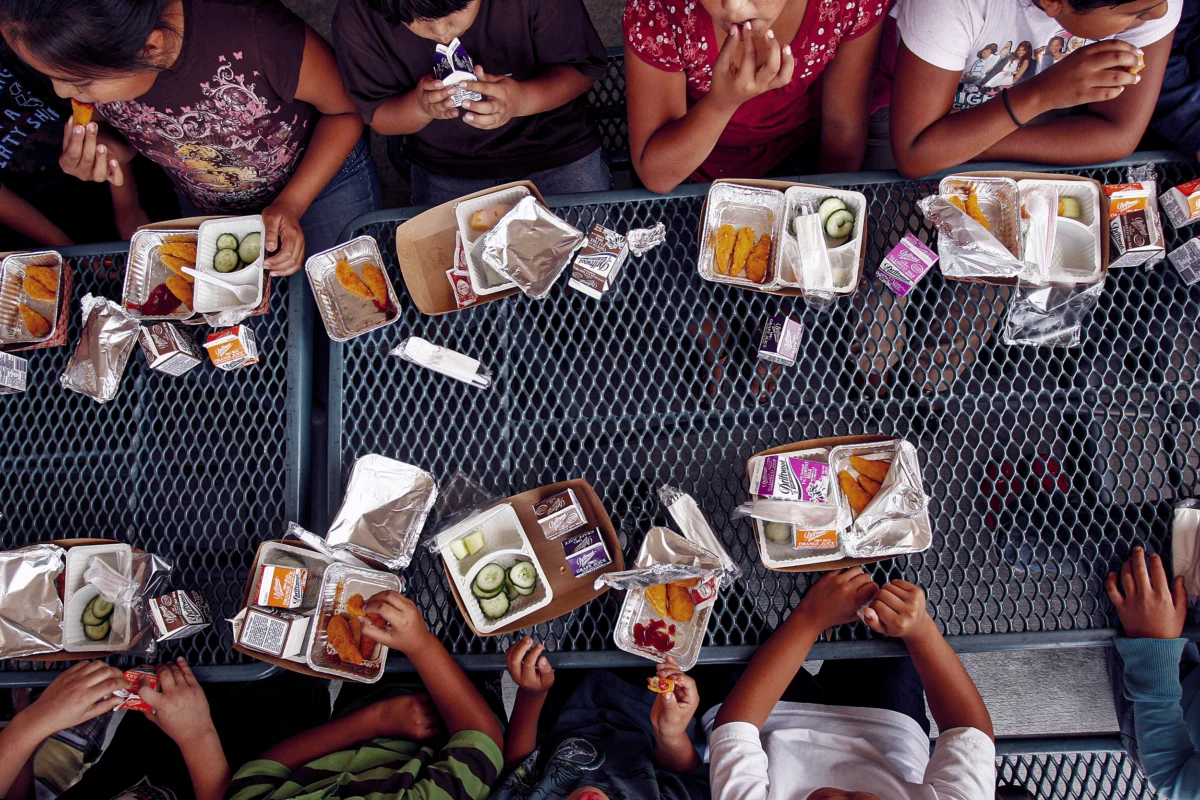
- 2024: Gabriel pivots to school nutrition, introducing the California School Food Safety Act. The legislation prohibits public schools from serving meals containing six specific synthetic dyes linked to neurobehavioral issues in children. The bill passes with unanimous support from the state legislature.
- 2025: The "Real Food, Healthy Kids Act" is signed into law, creating the first legal definition of "ultra-processed foods" in the United States and setting a path to remove the unhealthiest products from school vending machines and lunch lines.
- 2026: Governor Gavin Newsom signs a fourth bill authored by Gabriel, establishing a voluntary, state-backed label to identify minimally processed foods, further empowering consumers to make informed choices.
Supporting Data: The Case for Reform
The impetus for Gabriel’s legislation is rooted in growing alarm over public health trends. Data from the Office of Environmental Health Hazard Assessment (OEHHA) has highlighted a direct correlation between synthetic food dyes and neurobehavioral disorders, including ADHD—a diagnosis that has spiked nearly 70 percent among American children over the past two decades.
The economic reality is equally compelling. Because California represents the world’s fifth-largest economy, it is logistically and financially impractical for food manufacturers to produce "clean" versions of products for the California market while maintaining toxic versions for the rest of the country. Consequently, Gabriel’s state-level laws function as a de facto national mandate. By forcing the reformulation of products sold in school lunches—a $4.5 billion market—Gabriel has effectively dictated a new safety standard for national food conglomerates.
The MAHA-MAGA Standoff and Federal Inaction
While the MAHA movement has brought unprecedented attention to the toxicity of the American diet, its impact at the federal level has been surprisingly muted. Under the leadership of Robert F. Kennedy Jr., the Department of Health and Human Services has opted for a strategy of "voluntary commitments" rather than stringent enforcement.
In August, the HHS unveiled a proposal regarding GRAS that merely requires companies to inform the FDA after they have unilaterally determined their new additives are safe—a far cry from the robust regulatory oversight promised during the 2024 campaign. This failure has left a void, one that state legislators are rushing to fill. To date, more than 150 food safety bills have been introduced across the country, with 15 states successfully passing legislation—a rare example of bipartisan consensus in an era of extreme polarization.

The Bipartisan Blueprint: How Gabriel Succeeds
Gabriel’s success stems from a deliberate rejection of "political tribalism." He recognized early on that food safety is not a partisan issue, but a parental one. By focusing on the "common sense" aspect of protecting children, he has secured the support of Republican legislators, including those from California’s agricultural heartland.
Heath Flora, a Republican Assembly member whose family has farmed in the Central Valley for generations, noted that Gabriel’s willingness to include industry stakeholders at the table—rather than simply attacking them—was the key to his success. "Jesse is one of those guys that is willing to look at things from an agricultural perspective," Flora said. By framing his bills as a way to support local agriculture—by replacing chemical-laden snacks with fresh, local produce—Gabriel turned potential opponents into active co-authors.
The Looming Threat: Preemption and Obstruction
Despite these successes, a significant threat remains: federal preemption. Industry-aligned lawmakers in Washington, such as Rep. Kat Cammack, have floated proposals like the "FRESH Act," which would override state food safety laws with a weaker federal standard. Critics, including Gabriel, view these attempts as a "Trojan horse" for the chemical industry.
"This would move the federal government… from inaction to obstruction," Gabriel warned during a recent press conference. By attempting to block states from setting higher safety standards, these federal proposals could roll back years of progress. Gabriel has taken the fight to Washington, personally lobbying the California congressional delegation to ensure that no "must-pass" legislation is used as a vehicle to strip states of their right to regulate food safety.
Implications for the Future
As the midterm elections approach, the success of Gabriel’s legislative model offers a potential roadmap for the Democratic Party. At a time when many voters are disillusioned with the political establishment, food safety is a rare issue that cuts across demographic and party lines.

Gabriel’s approach proves that progress is possible when legislators prioritize tangible, science-based policy over performative rhetoric. By focusing on local control and incremental, achievable wins, he has shown that it is possible to hold the food industry accountable even when the federal government remains paralyzed.
For parents concerned about what is in their children’s lunchboxes, the message is clear: while the eyes of the nation have been fixed on the drama of Washington, the real change has been happening in state houses, driven by a quiet, determined assemblyman who decided that if no one was watching out for the food supply, he would have to do it himself.
As Gabriel himself puts it, "In an era of hyper-polarization, the right policy solution and the right messaging are the same thing." If his success is any indicator, the future of American food policy may not be found in the speeches of Cabinet secretaries, but in the pragmatic, bipartisan, and relentless work of state legislatures across the country.

 Sagoh
 Layla Zulfa

