 Laily UPN

 Suro Senen
 Muslim
 Raul Delapena Setiawan
 Layla Zulfa
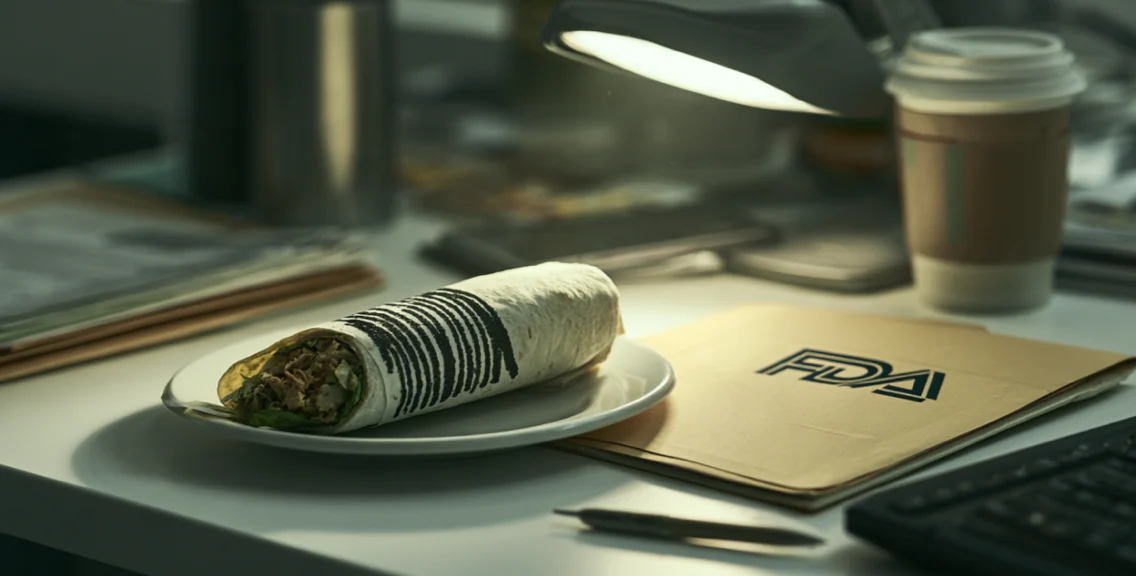
In the landscape of public health, transparency is the cornerstone of safety. Yet, for fifty individuals across multiple states, that transparency has been replaced by a wall of federal silence. These fifty people were sickened by E. coli O157:H7, a severe pathogen capable of causing kidney failure and death. While the U.S. Food and Drug Administration (FDA) and the U.S. Department of Agriculture’s (USDA) Food Safety and Inspection Service (FSIS) have spent weeks investigating the outbreak—collecting receipts, verifying supply chain data, and utilizing genetic sequencing to link victims—the public remains largely unaware of the source.
The government knows the manufacturer. It knows the retailer. It knows exactly which product caused the illness. Yet, the official public investigation table remains cryptic, offering only a vague descriptor: “Multi-ingredient wrap with chicken (suspect).”
There is no brand name, no retailer, no list of affected states, and no warning to the public. The only reason the public is aware that these illnesses are linked to Trader Joe’s Tarragon Chicken Salad Wraps is because of a private lawsuit filed on October 15, 2026—Gottlieb v. Trader Joe’s Co.—not because of a public health alert from the agencies charged with protecting the American food supply.
The Anatomy of an Opaque Investigation
The current investigation, tracked by authorities as reference #1421 (USDA 2026-04), highlights a systemic failure in how food safety agencies communicate risks. Investigative findings indicate that the wraps were produced for Trader Joe’s by F&S Fresh Foods of Vineland, New Jersey. In a testament to the lack of transparency, F&S quality staff reportedly reached out directly to victims, yet the FDA and FSIS have remained silent regarding the firm’s involvement.
The government’s primary justification for this opacity is that the products were “proactively removed” from the market and are now past their shelf life. Because this removal was not formally labeled a “recall,” it was never classified as one. Consequently, no store lists were published, no public health alert was triggered, and no consumer was warned to check their refrigerators or transaction histories.
This creates a dangerous loophole: by avoiding the terminology of a “recall,” companies and regulators can effectively bypass the disclosure rules intended to protect the public. If the decision to notify the public depends on the arbitrary vocabulary used by a manufacturer or the current policy mood of a federal agency, the entire food safety system is rendered unpredictable and, ultimately, ineffective.
A History of Inconsistency: Naming Names
The FDA maintains that the identity of a company linked to an outbreak constitutes “confidential commercial information” unless a formal recall is initiated. However, historical precedent proves that the government is fully capable of transparency when it chooses to be.
Since 2006, there have been at least eight documented instances where federal agencies named the farm, processor, or brand involved in an outbreak, even after the product was no longer on store shelves:
- 2006 (Dole Spinach): Six months after the recall, the government named the processor, the ranch, and even the fertilizer supplier.
- 2013 (Cyclospora): Taylor Farms de Mexico was named long after the contaminated salad mix had likely been consumed.
- 2018 (Romaine Outbreaks): In both the April and December 2018 outbreaks, the FDA named Harrison Farms and Adam Bros. Farming, respectively, even though the produce was past its shelf life or no longer in distribution.
- 2021–2022: The government identified Josie’s Organics, Simple Truth, Nature’s Basket, FreshKampo, and HEB strawberries, all well after the “best-by” dates had passed.
Perhaps most damning is the comparison to a 2013 E. coli outbreak that also involved Trader Joe’s. In that instance, thirty-three people were sickened by chicken salads produced by Glass Onion Catering. At that time, the CDC named the companies involved, and the FSIS published a formal recall. Thirteen years later, with the same retailer, the same pathogen, and the same agencies involved, the current silence is stark and inexplicable.
The Consequences of Ambiguity
The lack of standardized reporting is not merely a bureaucratic annoyance; it is a public health crisis. When federal agencies refuse to name specific brands or retailers, the ripple effects are felt across the entire industry.
When the government identifies only a broad commodity—such as "romaine lettuce"—consumers lose trust in the entire category. This penalizes the hundreds of honest growers and processors who adhered to safety standards, while the actual source of the contamination remains obscured.
Furthermore, this "silent" approach hinders medical professionals. If a patient presents with E. coli symptoms, a doctor needs to know if their patient has consumed a specific product from a specific store. Without public disclosure, the physician is left guessing, and the opportunity to prevent secondary infections or identify high-risk exposures is lost.
Data shows that in the fall of 2024, a romaine E. coli outbreak (#1280) resulted in 89 illnesses, 36 hospitalizations, seven cases of kidney failure, and one death. The FDA closed the investigation with the single word: "romaine." It was only through subsequent records requests that the public learned the contamination converged on a single processor and a single grower. This is not a system of protection; it is a system of concealment.
The Path Forward: Two Proposed Petitions
To address this systemic failure, advocates are calling for a formal rule change. Two companion citizen petitions are currently being prepared for the FDA to codify the public’s right to know.
Petition One: Outbreak Firm Disclosure
This petition argues that the identity of a firm implicated in an outbreak should never be considered "confidential commercial information" once epidemiology and lab evidence—such as whole genome sequencing—point to the source. The petition demands that the FDA:
- Disclose the firm’s identity regardless of whether the company labels the action a "recall," "withdrawal," or "proactive removal."
- Place the burden of proof on the company to justify secrecy, rather than the agency.
- Provide a one-business-day window for companies to correct factual errors, ensuring the public receives accurate, timely information.
- Require full transparency at the closure of an investigation, including the publication of redacted-free summaries that name the sources of contamination.
Petition Two: Recall Consignee Lists and Classification
This petition seeks to align FDA practices with those of the USDA. Since 2008, the USDA has been required to publish the names and locations of stores that received meat and poultry involved in Class I recalls. The petition urges the FDA to:
- Adopt a mandatory rule requiring the publication of retail consignee lists for all Class I food recalls.
- Extend these lists to include restaurants, schools, hospitals, and nursing homes.
- Classify every recall within ten days of the event.
- Formally confirm that the removal of a suspected outbreak vehicle constitutes a recall, closing the loophole that allowed the Trader Joe’s wrap incident to escape classification.
Conclusion: A Call for Accountability
The current state of food safety communication is fragmented, inconsistent, and dangerously reliant on the "mood of the day" within regulatory offices. When the responsibility for alerting the public to dangerous food falls to a private lawyer on an island off the coast of Seattle, the government has failed in its primary duty.
Public health relies on informed consumers. If the government knows who made fifty people sick, the public has an absolute right to that information. Transparency is not an optional courtesy; it is the only way to ensure that companies are held accountable and that future outbreaks can be prevented.
As we move toward the end of 2026, the question remains: will the agencies prioritize the reputations of private firms, or will they honor their commitment to the health and safety of the American people? The proposed petitions offer a roadmap to a more transparent future, but they require the support of the public, the industry, and the medical community to become reality. It is time to replace silence with clarity.