
 Neng Nana

 Nila Kartika Wati

 Layla Zulfa

 Ammar Sabilarrohman

 Pevita Pearce
 Ali Ikhwan
By Chris Boyles, Vice President of Food Safety at Steritech
The food service industry is currently navigating a quiet, high-stakes evolution. While food manufacturers have long grappled with the complexities of allergen labeling, the pressure is now cascading rapidly into the restaurant sector. With undeclared allergens consistently ranking among the leading causes of food recalls, regulators and consumers alike are demanding a level of precision that many operators are not yet equipped to provide. As the regulatory landscape shifts under the weight of new FDA guidelines and state-level mandates, the restaurant industry must transform its approach from reactive sign-posting to proactive, systemic risk management.
The Manufacturing Precedent and the Monotony Trap
For years, food manufacturers have labored under intense scrutiny to get allergen labels right. Despite these efforts, undeclared allergens remain a persistent and dangerous fixture at the top of the U.S. recall list. According to data analyses by the U.S. PIRG Education Fund, these oversights accounted for nearly half of all food recalls in 2023 and roughly one-third in 2024.
It is a common misconception that these failures are the result of gross negligence. In truth, the culprit is often the dangerous byproduct of efficiency: monotony. In a plant environment, a worker might perform the same cleaning or changeover process hundreds of times in a single week. Over time, the vigilance required to ensure that a mixer is perfectly sanitized between batches of different products inevitably wanes. A microscopic trace of wheat or milk left behind from one production run can contaminate an entire subsequent batch.
If this occurs in a controlled, standardized industrial environment, the risk in the restaurant sector is exponentially higher. Restaurants operate with far less routine, higher staff turnover, and menu items that shift with the seasons, promotions, and supply chain fluctuations.
Chronology of a Shifting Regulatory Landscape
The regulatory environment is no longer static. We are witnessing a clear movement toward mandatory, transparent allergen disclosure that is being codified at both the state and federal levels.
The California Benchmark
On July 1, California’s SB 68 became the first law of its kind, mandating that restaurant chains with 20 or more U.S. locations provide written notification to guests regarding which of the nine major food allergens are present in every menu item served within the state. This legislation serves as a bellwether for what may soon become a national expectation.
The FDA Food Code Evolution
For the majority of operators, the most significant driver of change is the FDA Food Code. While not a federal law in its own right, it serves as the foundational template for nearly every state’s health regulations. The 2022 edition of the Food Code introduced a critical requirement: operators must notify guests in writing of the presence of major food allergens in unpackaged food.
This requirement is not a one-off; it is baked into the recently released 2026 FDA Food Code (published September 17). As states continue to adopt these provisions, the legal obligation for restaurants to provide specific, itemized allergen data is transitioning from a "best practice" to a mandatory compliance standard.
The Interpretive Gap
A significant point of friction exists between the written provision 3-602.12(C) and the guidance provided to inspectors in Annex 7. While the written provision is broad—requiring notification of the presence of allergens—the Annex specifies that the notice must be specific to each individual food item. Because state inspectors are trained on both the provisions and the supporting annexes, operators often find themselves facing expectations that exceed what they perceive as the "written law," creating a dangerous disconnect in compliance.
Supporting Data: The Scale of the Challenge
The complexity of modern restaurant operations makes compliance a moving target. Consider the lifecycle of a Limited-Time Offer (LTO). An LTO requires a specialized supply chain, new allergen documentation, and intensive staff retraining—all for a product that may only be on the menu for six weeks.
The primary risk factor here is the industry’s heavy reliance on external suppliers. In a supply chain crisis, a buyer might swap a sauce supplier overnight to maintain availability. If the new sauce contains egg where the previous version did not, and that change is not communicated down the chain, the restaurant is set up for failure. The product looks the same and tastes the same; the staff, unaware of the ingredient swap, may continue to provide inaccurate information to guests with severe allergies. When this happens, a "sincere, confident, and wrong" answer from a server can lead to a medical emergency.
The statistics underscore the severity of this risk. Approximately 33 million Americans live with food allergies. These individuals are not merely "picky eaters"; they are individuals for whom an ingredient error can be life-threatening.
Official Responses and Strategic Implications
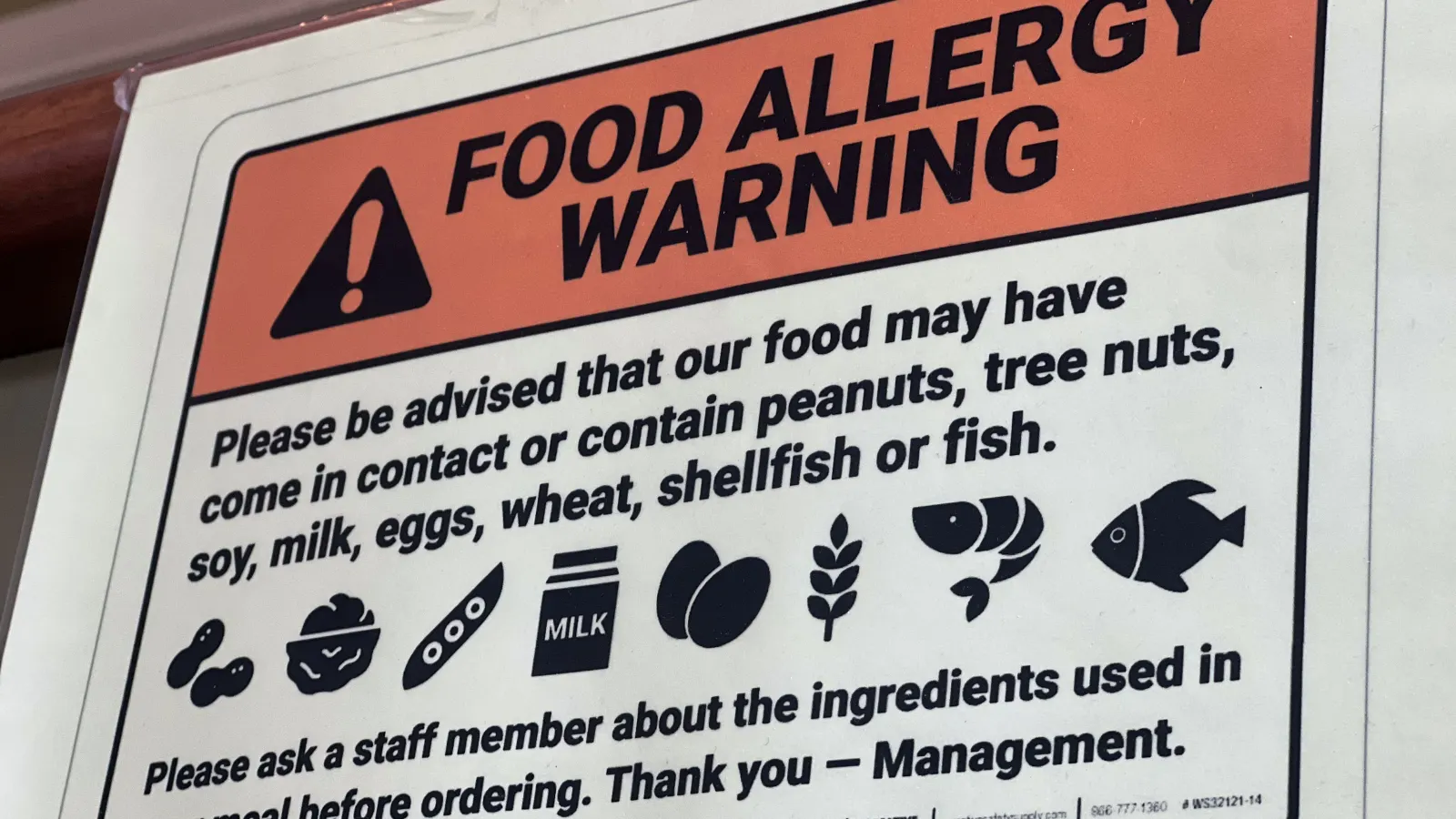
The industry must move beyond the "signage" mentality. Many operators attempt to mitigate risk by posting a single advisory sign at the entrance or point of sale, listing every major allergen present in the facility. While this provides a basic level of warning, it is fundamentally insufficient. It shifts the burden entirely onto the guest to initiate a complex conversation with a staff member who may not have been trained to answer accurately.
Moving Toward a "Single Source of Truth"
To thrive in the coming year, operators must adopt a unified, system-wide approach:
- Unified Standards: Do not create a patchwork of policies for different states. Adopt a single, rigorous standard that meets the most stringent requirement you face across your entire footprint.
- Supplier Integrity: Revisit your supplier approval process. Require, by contract, that suppliers provide immediate notification of any ingredient or formulation change. Define exactly what the internal process is once that notification hits your office.
- Digital Centralization: Printed allergen guides are obsolete the moment they are distributed. Multi-unit brands should transition to a single, digital, centrally managed "source of truth" that can be updated in real-time across all locations.
- Operational Protocols: Every allergen-related request must be treated with the same rigor as a health inspection. Define which requests you can handle safely and which you must decline. For the former, standardize the order-taking, preparation, and delivery steps to prevent cross-contact.
The Cost of Inaction
The most dangerous misconception in the industry is that allergen management is optional. It is not. While a high-profile recall or an allergic reaction can generate damaging headlines, the most significant risk is the "quiet" one: the loss of consumer trust.
When a guest with a food allergy cannot obtain reliable information, they rarely complain to management. They simply do not return. They tell their community, and the brand’s reputation erodes silently. In an era where allergen awareness is at an all-time high, guests are choosing brands that demonstrate a clear, documented commitment to their safety.
The coming six to 12 months will be a period of intense regulatory scrutiny. Brands that choose to build these robust, transparent systems now will gain a competitive advantage and ensure the safety of their patrons. Those who wait until an inspector mandates it will find themselves scrambling to retrofit a system that should have been the foundation of their operations all along. The question is no longer whether you can afford to manage allergens—it is whether your brand can survive the cost of failing to do so.


 Evan Lee Salim
 Asro