

 Nana Wu

 Dwi Wanna

 Suro Senen

 Evan Lee Salim

By Aneurin Canham-Clyne
Published October 22, 2026
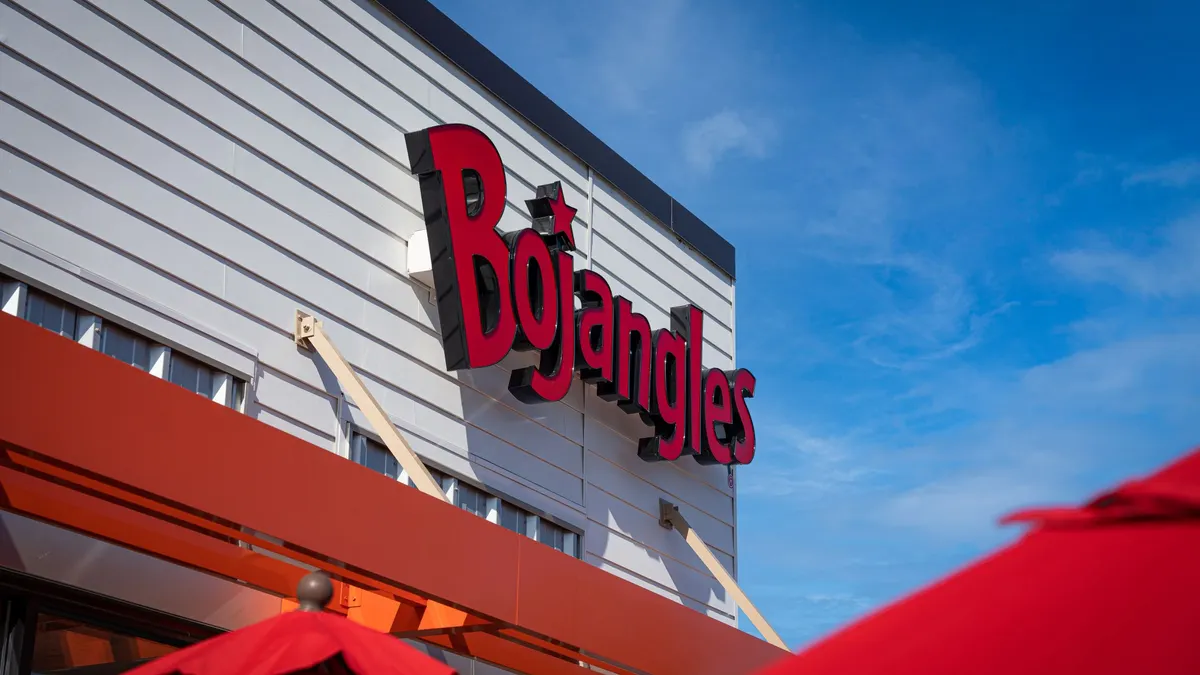
In the rapidly evolving landscape of quick-service restaurant (QSR) technology, the promise of artificial intelligence in the drive-thru has often been overshadowed by high-profile stumbles. However, while some industry giants have hit significant roadblocks, the fried chicken chain Bojangles is demonstrating that with the right partnership and incremental scaling, voice-ordering AI can deliver tangible operational success.
Bojangles recently announced that its proprietary AI voice-ordering system, "Bo-Linda," developed in partnership with Hi Auto, is now processing over one million orders per week across 500 locations. More impressively, the system boasts a 98% accuracy rate—a metric that serves as a benchmark for an industry still grappling with the complexities of automated customer service.
The Scaling Strategy: A Commitment to Operational Efficiency
The success of Bo-Linda has provided Bojangles with the confidence to accelerate its deployment. The company has confirmed plans to expand the technology to an additional 100 stores in the near term. This expansion brings the total footprint to 600 locations, meaning that approximately two-thirds of the chain’s 890 restaurants will soon be powered by the AI-driven system.
This steady, deliberate rollout stands in stark contrast to the "all-or-nothing" approaches that have plagued other chains. By focusing on a consistent partnership with Hi Auto since 2024, Bojangles has allowed the software to learn the nuances of its specific menu, regional dialects, and the high-paced environment of its drive-thru lanes.
Chronology of a Digital Transformation
The partnership between Bojangles and Hi Auto did not happen overnight. The following timeline highlights the strategic progression of their collaboration:
- Early 2024: Bojangles and Hi Auto initiate a pilot program to test voice-ordering AI at select corporate-owned locations.
- Mid-2024: Following initial positive feedback regarding order accuracy and reduced wait times, the system is officially christened "Bo-Linda" and enters a broader testing phase.
- Late 2024–2025: Bojangles begins a systematic rollout, collecting data on throughput and labor allocation.
- October 2026: Bojangles officially hits the milestone of one million orders per week, demonstrating the scalability of the Hi Auto platform.
- Current Phase: The companies are now integrating advanced features, including dynamic upselling and visual order-verification technology, to further optimize the drive-thru experience.
Supporting Data: Why Accuracy Matters
In the QSR industry, accuracy is the primary driver of customer retention. A misheard order leads to wasted food, frustrated customers, and bottlenecked drive-thru lanes. Hi Auto’s 98% accuracy rating is not merely a technical accomplishment; it is an economic one.
By achieving this level of reliability, Bojangles has effectively decoupled the ordering process from the need for a dedicated human ear at the headset. This allows employees to shift their focus from inputting data into a POS system to preparing food and managing the kitchen workflow. According to Richard Del Valle, Chief Information Officer and Chief of Staff at Bojangles, the system is a "rare tool that improves the guest and employee experience at the same time."
Advanced Capabilities: Beyond Basic Ordering
The latest iteration of Bo-Linda is moving beyond simple order taking. The system is now being equipped with "dynamic upselling" features that respond to the reality of the drive-thru environment.
Context-Aware Upselling
Unlike static AI systems that suggest a dessert regardless of wait times, the new Bo-Linda update analyzes the length of the drive-thru queue. During peak rush hours, the AI prioritizes quick-to-prepare items to keep the line moving. Conversely, during slower periods, the system is programmed to suggest more complex or time-intensive menu items, effectively maximizing the average check size without compromising speed of service.

Solving the Dual-Lane Dilemma
One of the most persistent issues in modern fast-food design is the "dual-lane bottleneck," where orders from two separate lanes merge at the window, leading to confusion and potential mix-ups. Bojangles has implemented a technical fix: the AI now pairs each voice order with a high-resolution image of the vehicle that placed it. When the driver reaches the window, staff can instantly verify the order against the visual record, significantly reducing errors during high-traffic surges.
The Broader Industry Context: Navigating the AI Minefield
The restaurant industry’s relationship with AI has been characterized by extreme highs and lows. While Bojangles is celebrating success, other chains have faced public-relations challenges.
McDonald’s, for instance, famously parted ways with its IBM-developed voice AI testing after concerns over order accuracy and inconsistent performance. Similarly, the industry was shaken when reports surfaced of "absurd" AI errors, such as a Taco Bell drive-thru order that processed a request for 18,000 waters, prompting a total strategy rethink for that brand.
These failures have led to a more cautious approach across the sector. Companies like Taco Bell have shifted gears, partnering with firms like Omilia to refine their approach. Meanwhile, McDonald’s is focusing on its own internal "Archy" system as part of its "Next" strategy, proving that the tech giants of the food world are still convinced that voice AI is the key to the future of fast food. Dairy Queen has also joined the fray, offering franchisees access to Presto’s voice automation technology.
Implications: The Future of the QSR Workforce
The success of Bo-Linda suggests that the "replacement" narrative—the idea that AI will simply delete human jobs—is overly simplistic. Instead, the Bojangles model points toward an "augmented" future.

Labor Optimization
By delegating the repetitive task of taking orders to an AI, Bojangles is essentially redeploying its human capital. Employees are now more available for food quality control, store cleanliness, and customer service tasks that require human empathy and problem-solving skills. As the labor market remains tight, this shift in focus is essential for operational sustainability.
The Data Advantage
Beyond labor, these AI systems are massive data-collection engines. By analyzing millions of orders, Bojangles is gaining unprecedented insight into consumer behavior. They can track which menu items are paired together most frequently, how weather impacts order size, and how specific promotions influence traffic patterns. This data, when synthesized by Hi Auto’s algorithms, creates a feedback loop that makes the store more efficient every single day.
Conclusion: A Model for the Industry?
The path to integrating AI into the dining experience is fraught with technical and social challenges, but Bojangles has provided a blueprint for success. By focusing on high accuracy, incremental scaling, and features that directly solve the pain points of both customers and staff, they have turned an experimental technology into a core business asset.
As the industry continues to experiment, the takeaway from Bojangles is clear: AI in the drive-thru isn’t about replacing the human element; it’s about refining the workflow so that humans can be more effective. With 600 stores soon to be under the guidance of Bo-Linda, the chicken chain is positioning itself to lead the next generation of quick-service technology. Whether other chains can replicate this 98% accuracy remains the billion-dollar question, but for now, Bojangles has set the bar.

 Asro

