

 Dwi Wanna
 Nana Wu
 Muslim
 Reynand Wu
 Ammar Sabilarrohman
 Azzam Bilal Chamdy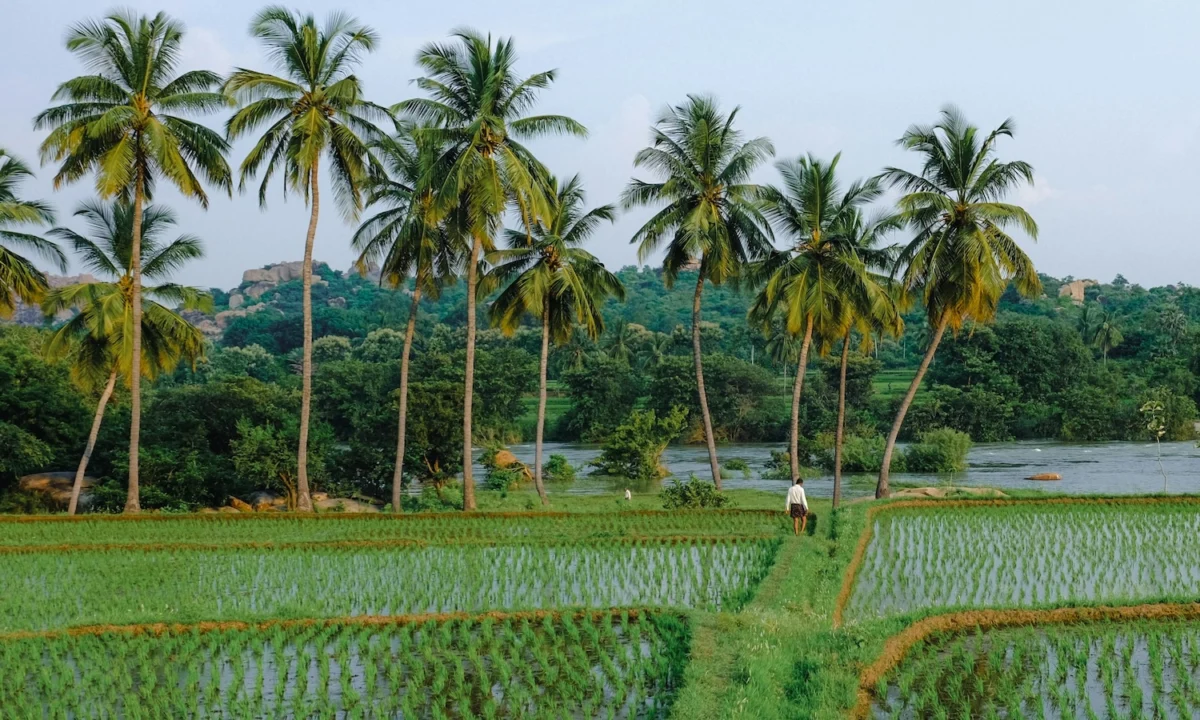
Each week, Food Tank curates a selection of news stories that demand our attention—whether they inspire hope through innovation, ignite frustration over policy, or provoke curiosity about the future of our food. This week, we examine a landscape defined by the tension between global dependency and the urgent, necessary movement toward localized, climate-resilient food systems.
1. The Fragility of Globalized Food Systems: A Call for Self-Reliance
A new, sobering report from the International Panel of Experts on Sustainable Food Systems (IPES-Food) has sounded the alarm on the precarious state of the global food trade. As shifting geopolitical currents reshape the security of our food supply, the experts warn that without a fundamental course correction, the world faces a compounding crisis of rising food prices, deepening hunger, and dangerous corporate consolidation.
The Anatomy of Vulnerability
The numbers tell a grim story: global food prices remain locked at levels more than 35 percent higher than those seen pre-pandemic. This persistent inflation is not merely a byproduct of market cycles but a direct result of overlapping crises—protracted conflicts, intensifying trade tensions, drastic cuts in humanitarian aid, and energy shocks that have crippled global supply chains.
According to Shalmali Guttal, an expert with IPES-Food, the current system is not only fragile but inherently unjust. The global agricultural framework is currently predicated on a heavy reliance on volatile international markets and centralized supply chains controlled by a handful of nations and multinational conglomerates. This concentration of power leaves the global south and food-insecure regions at the mercy of external disruptions.
The Pivot to “Resilient Self-Reliance”
The report advocates for a strategy of “resilient self-reliance.” Rather than doubling down on global dependency, governments are encouraged to prioritize the development of robust local supply chains. By supporting small-scale farmers and fostering regional markets, nations can decouple their food security from the whims of international commodity traders.
Mamadou Goita, another IPES-Food expert, argues that the blueprints for this transition already exist. He points to the West African regional food security reserve as a primary example of how collective cooperation and public policy tools can effectively stabilize regional markets against volatility. Similar successes have been observed in India, Canada, and Norway. "The solutions are here," Goita asserts. "What we lack is the political will to scale these localized models into a global standard."
2. Fiji’s Organic Blueprint: Economic and Environmental Resilience
While some nations struggle with global market dependencies, Fiji is taking decisive action to reclaim its food sovereignty. The government has officially advanced a new national organic farming policy, marking a pivotal shift in its agricultural trajectory for the 2026–2030 period.
Beyond Agriculture: A Multi-Pronged Strategy
Tomasi Tunabuna, Fiji’s Minister for Agriculture, Waterways, and Sugar Industry, emphasizes that the National Organic Policy 2026–2030 transcends traditional farming mandates. It is explicitly designed as an economic resilience strategy, an environmental safeguard, and a critical investment in public health.
The impetus for this shift is clear: rising costs for imported fuels and chemical fertilizers have placed an untenable burden on the nation’s producers. By transitioning to organic practices, the government aims to insulate farmers from these fluctuating input costs while simultaneously improving soil health and enhancing the island nation’s climate resilience. Furthermore, the Ministry anticipates that this shift will bolster Fiji’s position in international export markets, specifically for high-value organic commodities like turmeric, ginger, and coconut oil.
“In a time of global uncertainty,” Tunabuna notes, “Fiji is choosing resilience over dependency and local solutions over imported vulnerability.”
3. Climate Innovation in India: Scaling Resilient Agriculture
As climate change continues to threaten agricultural productivity, India has emerged as a leader in adaptive technology. Over the past decade, the Indian Council of Agricultural Research (ICAR) has successfully released nearly 3,000 climate-resilient crop varieties, a monumental achievement in the race to secure the nation’s food future.
The National Innovations on Climate Resilient Agriculture (NICRA)
Launched in 2011, the NICRA program was established to bridge the gap between laboratory research and field application. The program focuses on the development and dissemination of stress-tolerant crops, alongside extensive training and field demonstrations designed to help farmers adopt sustainable practices.
To ensure these technologies reach the most vulnerable, researchers have established “climate-resilient villages” in more than 440 villages across 150 districts. These hubs serve as testing grounds for technologies that can be replicated across India’s vast agricultural landscape. The urgency of this mission cannot be overstated: recent assessments of 650 agricultural districts indicate that roughly half are highly or very highly vulnerable to climate-driven disasters, including catastrophic floods, prolonged droughts, and record-breaking heatwaves.
4. Institutional Turbulence: The USDA Relocation Controversy
In the United States, a significant administrative clash is currently unfolding within the Department of Agriculture (USDA). Approximately three-quarters of the researchers at the Economic Research Service (ERS) and the National Institute of Food and Agriculture (NIFA) have formally stated they will not relocate from Washington, D.C., to Kansas City.
The Specter of Brain Drain
This relocation push marks the second time in seven years that the USDA has attempted to shift its research workforce. The 2019 attempt saw a mass exodus, with 85 percent of affected employees choosing to quit or retire rather than move. Critics fear that the current plan will trigger a repeat performance, leading to a profound “brain drain.”
Dr. Kathleen Merrigan, Executive Director of the Swette Center for Sustainable Food Systems at Arizona State University, has been a vocal critic of the move, warning that the loss of institutional knowledge will jeopardize the data and funding structures that underpin the entire American agricultural economy. The American Federation of Government Employees (AFGE) Local 3403 has echoed these concerns, stating that the move threatens to dismantle decades of research capacity at a time when precision data is essential for policymakers and farmers alike.
5. A Milestone for School Nutrition: Private Sector Investment
Finally, we look to East Africa, where a landmark investment is set to transform childhood nutrition. The World Food Programme (WFP) recently announced the largest private-sector commitment to school feeding in its history, bolstered by support from the Novo Nordisk Foundation and the Grundfos Foundation.
Connecting Farmers to Classrooms
This initiative focuses on the third phase of a strategic partnership targeting Uganda, Kenya, and Ethiopia. The program is designed to create a “virtuous cycle”:
- Nutritional Impact: Providing 366,000 children with nutritious, locally sourced meals over the next five years.
- Economic Impact: Creating stable, reliable markets for over 57,500 smallholder farmers.
- Sustainability: Integrating clean energy solutions and climate-resilient farming techniques into the supply chain.
Cindy McCain, Executive Director of the WFP, lauded the effort, noting that school meals represent “one of the best investments a government can make in a nation’s future.” This investment also serves as a catalyst for the School Meals Accelerator, a global initiative aimed at providing technical assistance to governments to reach an additional 100 million children by 2030.
Implications: The Road Ahead
The common thread linking these disparate stories is the transition from passive reliance on global systems to active, localized, and resilient management. Whether it is Fiji’s organic policy, India’s climate-resilient crops, or the WFP’s focus on home-grown school meals, the message is clear: the future of food security lies in the strength of local communities.
However, as the USDA relocation struggle highlights, this transition is not without its administrative and political pitfalls. Institutional knowledge is the bedrock of agricultural advancement, and the erosion of such expertise can be as damaging as a climate disaster. As we look toward the remainder of the decade, the global food system faces a choice: continue to rely on the fragile, centralized networks of the past or invest in the decentralized, resilient structures required to feed a changing world.
Articles like the one you just read are made possible through the generosity of Food Tank members. Can we please count on you to be part of our growing movement? Become a member today by clicking here.
Photo courtesy of Chrysanthi Ha, Unsplash.

 Sagoh
Sagoh