Nana Wu

 Dwi Wanna

 Suro Senen

 Evan Lee Salim

 Ammar Sabilarrohman
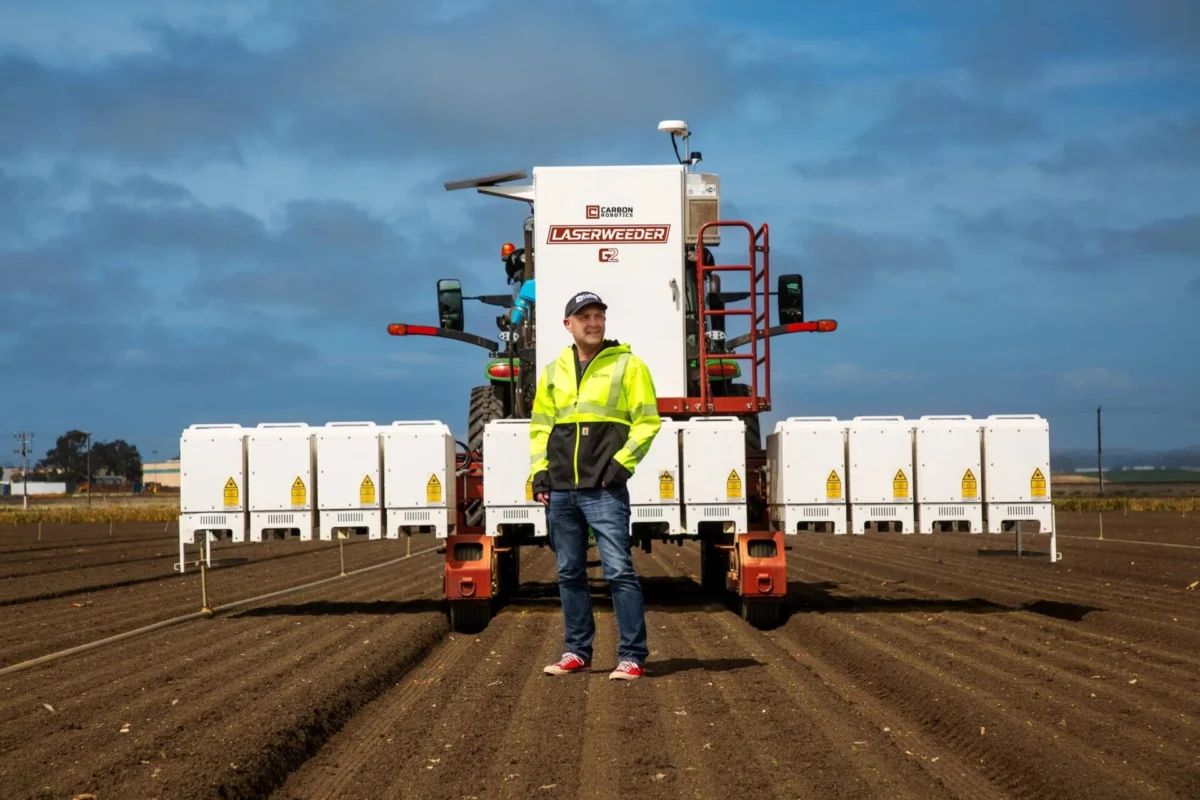
Seattle-based ag-tech innovator Carbon Robotics, a company widely regarded as a trailblazer in the field of laser-based weed control and autonomous farming, has confirmed a workforce reduction. The move, characterized by the company as a strategic realignment to navigate "broader economic conditions," has sent shockwaves through the ag-tech sector, raising questions about the sustainability of rapid scaling in the high-stakes world of agricultural automation.
The News: A Sudden Shift in Momentum
Carbon Robotics, best known for its flagship G2 LaserWeeder—a machine that utilizes artificial intelligence and high-powered lasers to eliminate weeds without the use of chemical herbicides—has confirmed an undisclosed number of layoffs. The decision comes at a pivotal time for the company, which only months ago was touting significant revenue milestones and long-term plans for an initial public offering (IPO).
While the company has remained tight-lipped regarding the specific number of affected employees, internal and external reports suggest a significant impact. The workforce reduction, which spans both U.S. and international operations, has affected various departments, signaling a broad restructuring rather than a localized departmental shift.
Brett Goodwin, VP of Marketing at Carbon Robotics, issued a brief statement confirming the layoffs: "We did have to realign costs due to broader economic conditions. Employees impacted were distributed across the US and internationally and across a variety of positions."
Chronology of a Disrupted Growth Phase
To understand the current volatility, one must look at the company’s trajectory over the past year.
March 2026: Carbon Robotics took to social media, including a notable Reddit thread, to invite prospective talent to join a team described as being "over 300 people." The tone was one of aggressive recruitment and expansion, suggesting that the company was in a high-growth phase.
August 2026: During the Ruggedize ag robotics conference held at Reservoir Farms in Salinas, California, founder and CEO Paul Mikesell painted a picture of immense scale. He spoke with optimism about the future, outlining a market opportunity that included thousands of laser weeders annually and an even larger potential for the company’s burgeoning tractor autonomy business—targeting a market of 30,000 to 40,000 tractors. During this period, the firm proudly announced that it had surpassed the $100 million revenue mark.
October 2026: The narrative shifted abruptly. By mid-October, reports began to surface on professional platforms like Glassdoor, revealing deep internal dissatisfaction regarding the manner in which the layoffs were executed.
October 17, 2026: A former employee posted a scathing critique on Glassdoor, alleging that the company had "rapidly scaled headcount only to issue a sudden massive layoff months later, with some employees let go just weeks after starting." This post highlighted a growing disconnect between the company’s public-facing growth projections and its internal reality.
The Anatomy of Internal Friction
The criticism leveled against Carbon Robotics’ leadership is not merely about the fact that layoffs occurred, but about the transparency and culture surrounding the process. Former employees have characterized the leadership team’s communication style as "overly optimistic" right up until the moment the cuts were announced.
The Glassdoor account noted: "The final layoff message from the CEO also showed no sincerity or respect." Such sentiments, while often subjective, indicate a significant breakdown in the psychological contract between the firm’s executive suite and its engineering and operations staff. Despite the criticism, the same post acknowledged that the company had previously provided a "high degree of autonomy and ownership," suggesting that the sudden pivot caused significant whiplash for a workforce that had previously felt highly empowered.
Supporting Data: The Economic Backdrop
The "broader economic conditions" cited by Carbon Robotics reflect a reality currently plaguing much of the venture-backed technology sector. As interest rates remain high and capital becomes more expensive, investors are shifting their focus from "growth at any cost" to "path to profitability."
For an ag-tech firm, the challenge is two-fold. First, they face the standard pressures of a startup: high R&D costs, supply chain management, and the need to scale manufacturing. Second, they face the unique constraints of the agricultural market. Farmers are notoriously cautious buyers; they require machines that are not only technologically advanced but also demonstrably reliable and financially accretive from day one.
Mikesell’s comments from August provide a window into the company’s financial model. By moving toward operating leases—where farmers pay a recurring monthly fee rather than a massive upfront capital expenditure—Carbon Robotics has attempted to lower the barrier to entry. This strategy was designed to keep the company "cash positive" from the customer’s perspective, yet it clearly placed a heavy strain on the company’s own balance sheet, necessitating a constant influx of capital to fund the manufacturing of the machines.
Implications for the Ag-Tech Sector
The Carbon Robotics situation is a bellwether for the wider ag-robotics industry. The sector has been riding a wave of investor excitement for the past five years, with firms like TRIC Robotics and various AI-integrated hardware startups receiving significant funding. However, the Carbon Robotics layoffs demonstrate that even companies with $100 million in revenue are not immune to the realities of market correction.
1. The Challenge of "Hardware-as-a-Service"
Many ag-tech startups are moving toward "Hardware-as-a-Service" (HaaS) models to make expensive robotics accessible. While this is a boon for farmers, it creates a "working capital trap" for the manufacturer. The manufacturer must spend heavily to build the robot, but only receives the payment in drips over several years. If the company cannot secure cheap debt or equity financing to cover that gap, it will be forced to scale back, regardless of how strong the demand for its robots might be.
2. The IPO Dream vs. Reality
Carbon Robotics has been vocal about its desire to go public. In the current market, however, the threshold for a successful IPO is exceptionally high. Investors are no longer rewarding top-line revenue growth if it is not accompanied by a clear, defensible, and near-term path to profitability. The layoffs suggest that Carbon Robotics is aggressively cutting costs to present a leaner, more attractive profile to public market investors—or perhaps to preserve cash while waiting for the IPO window to reopen.
3. Cultural Resilience
The reputational damage caused by "sudden, massive layoffs" can have long-term consequences for a company’s ability to recruit top-tier engineering talent. In the specialized field of robotics and AI, where talent is scarce and highly sought after, a reputation for poor communication or lack of transparency can become a significant competitive disadvantage.
Official Responses and Next Steps
Beyond the brief statement provided by Brett Goodwin, Carbon Robotics has remained silent on the exact headcount reductions and the long-term impact on its product roadmap. The company’s plans to develop an as-yet-unannounced machine remain a mystery, though analysts speculate that continued innovation is required to maintain the firm’s competitive edge against emerging rivals in the laser-weeding space.
Industry observers remain cautiously optimistic. The core technology—the G2 LaserWeeder—remains highly regarded. With a presence in 20 countries and strong traction in the U.S., Western Europe, and Australia, the underlying business model is fundamentally sound. The question for Carbon Robotics is whether it can navigate this "economic winter" without sacrificing the R&D momentum that made it a leader in the first place.
Looking Ahead: A Pivotal Moment
The coming months will be critical for Carbon Robotics. The company must balance the need for operational efficiency with the need to maintain the trust of its customers and its employees. If the layoffs were indeed a "realigning of costs" necessary to reach the next stage of growth, they may be viewed as a painful but necessary step toward an IPO. However, if they are indicative of a deeper struggle to manage the capital intensity of the HaaS model, the firm may face further headwinds.
As the agricultural sector continues its rapid march toward full autonomy, Carbon Robotics stands at a crossroads. The promise of "dramatic yield improvements" and reduced chemical usage is a compelling value proposition that will not disappear, regardless of the company’s current staffing levels. The challenge remains for leadership to prove that they can turn that technological promise into a stable, sustainable, and transparently managed enterprise.
For now, the ag-tech world will be watching closely to see if Carbon Robotics can stabilize its operations and continue its journey toward becoming a cornerstone of the modern, automated farm. The dream of a laser-weeded, AI-driven agricultural revolution is still very much alive, but the path to achieving it has proven to be far more treacherous than many early investors initially anticipated.


 Pevita Pearce