

 Raul Delapena Setiawan

 Ammar Sabilarrohman
 Lina Irawan
 Suro Senen
 Azzam Bilal Chamdy
The modern food system is not merely a supply chain; it is a complex, living web that links agricultural output to human biology, ecological stability, and the long-term survival of our planet. As the global conversation around climate change intensifies, a critical realization is taking hold among researchers, policymakers, and industry leaders: the path to a healthier humanity begins in the soil.
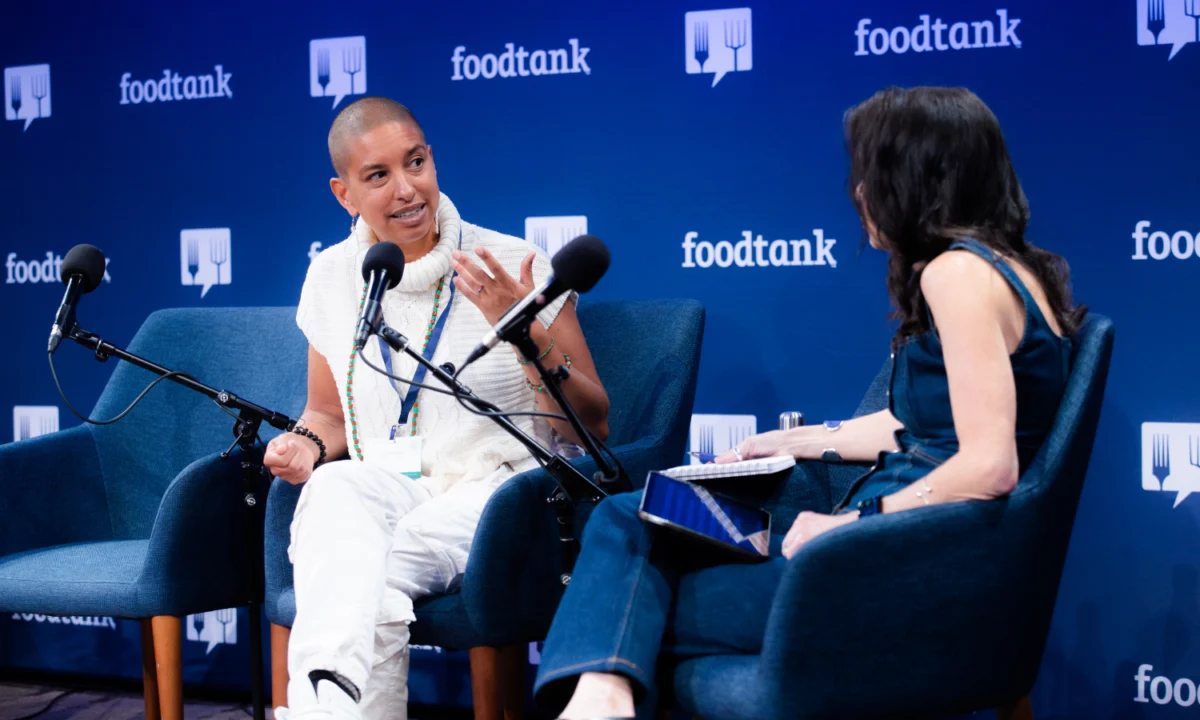
During the recent Food Tank Summit, held in partnership with Diestel Family Ranch as part of Climate Week NYC, a diverse assembly of ranchers, scientists, chefs, and health experts gathered to explore the theme: "Nourishing the Future: How Farming Practices Shape the Food We Eat, the Health We Build, and the Longevity We Seek." The consensus was clear—the "connective tissue" of our civilization is the farm, and how we manage that land determines the vitality of our future.
The Soil-Health Nexus: A Scientific Reality
The narrative that links sustainable farming to nutritional superiority is shifting from a niche environmental argument to a rigorous scientific discipline. For decades, industrial agriculture prioritized yield and shelf-life, often at the expense of phytochemical density and soil microbiome health. Today, that paradigm is being challenged.
"Everything starts in the soil; everything is grounded in the soil," says Heidi Diestel, a fourth-generation family farmer at Diestel Family Ranch. Her perspective highlights a growing movement among producers who view themselves not just as growers, but as stewards of a biological heritage. "The family farmers are the ones who have figured out not just how to farm, innovate, and market the products, but help people understand the value of healthy food."
This is not a matter of idealism; it is a matter of biological function. Dariush Mozaffarian, a cardiologist and director of the Tufts Food is Medicine Institute, emphasizes that the evidence supporting regenerative agriculture—farming practices that restore soil health and biodiversity—is increasingly robust. "There is pretty good evidence that crops are more nutritious, and even livestock that are pasture-raised are more nutritious," Mozaffarian notes. "We have to link agriculture to human health to human productivity."
Challenging the Myths of Modern Nutrition
A significant barrier to progress is the oversimplification of complex food issues. Paul Lightfoot, General Manager of Patagonia Provisions, argued during the summit that the public discourse often gets stuck in unproductive binaries. "Should we eat beef?" he posited, "That’s not the right question; not all beef is the same."
This nuance is where the future of food technology meets traditional wisdom. The Periodic Table of Food Initiative (PTFI) is currently leading the charge in mapping the molecular composition of our food. According to Nile Nair, Senior Program Manager for Health Science, Research, and Translation at PTFI, the tools available today allow us to look far beyond the standard "Nutrition Facts" label.
"We now have the molecular tools to be able to profile foods beyond what’s conventionally on the back of the nutrition label," Nair explained. "This allows us to elevate foods with nutrients that might not show up on a label." By mapping the diverse chemical compounds in crops—compounds often influenced by the specific health of the soil in which they were grown—scientists can finally provide the data necessary to substantiate the claim that "better farming equals better food."
Chronology of a Shifting System
To understand where we are going, we must look at how the food movement has evolved:
- The Industrial Era (1950s–1990s): The "Green Revolution" focused heavily on caloric output, utilizing synthetic fertilizers and pesticides to feed a growing population. While it reduced global hunger, it arguably led to a decline in nutrient density and long-term soil health.
- The Awakening (2000s–2015): The rise of the "Farm-to-Table" movement began to emphasize transparency, local sourcing, and seasonal eating. Consumers began to question the environmental cost of long-distance food transport.
- The Regenerative Shift (2015–Present): Farmers, scientists, and activists began to recognize that the conversation had to move beyond "organic" labels. The focus shifted toward soil health (carbon sequestration, water retention, and microbial diversity) as the primary indicator of agricultural success.
- The Current Convergence: We are now entering an era where "Food as Medicine" is becoming a formalized pillar of healthcare, with institutions like Tufts leading research that connects clinical outcomes directly to agricultural practices.
Engaging the Consumer: The Crisis of Literacy
Despite the scientific advancements, there remains a massive gap between the source of our food and the consumer’s understanding of it. Tambra Raye Stevenson, founder of WANDA (Women Advancing Nutrition, Dietetics, and Agriculture), warns that we are currently facing a state of "food system illiteracy."
"The media and algorithms, such as TikTok, are becoming the determinant of our health," Stevenson said. In an era of viral trends, nutritional advice is often dictated by influencers rather than agricultural experts or clinical researchers. This lack of literacy creates a vulnerability where consumers are disconnected from the consequences of their food choices.
However, there is an opening. Kristine Root, Chief Strategist and Founder of Socha, points out that while consumer interest in high-quality food is surging, it is largely driven by personal wellness rather than environmental concerns. "Consumers are sick and tired of being sick," Root observed. "They’re turning to food as health more and more. We’re seeing mass segments of consumers who care about food quality, but they need our help in communicating better."
The task for advocates is to bridge that gap—to help consumers understand that the personal health they seek through "clean eating" is inherently linked to the health of the soil and the planet.
Official Responses and Strategic Implications
The panel at Climate Week NYC highlighted several key pillars for systemic change:
1. Strengthening Local Food Systems
Kate Fullam of the New York State Department of Agriculture and Markets emphasized that shortening the distance between farm and consumer is a fundamental strategy for resilience. "Getting closer to the source oftentimes is the very beginning of the choice to having a whole food, not as much processing involved," she noted.
2. Inviting Farmers to the Boardroom
Ann Marie Hourigan, Head of Quality Standards for Whole Foods Market, stressed the need for corporate accountability and collaboration. It is not enough for retailers to set standards; they must actively engage farmers to understand the economic and logistical realities of producing high-quality, sustainable food.
3. Economic Transformation through Agriculture
Chef Andrew Zimmern highlighted the global scope of this issue, noting that in regions like Zambia, shifting agricultural priorities can fundamentally alter a nation’s economic landscape. By choosing to grow nutrient-dense, local crops rather than focusing solely on commodity exports, countries can build greater internal stability and health.
4. The Moral Imperative of Access
Perhaps the most poignant contribution came from Elder Raymond Bryant, co-founder of the San Antonio Million Gardens Project. He reminded the audience that health is not a luxury. "We believe that food is medicine, and therefore we work hard to grow food, provide quality food to families," he stated. He added a critical caveat for any food movement: "If the food is not good, people are not going to eat it. It doesn’t matter how healthy it is." Flavor, accessibility, and dignity must remain at the heart of the conversation.
Conclusion: A Legacy of Intentionality
As the summit concluded, the sentiment was one of cautious optimism. The "one long chain" described by Jason Diestel of Diestel Family Ranch—from the soil, to the farmer, to the plate, and finally to the human body—is finally being recognized for its true complexity.
"Stewardship goes beyond just what we do," says Jason Diestel. "It’s really about the legacy of food and being intentional about the food that we’re producing. I wish more people understood that what we eat matters, what we feed the soil matters."
The implications for the coming decade are clear. We are moving toward a future where "Food as Medicine" is not just a buzzword, but a clinical standard; where molecular profiling of food provides the accountability farmers need to be rewarded for quality; and where the consumer finally understands that the health of their body is a direct reflection of the health of the land.
The food system is changing, but the speed of that change will depend on our ability to communicate these truths, invite diverse voices to the table, and maintain an unwavering commitment to the soil that sustains us all.


 Ali Ikhwan
