

 Dwi Wanna
 Nana Wu
 Muslim
 Reynand Wu
 Ammar Sabilarrohman
 Asro
Asro
In an era defined by labor volatility and the widening gap between the cost of living and stagnant wages, a small but significant victory has emerged from the South Wedge neighborhood of Rochester, New York. Workers and management at the Abundance Food Cooperative have officially ratified their first union contract, a milestone that not only secures fundamental protections for staff but also redefines the role of a cooperative in an urban landscape struggling with food insecurity.
The agreement, reached less than a year after workers voted to join Workers United, marks a departure from the adversarial labor relations often seen in the retail industry. By prioritizing "just-cause" protections, wage transparency, and health and safety standards, the contract serves as a blueprint for how mission-driven businesses can balance operational sustainability with the urgent needs of their workforce.
A Chronology of Collaboration
The journey to this contract was not without its internal hurdles. Following a successful unionization vote in mid-2024, the path to the bargaining table required a shift in mindset for both staff and management.
Francis Barrow, the Co-Op’s Special Projects Coordinator, acknowledges that the process was not universally embraced from the start. "There were disagreements between employees about what the union would bring and if it would benefit everyone," Barrow reflects. Navigating these differing perspectives required a transparent, iterative approach to negotiation.
By the time the contract was ratified, however, the atmosphere had shifted toward a shared vision. The collaborative drafting process—which occurred over the span of several months—allowed management and labor to co-create policies that address the daily realities of the storefront. This wasn’t merely a contract of concessions; it was a roadmap for organizational culture. The final document includes cost-of-living wage increases, a robust and flexible paid-time-off (PTO) policy, and enhanced health and safety protocols, all of which were designed to stabilize the workforce in a turbulent economic climate.
Protecting the Workforce: Key Contractual Gains
At the heart of the new agreement is the "just-cause" provision. In the retail sector, where at-will employment is the standard, workers are often vulnerable to sudden termination without recourse. The new contract mandates that the cooperative provide fair, proven, and documented reasons before any employment action can be taken.
Beyond job security, the contract emphasizes holistic worker wellbeing:
- Economic Security: With inflation impacting the cost of groceries, rent, and fuel in Rochester, the inclusion of cost-of-living adjustments ensures that employee wages keep pace with local economic trends.
- Work-Life Balance: The implementation of a flexible PTO policy acknowledges that the modern worker requires time for personal health and family obligations without the fear of penalization.
- Operational Safety: By formalizing health and safety rules, the contract ensures that the physical environment of the store—ranging from stocking areas to customer-facing spaces—is governed by standards that protect employees from injury and stress.
"The collaboration in the drafting of the first contract illustrates the strength of the cooperative’s labor-management partnership," says Debbie Smith, Marketing Coordinator at Abundance. "As the cost of living in Rochester climbs, the store wants workers to feel valued and cared for, not just as employees, but as vital contributors to our community."
The Economic Context: Food Insecurity in Rochester
The significance of this union contract cannot be separated from the environment in which Abundance operates. Vince Ularich, the Co-Op’s Interim General Manager, frames the business not as a traditional commercial entity, but as a community asset designed to combat structural inequality.
"Our neighborhood has been described by terms such as food apartheid, a food desert, or a food swamp," Ularich explains. "Statistically, we serve areas that suffer from some of the greatest food insecurity in the country."
The data supports his assessment. According to the U.S. Department of Agriculture (USDA), national food insecurity rates hover around 13.5 percent. However, Rochester faces a starkly different reality. Data from Feeding America’s "Map the Meal Gap" project indicates that local food insecurity rates are as high as 21.5 percent. In these neighborhoods, access to fresh, organic, and locally sourced food is often limited by both physical distance and financial barriers.
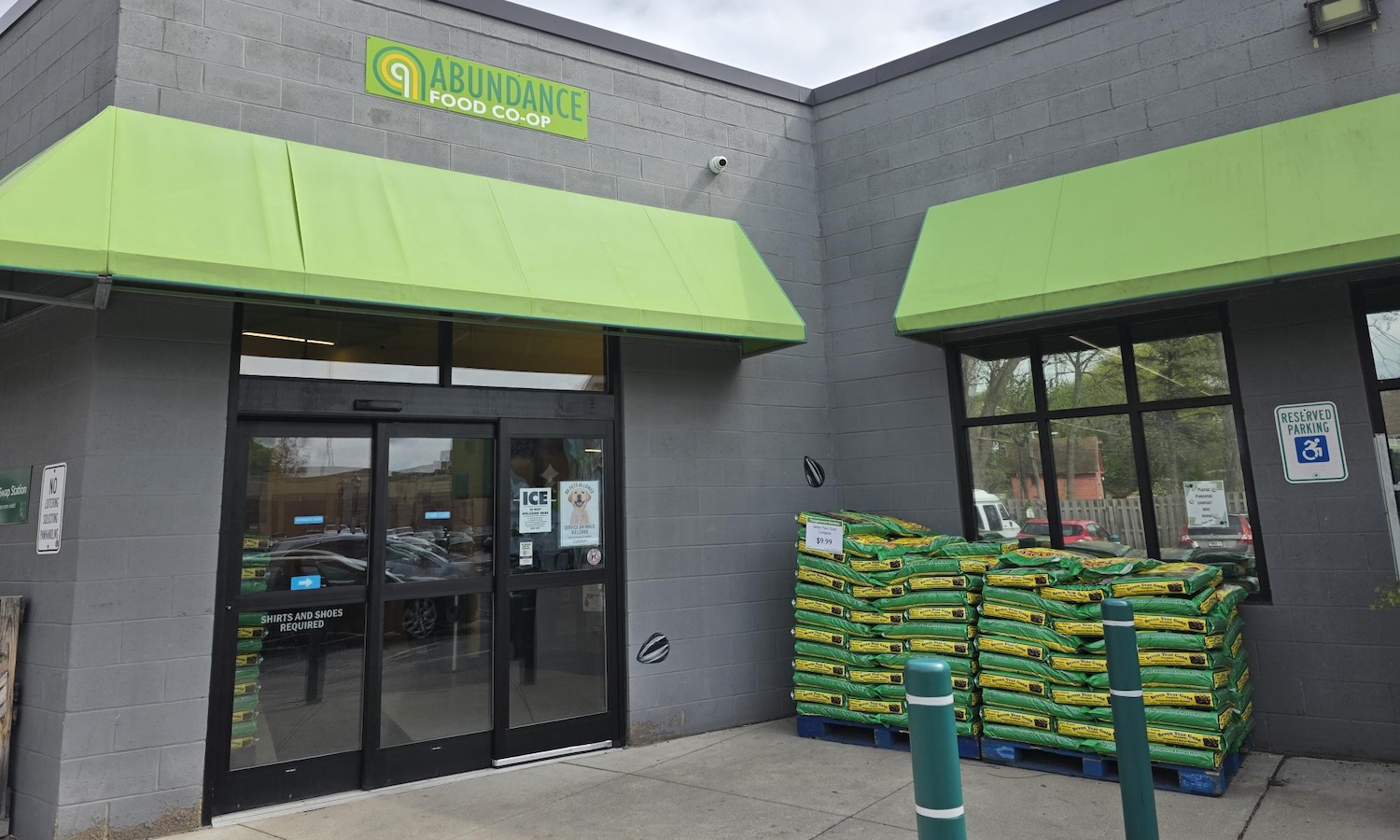
Abundance has responded to these challenges with a three-pronged approach to accessibility:
- Economic Access: The co-op prioritizes pay-by-the-pound bulk items, which significantly lower the price point for staples compared to pre-packaged goods.
- Waste Mitigation: Through partnerships like "Too-Good-To-Go," the co-op offers discounted, surplus food that would otherwise be discarded, simultaneously reducing waste and helping budget-conscious shoppers.
- Community Health: By stocking minimally processed and locally sourced goods, the co-op serves as a health-focused alternative to the convenience stores that dominate many food-desert regions.
Official Responses and Philosophical Alignment
For leadership at Abundance, the unionization effort was never seen as a threat, but as an alignment of values. "Cooperatives exist to serve our community, and the workers are a part of our community," Ularich notes.
This sentiment is echoed by the management team, who have viewed the labor movement within their walls as a reflection of their outward-facing mission. Throughout the negotiation process, the goal remained consistent: to build a business model that upholds worker rights while maintaining the financial health of the cooperative.
"Throughout this process, we have been aligned in the goal of ensuring that our co-op is a business that supports workers’ rights," Ularich says. By ensuring the staff is treated equitably, the co-op believes it is better positioned to serve the customers who rely on them for daily nutrition.
Broader Implications: The Co-op as a Labor Model
The success of the Abundance Food Cooperative serves as a case study for other cooperatives and small-to-medium-sized businesses. It challenges the conventional narrative that unions and small businesses are inherently at odds. Instead, it suggests that when a business is founded on cooperative principles—shared ownership and democratic participation—the union acts as a natural extension of those values.
The Future of Community-Centered Retail
As the retail industry continues to grapple with high turnover and low employee morale, the "Abundance model" offers a different path forward. By treating the workforce as a stakeholder group rather than a line item, the co-op has successfully managed to increase retention and morale.
Francis Barrow remains optimistic that this contract will serve as a foundation for a stronger, more resilient organization. "My hope is that employees and management work hand in hand to make the co-op stronger: for the people who work here, the people who shop here, and the community as a whole," she says.
Scaling the Success
The implications of this contract extend beyond Rochester. As the national conversation around food justice and labor rights intensifies, the success at Abundance provides a tangible example of how local institutions can address systemic problems. By providing stable jobs with fair wages, the co-op is not only feeding the community but is also helping to build a more robust, middle-class local economy.
In a city facing significant socio-economic challenges, the Abundance Food Cooperative stands as a reminder that community wellbeing is not just about the food on the shelves; it is about the dignity of the people who put it there. The ratification of this contract is a victory for the labor movement, but more importantly, it is a victory for the community of Rochester, proving that a business can be both a market participant and a social champion.
This report was written by Skye Ellis, a Research, Writing, and Advocacy Intern at Food Tank. Food Tank is a global organization dedicated to highlighting the innovations that are creating a more sustainable and equitable food system. Through deep-dive journalism and advocacy, Food Tank connects the dots between food waste, nutrition, labor rights, and environmental sustainability.

 Azzam Bilal Chamdy
 Ali Ikhwan