

 Nana Wu

 Dwi Wanna

 Suro Senen

 Evan Lee Salim

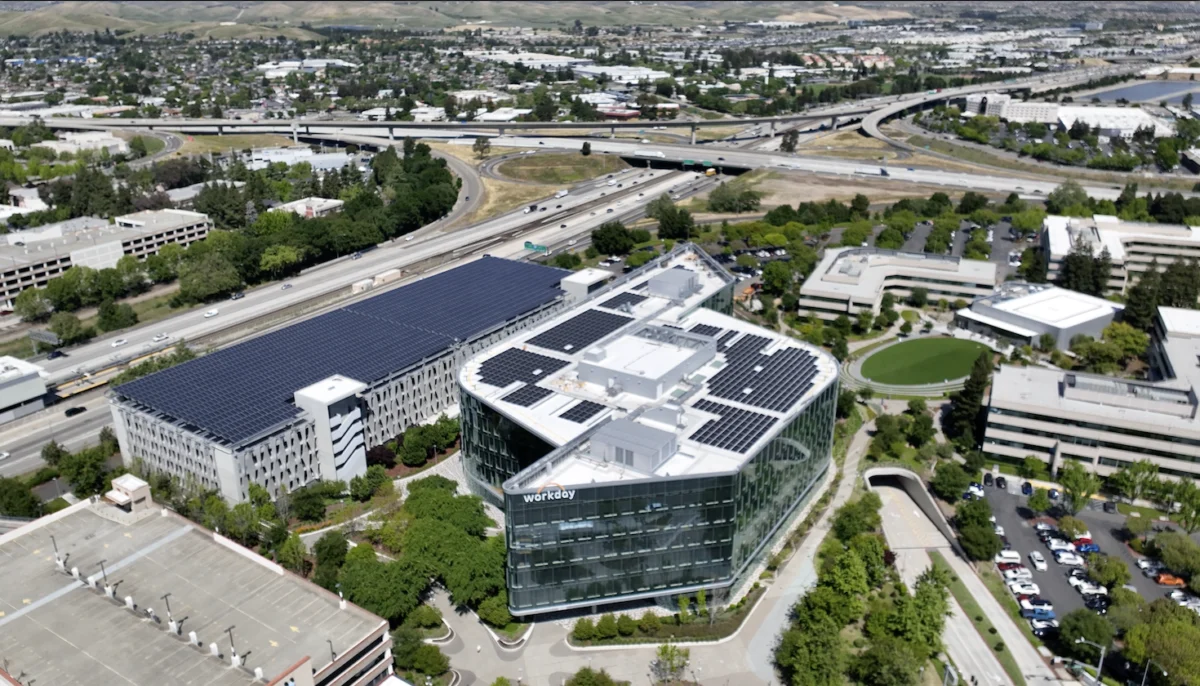
Enterprise software giant Workday is ushering in a new chapter of its environmental strategy. Having successfully navigated its initial foray into science-based climate action, the company has announced a rigorous set of updated greenhouse gas (GHG) reduction commitments. These new targets, which extend to fiscal year 2031, reflect both the hard-won lessons of the past half-decade and the evolving complexities of the digital economy—most notably, the explosive energy demands of artificial intelligence.
By shifting from broad, aspirational goals to more granular, intensity-based metrics, Workday is positioning itself at the vanguard of corporate decarbonization. However, the path forward is marked by the sobering reality that influence—especially over global supply chains—is not absolute.
The New Frontier: 2031 Targets
Workday’s latest roadmap is validated by the Science Based Targets initiative (SBTi), ensuring the goals align with the global effort to limit temperature increases. The core of the new strategy involves three primary pillars:
- Scope 1 and 2 Emissions: A commitment to slash absolute GHG emissions from direct operations and electricity consumption by 42 percent by 2031, using 2025 as the baseline.
- Renewable Energy Continuity: Extending its long-standing pledge to match 100 percent of power consumption in its global office footprint and data centers with renewable energy through 2031.
- Scope 3 Intensity: A mandate to reduce the emissions footprint of purchased goods, capital expenditures, and business travel by 52 percent per dollar of spend by 2031.
These targets move beyond mere reduction; they represent an operational evolution. By focusing on intensity-based metrics for Scope 3, Workday acknowledges that as the business grows, its absolute carbon footprint may fluctuate, but the efficiency of its procurement must improve at a rapid, quantifiable rate.
A Chronology of Climate Ambition
To understand the gravity of these new goals, one must look at the trajectory Workday has carved since 2020.
- 2020: Workday formalizes its first set of science-based targets, setting a high bar for its supply chain and internal operations.
- 2020–2026: The company achieves a six-year streak of matching 100 percent of its electricity consumption with renewable energy.
- 2025: A pivotal year for operational efficiency; Workday implements "rightsizing" initiatives for cloud infrastructure, resulting in a 5,000 metric ton (MT) reduction in CO2e and multi-million-dollar cost savings.
- 2026: The company concludes its initial target cycle. While it met its operational and business travel goals, it fell short on supplier engagement.
- 2026–2031: The current phase begins, marked by the integration of AI-specific sustainability protocols and a renewed focus on Scope 3 transparency.
Supporting Data: The Reality of Scope 3
The "hard reality" of sustainability is most visible in Scope 3 emissions—the indirect emissions occurring in the value chain. In its 2026 Global Impact Report, Workday revealed that while it hit its business travel goal—reducing emissions by 31 percent, far exceeding the 25 percent target—it struggled with supplier engagement.
The 2020 goal was to help 70 percent of suppliers set their own emission reduction targets. By the end of 2026, only 24 percent had done so.
"Some organizations aren’t ready, and they were clear with us about that," noted Erik Hansen, Workday’s Chief Sustainability Officer. This gap illustrates the limitations of corporate influence. Even a company as influential as Workday cannot dictate the internal maturity or financial readiness of its vendors.
However, the data also provides a roadmap for success. In 2026, Workday’s total reported emissions stood at 335,490 MT CO2e. With roughly one-third of that total linked to data center and cloud operations, the focus on "rightsizing" capacity and optimizing software code has proven to be the most effective lever for immediate decarbonization.
Official Responses and Strategic Philosophy
The evolution of Workday’s strategy is rooted in the belief that sustainability cannot exist in a vacuum. The company has moved to integrate climate considerations into procurement, engineering, and finance departments.
Internal Carbon Pricing
Perhaps the most significant structural change is Workday’s implementation of an internal price on carbon. By assigning a dollar value to every ton of emissions, the company is effectively forcing budget holders to internalize the cost of their carbon footprint. This makes the business case for green investments—such as energy-efficient servers or carbon-conscious AI models—transparent and compelling. The company plans to increase this internal price incrementally over the next several years, creating a permanent incentive for departments to innovate away from high-carbon activities.
The "Linchnpin" of Contractual Transparency
Workday’s approach to its partners, such as Google and Amazon Web Services (AWS), is increasingly contractual. "We routinely request emissions data as part of our contracts," says Hansen. By treating emissions data as a critical performance metric, Workday turns sustainability from an ethical "nice-to-have" into a standard business requirement.
Implications: The AI Sustainability Paradox
As the tech industry pivots toward generative AI, the energy intensity of software is rising. Workday is addressing this "AI footprint" with a two-pronged strategy: choosing "carbon-conscious" foundational models and optimizing data architectures.
The AI Ecosystem
Workday has made a tactical decision to prioritize models like Google’s Gemini, which benefits from the provider’s 24/7 carbon-free energy commitments. By embedding this preference into its AI platform, Sana, Workday is essentially outsourcing part of its decarbonization to the infrastructure layer.
However, the company is also looking to lead. It is currently collaborating with other software firms to demand greater transparency from AI model developers. The implication here is clear: the era of "black box" computing, where energy consumption is hidden behind proprietary model architectures, is coming to an end.
Operational Electrification
On the ground, the physical footprint of the company is also changing. Workday is actively pursuing the electrification of its offices and the elimination of natural gas. Coupled with ongoing investments in on-site solar and energy storage, these moves represent a total decoupling of business growth from fossil fuel dependency.
The Future of Corporate Responsibility
Workday’s journey from 2020 to 2031 offers a blueprint for the modern enterprise. It is a story of trial and error, where the primary takeaway is that sustainability is a continuous, iterative process of stakeholder buy-in.
The failure to meet the 70 percent supplier target was not a defeat, but a diagnostic tool. It highlighted that the next stage of decarbonization requires a more nuanced approach—moving away from broad-brush demands and toward collaborative, technology-driven solutions like right-sizing cloud capacity and choosing carbon-efficient AI architectures.
As the company looks toward 2031, it faces a landscape where customer expectations are higher than ever. With sustainability now firmly established as a core value of integrity and service, Workday is betting that its ability to manage its carbon footprint will become a competitive advantage, driving both fiscal efficiency and environmental stewardship.
In the words of its latest impact report: "Achieving ambitious targets requires continuous deep stakeholder buy-in across every department." By turning sustainability into an operational discipline rather than an environmental initiative, Workday is setting a standard that other enterprise firms will likely find themselves forced to emulate. The reality of the climate crisis is that the "siloed" approach is dead; the future of the software industry is one where every line of code, every cloud server, and every supplier relationship is accounted for in the balance sheet of the planet.

 Asep Darmawan
 Layla Zulfa

