 Jia Lissa

 Raul Delapena Setiawan

 Asro
 Layla Zulfa
 Sagoh
 Rifan Muazin
For over a decade, Dr. Gabrielle Fundaro was the gold standard of nutritional discipline. With a PhD in Human Nutrition, an extensive background in elite coaching, and six competitive powerlifting titles to her name, she lived by the numbers. Like many in the fitness industry, she treated her food intake as a high-stakes engineering project, meticulously tracking every gram of protein, carbohydrate, and fat to ensure her physique remained at peak performance.
But behind the clinical precision lay a growing, silent tension. Despite her expertise, Dr. Fundaro felt increasingly disconnected from her own biology. The numbers on her tracking app had become a cage, and the anxiety of "what happens if I stop?" began to overshadow the joy of eating.
This is the story of how a leading nutrition scientist successfully abandoned the tracker, developed a new framework for eating, and is now helping thousands of others reclaim their relationship with food.
The Breaking Point: When Data Becomes a Burden
For years, macro-counting worked—until it didn’t. The turning point for Dr. Fundaro was not a failure of the method, but a realization about the quality of her life. She found herself unable to navigate a simple restaurant menu without spiraling into mental calculations. The fear was pervasive: If she stopped tracking, would she lose her muscle? Would she gain unwanted body fat? Worse yet, what did it say about her credentials as an expert if she couldn’t "manage" her own intake without an app?
This dilemma—the tension between scientific control and lived experience—is a common struggle for athletes and health enthusiasts alike. The more she wrestled with the rigidity of counting, the more she sought a middle ground. She wanted structure, but she didn’t want the confinement of a spreadsheet. Intuitive eating, while popular, often felt too vague for someone accustomed to the quantitative rigor of sports science.
The breakthrough arrived in the gym. While training, Dr. Fundaro was using the "Rate of Perceived Exertion" (RPE) scale—a system that allows athletes to gauge their effort based on subjective feeling rather than fixed percentages of a one-rep max. She noticed that when she listened to her body’s feedback, she recovered faster and performed better. The realization was immediate: if RPE could optimize a deadlift, why couldn’t it optimize a dinner?
Chronology: From Physiology to Philosophy
The development of "RPE-Eating" didn’t happen overnight. It required bridging the gap between clinical nutrition and behavioral psychology.
- The 1960s: The foundation of RPE is laid by Gunnar Borg, who created the scale to measure physical exertion in clinical and therapeutic settings.
- The Early 2020s: Dr. Fundaro begins applying the RPE framework to her own daily nutrition, slowly weaning herself off macro-tracking apps.
- The Refinement Phase: Dr. Fundaro tests the methodology with her coaching clients, noting that it effectively reduces "all-or-nothing" thinking.
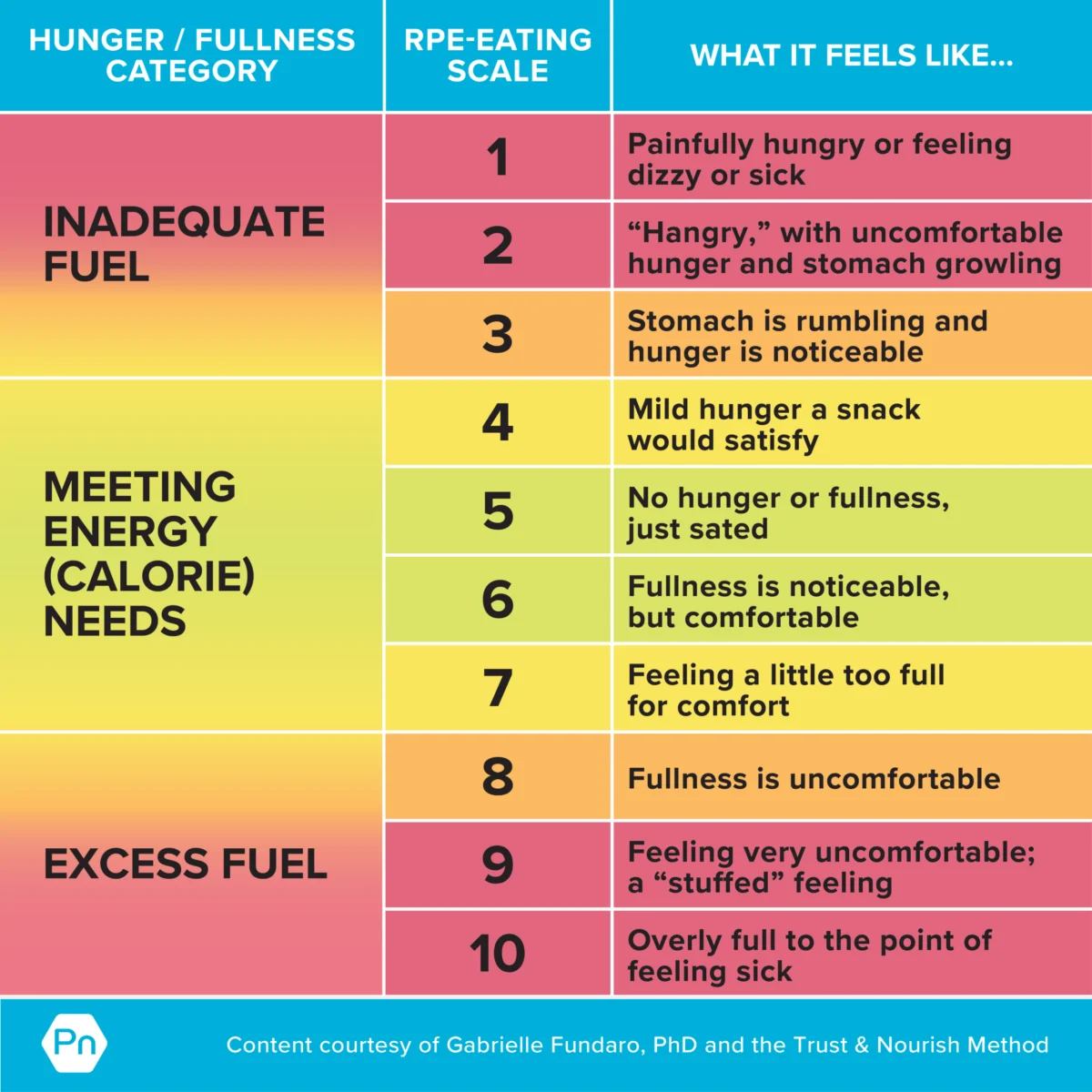
- The Formalization: The RPE-Eating scale is finalized, moving from a vague concept to a structured 1-10 chart that differentiates between physical hunger, emotional appetite, and genuine satiety.
By formalizing the scale, Dr. Fundaro provided a "safety net" for people terrified of losing the structure they’ve relied on for years.
Understanding the RPE-Eating Framework
The core of RPE-Eating is the cultivation of interoceptive awareness—the ability to perceive the physical sensations within the body. While the fitness world uses a 0-10 scale for lifting, Dr. Fundaro adapted this for appetite:
- 1-3 (Inadequate Fuel): Characterized by dizziness, lightheadedness, or painful hunger.
- 4-7 (Adequate Fuel): The "Goldilocks" zone. You are satisfied, energized, and mentally clear.
- 8-10 (Excess Fuel): The point of physical discomfort, lethargy, or "stuffed" sensations.
Unlike a diet, this system does not dictate what to eat. Instead, it teaches the practitioner to check in before, during, and after a meal. By recording these numbers, the individual builds a mental database of what their body feels like when it is appropriately nourished, eventually rendering the external tracker obsolete.
Supporting Data: Why Subjectivity Matters
Critics often dismiss RPE-Eating as "just feelings over facts." However, the scientific literature on autoregulation in sports performance provides a robust defense. Studies on RPE in strength training have consistently shown that self-regulation leads to better long-term adherence and injury prevention compared to rigid, percentage-based programming.
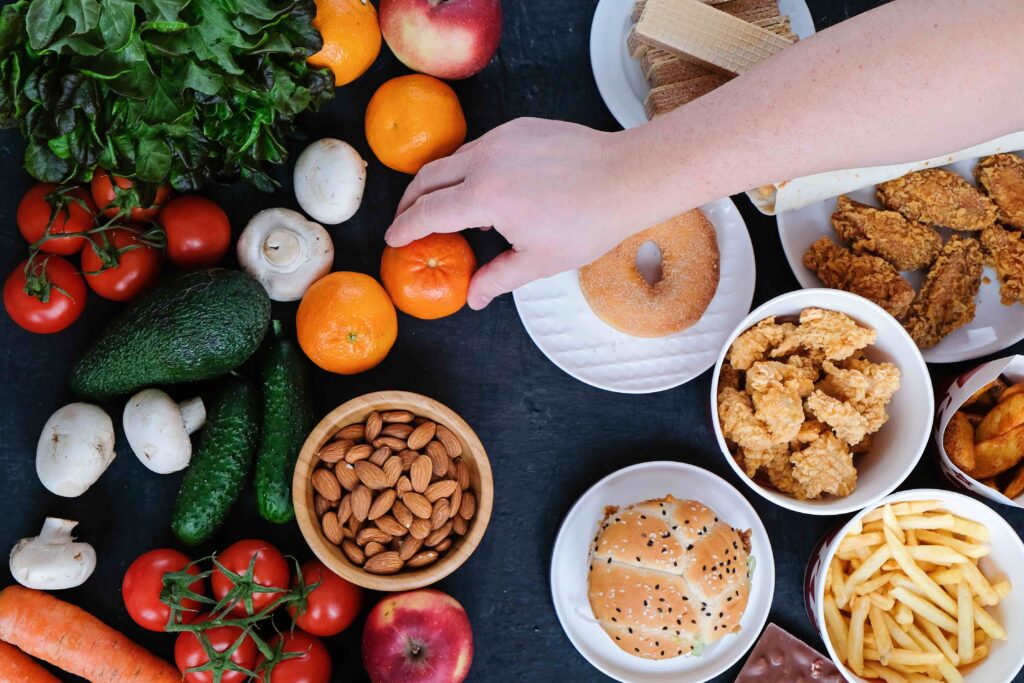
Furthermore, the psychological toll of chronic dieting is well-documented. Research indicates that individuals who rely on external trackers for long periods often struggle with "disordered" eating patterns, such as guilt associated with food choices or an inability to recognize natural fullness cues. By shifting the locus of control from an app to the nervous system, RPE-Eating addresses the underlying cause of food anxiety rather than merely managing the symptoms.
Official Perspectives: The Expert View
Dr. Fundaro emphasizes that this is not a panacea. "RPE-Eating is a tool," she explains. "A screwdriver is excellent for screws, but you wouldn’t use it to drive a nail."
For individuals with a history of clinical eating disorders, Dr. Fundaro is clear: this method is not a replacement for medical supervision. It is an "off-ramp" for the chronic dieter, not a clinical intervention for those struggling with severe pathology. She advocates for a flexible application, suggesting that practitioners can start by using the scale for just one meal a day—such as a quiet lunch—to build the habit without feeling overwhelmed.
Implications for the Future of Nutrition
The move toward RPE-Eating represents a broader shift in the health and wellness industry. As consumers become increasingly disillusioned with the "hustle culture" of fitness, there is a growing demand for systems that prioritize mental health and long-term sustainability over short-term body composition hacks.
1. The Death of the "Good vs. Bad" Food Binary
By focusing on satiety and satisfaction, RPE-Eating removes the moral weight assigned to specific foods. If a meal is satisfying and leaves you at a "6" on the hunger scale, it has fulfilled its purpose. This eliminates the pendulum swing of "restrict now, binge later" that plagues so many dieters.
2. Building Resilience
The system teaches people that they can survive a meal without knowing the exact macro breakdown. This builds a profound sense of self-trust. When an individual realizes they can maintain their health—and their physique—without the constant tether of a digital tracker, the anxiety surrounding food begins to evaporate.
3. A Sustainable Lifestyle
Perhaps the most significant implication is the sustainability of the practice. Unlike tracking, which is time-consuming and often socially isolating, RPE-Eating is invisible. It can be practiced at a wedding, a business lunch, or at home with family. It integrates seamlessly into life rather than demanding that life be built around the diet.
Conclusion: Reclaiming the Internal Compass
Dr. Fundaro’s journey from elite athlete to advocate for intuitive, RPE-based eating serves as a powerful reminder that our bodies are smarter than our spreadsheets. While data has its place in science, the lived experience of health is an internal, biological process.
By adopting the RPE-Eating scale, you aren’t just changing how you track your calories; you are changing your relationship with your own body. You are moving from a state of external dependence to one of internal sovereignty. It is a process that requires patience, honesty, and the courage to stop looking at the screen and start listening to the signal.
As Dr. Fundaro concludes, "The goal is to know that you’re nourishing yourself—and you don’t need a food tracker to do that." Whether you are a high-level athlete or someone just looking for peace at the dinner table, the path to freedom starts with a simple question: How does my body feel right now?



 Ammar Sabilarrohman