 Dwi Wanna
 Nana Wu
 Muslim
 Reynand Wu
 Ammar Sabilarrohman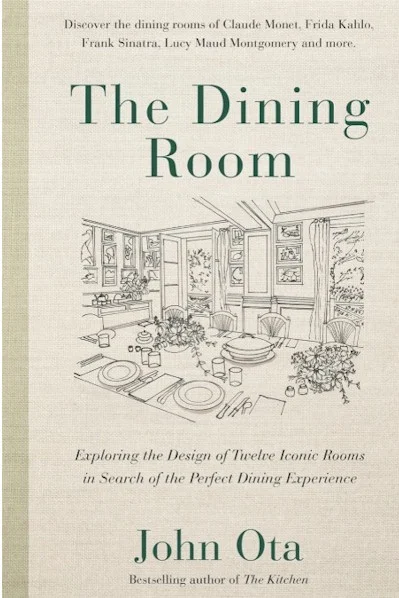
Main Facts: An Architectural Journey Through History
On Wednesday, May 13, 2026, at 7:00 PM Central Time, the Culinary Historians will host a virtual deep dive into the evolution of domestic space. Featured guest John Ota, a renowned architectural writer and author, will present a lecture centered on his latest publication, The Dining Room, released by Penguin Random House.
The presentation promises to be more than a mere literary review; it is an immersive exploration of twelve iconic dining spaces that have shaped the cultural and social history of the modern era. Through a combination of video documentation and historical analysis, Ota will examine the physical architecture, interior design choices, and the intangible "cherished history" held within the walls of spaces once occupied by global icons. From the artistic sanctuary of Claude Monet to the politically charged table of Dr. Martin Luther King Jr., Ota’s research seeks to answer a fundamental question: How does the architecture of our dining rooms influence the way we live, socialize, and nourish ourselves?
The event, held via Zoom, is open to the public and serves as a testament to the Culinary Historians’ ongoing commitment to examining the intersection of food, history, and the built environment.
Chronology: The Evolution of an Architectural Perspective
To understand the significance of Ota’s upcoming lecture, one must look at the trajectory of his career and the evolution of his investigative focus.
- 1978 – The Foundation: John Ota’s formal engagement with architecture and design began in 1978. His academic journey saw him earn degrees from three prestigious institutions: Columbia University, the University of Toronto, and the University of British Columbia. These formative years provided him with the technical rigor necessary to analyze not just the aesthetics of a building, but its structural and sociological integrity.
- Decades of Practice: Following his education, Ota spent years working as an architect across the vibrant urban landscapes of Toronto, New York, and Vancouver. This period of his career was defined by hands-on design, where he learned the language of space, light, and utility.
- 2021 – The Pivot to Culinary History: Ota’s transition from a practicing architect to an author of architectural-culinary history was cemented with the publication of The Kitchen. The book was a critical success, earning recognition as a 2021 Taste Canada Awards finalist and a 2021 Paris Gourmand Cookbook finalist in the book design category. This success signaled a shift in Ota’s focus toward the intersection of the hearth and the home.
- 2026 – The Dining Room: Building upon the success of his previous work, Ota spent the intervening years traveling the globe. His research involved visiting historic houses, cooking regional cuisines, and interviewing individuals from diverse backgrounds to synthesize the experiences that define the modern dining room.
- May 13, 2026 – The Presentation: The lecture represents the culmination of this multi-year research project, offering a digital platform for a global audience to experience the evolution of the domestic dining space.
Supporting Data: Twelve Icons, Twelve Perspectives
At the heart of Ota’s work is the study of twelve distinct dining rooms. While the full list remains a highlight of his book, the inclusion of figures such as Frida Kahlo, Frank Sinatra, and Jackie Kennedy provides a compelling cross-section of 20th-century life.
The Anatomy of a Dining Room
Ota’s methodology involves analyzing these spaces through several lenses:
- Architecture: The physical proportions of the room, the placement of windows, and the flow of light—elements that dictate the mood of a meal.
- Interior Design: The materials, color palettes, and furniture that reflect the era’s aesthetic values and the occupant’s personal taste.
- The Culinary Context: Ota goes beyond the walls by providing era-accurate recipes associated with these spaces. This reinforces the idea that a dining room is a "living" machine—a space that only fulfills its potential when utilized for its intended purpose: the act of dining.
The Role of Technology in Historical Preservation
By utilizing video documentation during his presentation, Ota bridges the gap between the physical reality of these spaces and the digital experience of his audience. This use of technology is particularly relevant in 2026, where virtual access has become a critical tool for architectural historians seeking to reach international audiences without the carbon footprint associated with physical travel.
Official Responses and Perspectives
In discussions regarding his work, John Ota has frequently noted that his primary goal is to encourage homeowners and designers to reconsider the "lost art" of the dining room. In an era where open-concept floor plans and "eat-in kitchens" have dominated modern design, Ota argues that the formal or semi-formal dining room serves a vital social function.

"The dining room is not just a place to consume food," Ota has suggested in previous interviews. "It is the stage for our most important human interactions. When we design these rooms, we are designing the quality of our relationships."
The Culinary Historians, in hosting this event, echo this sentiment. By focusing on the historical narrative behind these rooms, the organization seeks to preserve the cultural memory of dining—a practice that is increasingly under threat from the "grab-and-go" culture of the 21st century.
Implications: The Future of Domestic Spaces
The implications of Ota’s research are twofold: they influence both our historical understanding and our future architectural practices.
Reclaiming the Dining Room
As society becomes more fragmented by digital screens and rapid-paced living, the dining room is increasingly viewed as an archaic concept. Ota’s lecture aims to challenge this notion. By showcasing how figures like Jackie Kennedy or Dr. Martin Luther King Jr. used the dining room to host, discuss, and strategize, Ota positions the room as a place of empowerment. The implication is that if we abandon the dining room, we may be losing the physical space necessary for meaningful social cohesion.
Design as a Historical Document
Ota’s work also serves as a guide for the architectural preservation community. He highlights that a house is not merely a structure of wood and stone; it is a repository of human history. The paint on the walls of Frida Kahlo’s dining room carries as much weight as her paintings, because it is the environment that nurtured her creative process. This perspective encourages architects and homeowners alike to treat their living spaces with a greater sense of historical stewardship.
Logistics and Accessibility
For those wishing to attend the lecture on May 13, 2026, the process is streamlined to ensure maximum participation.
- Virtual Access: The event will be hosted via Zoom. Interested parties are encouraged to reach out to the Culinary Historians at [email protected] to secure a link.
- Educational Archive: Recognizing that time zones and professional commitments may prevent live attendance, the organization will publish a recording of the program on their official YouTube channel within 24 hours of the event’s conclusion. This ensures that the information remains accessible to students, historians, and design enthusiasts long after the initial presentation.
Conclusion
John Ota’s The Dining Room is more than a book or a lecture; it is a call to action to appreciate the spaces that define our domestic lives. By blending architecture, design, and culinary history, Ota invites us to pull up a chair and consider the history beneath our feet and the walls that surround our tables. As we look toward the future of architecture, it is clear that understanding our past—specifically the way we have gathered to break bread—is essential to building better, more connected homes for the years to come.

 Lina Hope
 Lina Irawan