Nana Wu

 Dwi Wanna

 Suro Senen

 Evan Lee Salim

 Ali Ikhwan
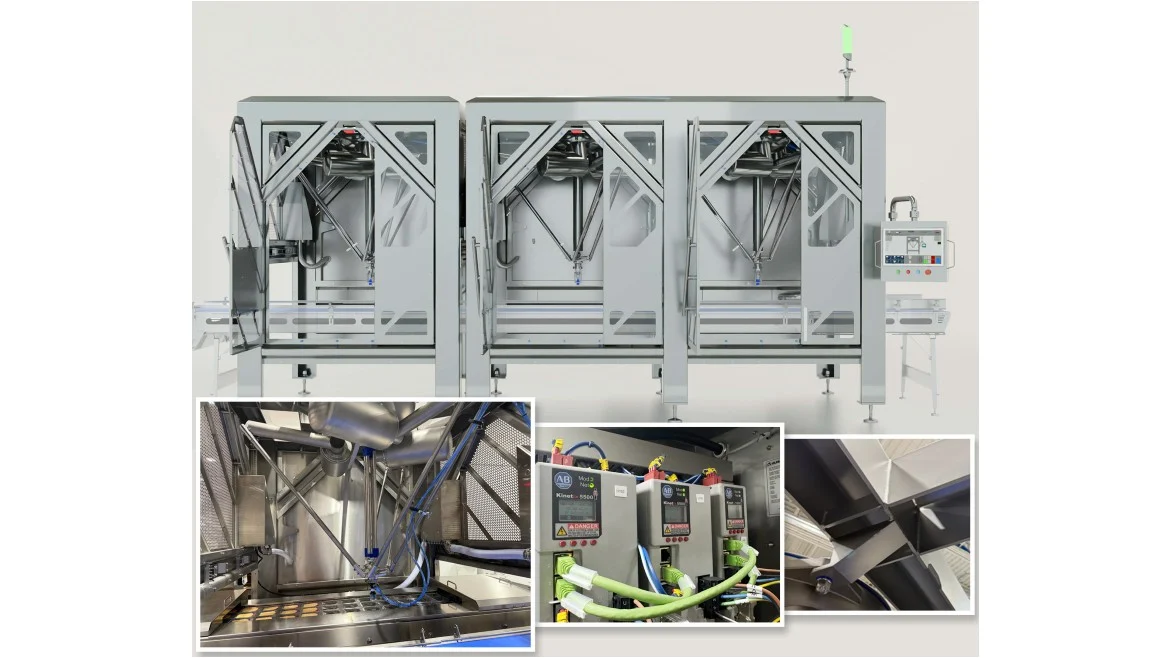
In the fast-evolving landscape of food and medical device manufacturing, the integration of robotics into processing lines has often been characterized by complexity, fragmented software environments, and daunting maintenance requirements. Addressing these industry-wide pain points, Harpak-ULMA has unveiled a transformative family of robotic loading platforms. By merging high-level hygienic design with a unified Rockwell Automation PLC programming environment, the company is positioning itself to fundamentally alter how manufacturers deploy and maintain automated packaging systems.
Main Facts: A Unified Approach to Robotic Loading
The core innovation of the Harpak-ULMA platform lies in its ability to bring robot motion directly into the Rockwell Automation Logix programming environment. Historically, plant teams have had to juggle disparate software suites—one for the packaging machine and another, often proprietary, interface for the robotic arm. This new platform eliminates that divide.
Designed primarily for sectors with stringent cleanliness requirements—such as cheese, fresh meat, and snack food manufacturing—the system is capable of locating, inspecting, picking, and loading products into thermoforming, flow-wrapping, and tray-sealing equipment. Depending on the specific system configuration and the nature of the product, these units can scale to achieve throughputs of hundreds of packages per minute.
Beyond food, the platform features a general-purpose configuration designed for non-food applications, including medical device assembly and end-of-line case packing and cartoning. This versatility is underscored by a parametrically designed architecture, which allows the physical dimensions of the cell—its length, width, and height—to be adjusted during manufacture to suit specific floor space constraints and packaging line layouts.
Chronology: From Custom Engineering to Scalable Platforms
For decades, the implementation of robotic loading was treated as a "ground-up" engineering project. Every installation required a bespoke design, unique software integration, and specialized training for maintenance staff.
The Evolution of the Strategy
- The Traditional Era: Manufacturers relied on disparate systems where packaging machines and robots operated as separate entities, often resulting in complex data silos and communication bottlenecks.
- The Development Phase: Harpak-ULMA recognized that the barrier to entry for many plants was not just the cost of robotics, but the technical debt associated with maintaining those robots. The company began developing a library of proven end-of-arm tooling concepts and standardized control architectures.
- The Integration Milestone: By aligning with Rockwell Automation, Harpak-ULMA moved to integrate robot motion control directly into the Allen-Bradley PLC, effectively turning the robot into just another "axis" of the primary packaging machine.
- The Launch: Today, the platform stands as a mature, repeatable solution. Engineering and manufacturing for these systems are now centered in Taunton, Massachusetts, providing a domestic base for application development and rapid delivery for the North American market.
Supporting Data: Engineering for Hygiene and Precision
The technical specifications of the Harpak-ULMA platform are engineered to meet the highest industry standards, particularly for the rigorous washdown environments found in food processing plants.
Hygienic Design Parameters
The platform departs from traditional tubular framing, which can harbor pathogens. Instead, it utilizes an open, bent-plate stainless steel structure. This design choice serves several critical functions:
- Self-Draining Surfaces: All surfaces are sloped to prevent water pooling, a key factor in mitigating bacterial growth.
- Component Accessibility: The architecture ensures that utilities and internal components are easily accessible for cleaning, inspection, and maintenance.
- IP69K Compliance: Every critical component carries an IP69K rating, ensuring the equipment can withstand high-pressure, high-temperature washdowns without internal ingress.
Vision and Inspection Capabilities
The platform’s "eyes" are as critical as its "hands." The system utilizes a combination of 2D and advanced 3D vision systems. These tools guide the robot in locating and orienting products with high precision. Furthermore, the system can be configured for auxiliary inspection tasks, including verifying product presence, checking for color consistency, identifying physical defects, and confirming the mass of the product.
Official Responses: The Vision for Industry 4.0
The collaboration between Harpak-ULMA and Rockwell Automation represents a strategic alignment between a packaging leader and a global control systems giant.
"Customers want the flexibility to automate different products and packaging formats without turning every new application into a ground-up engineering project," says Kevin Roach, Chairman and CEO of Harpak-ULMA. "We built a repeatable platform that can adapt to the application and give customers a practical way to add robotics and build on that investment as their needs change."
Roach emphasizes that the goal is to lower the "barrier to adoption." By reducing the engineering load, plants can move from the conceptual phase to full-scale production significantly faster.
Blake Moret, Chairman and CEO of Rockwell Automation, echoes this sentiment, highlighting the synergy of the integrated control platform. "Our vision for robotics is to make it an integrated part of production that is easier to deploy, operate, and maintain," Moret notes. "Harpak-ULMA brings that vision to food packaging by combining hygienic design with a common control platform for robotics and packaging machinery. That means plant teams can support more of their operation with the tools and skills they already have."
Implications: Changing the Economics of Automation
The introduction of this platform carries significant implications for the future of manufacturing, particularly regarding labor, uptime, and capital expenditure.
Streamlined Maintenance and Training
Perhaps the most immediate impact is on the workforce. Because the robots are programmed within the Logix environment—the same environment used for the rest of the packaging line—the training burden on plant engineers is drastically reduced. A maintenance technician who is proficient in troubleshooting a Harpak-ULMA flow wrapper is now, by extension, proficient in troubleshooting the robot that feeds it. This unified skill set reduces the reliance on external OEMs for minor technical issues.
Future-Proofing the Production Line
The modular nature of the system means that as a company’s product line evolves, the robotic platform can evolve with it. Because the architecture is based on proven, parametric concepts, a manufacturer can adapt a cell previously used for fresh meat to a different product format with minimal downtime and engineering cost.
Data-Driven Operations
By integrating the robot into the Allen-Bradley controls architecture, the platform facilitates seamless data flow. Shared recipes, synchronized diagnostics, and comprehensive production information are now accessible from a single point of entry. This level of connectivity is a cornerstone of the "Smart Factory" concept, enabling plant managers to track real-time efficiency metrics and identify bottlenecks before they lead to significant downtime.
Addressing the Labor Shortage
The food industry continues to face severe labor shortages and high turnover in production roles. Robotic loading is no longer just a luxury for high-volume manufacturers; it is a necessity for maintaining consistent output. Harpak-ULMA’s approach makes this technology accessible to mid-sized producers who may have previously felt that robotic automation was too complex or too difficult to support internally.
Conclusion
Harpak-ULMA’s latest robotic loading platform represents a significant shift from "automation as a project" to "automation as a standard." By focusing on a hygienic, repeatable, and unified control architecture, the company is directly addressing the core challenges that have historically slowed the adoption of advanced robotics in the food and medical industries.
As manufacturers face increasing pressure to increase throughput while adhering to strict sanitary standards, the ability to deploy flexible, easy-to-support robotic systems will likely become a primary competitive advantage. With the backing of Rockwell Automation’s robust control ecosystem and a strong domestic support structure in Massachusetts, Harpak-ULMA is setting a new benchmark for how robotic technology integrates into the modern production floor.
The industry is moving toward a future where the packaging line is a singular, cohesive organism—where the robot and the wrapper are not two separate machines, but two parts of one intelligent, efficient, and sanitary whole. For plant teams, this means less time spent wrestling with incompatible software and more time focused on the core mission: delivering high-quality products to market with speed and precision.


 Pevita Pearce