
 Dwi Wanna
 Nana Wu
 Muslim
 Reynand Wu
 Ammar Sabilarrohman
 Azzam Bilal Chamdy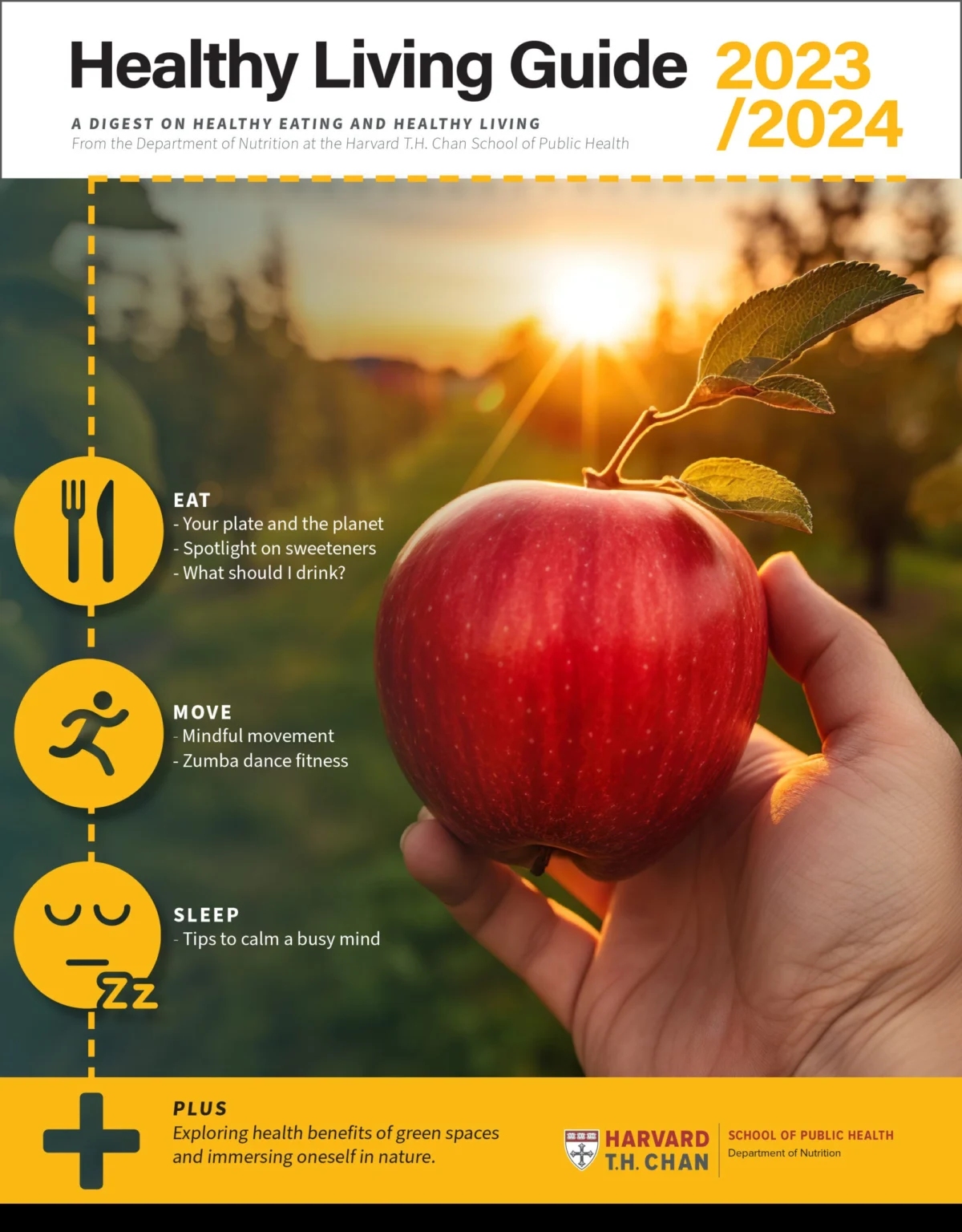
As the world steps into 2024, the pursuit of longevity and holistic well-being has transitioned from a series of fleeting trends to a rigorous, science-backed discipline. At the forefront of this movement, the Department of Nutrition at the Harvard T.H. Chan School of Public Health has released its fourth annual Healthy Living Guide. This year’s edition is not merely a collection of dietary advice; it is a comprehensive manifesto on how mindfulness, biological rhythm, and conscious consumption intersect to create a healthier global population.
Anchored by the wisdom of the late Thich Nhat Hanh—whose observation that "the apple in your hand is the body of the cosmos" serves as the guide’s philosophical compass—the document bridges the gap between individual health choices and the broader environmental impact of our consumption.
Main Facts: The Intersection of Mindfulness and Public Health
The cornerstone of the 2023-2024 Healthy Living Guide is the formal introduction of the Thich Nhat Hanh Center for Mindfulness in Public Health. This research initiative marks a paradigm shift in how academic institutions approach population health. Rather than focusing exclusively on clinical interventions, the Center explores how the practice of mindfulness can be scaled to improve well-being across diverse demographics.
The Pillars of the 2024 Guide
The guide is structured around three primary pillars that have defined the Department’s research agenda over the past year:
- Mindful Consumption: Examining how the act of eating—not just what we eat, but how we engage with our food—affects both metabolic health and the sustainability of global food systems.
- Biological Rhythmicity: A deep dive into "chronotypes," helping readers understand how their unique internal clocks influence sleep quality and chronic disease risk.
- Holistic Movement: Moving beyond the standard "exercise for weight loss" narrative to explore the psychological and physiological benefits of rhythmic, joyful movement, such as Zumba.
Chronology: A Year of Research and Evolution
The release of the 2023-2024 guide represents the culmination of a year of intensive inquiry. To understand the significance of this publication, one must look at the timeline of the Department’s milestones:
- Early 2023: The Department of Nutrition initiated a series of longitudinal studies focusing on the rising prevalence of ultra-processed foods (UPFs) and their correlation with neuro-cognitive decline.
- Mid-2023: The official launch of the Thich Nhat Hanh Center for Mindfulness in Public Health. This created a new framework for researchers to analyze how stress reduction techniques can mitigate the negative health effects of modern, fast-paced living.
- Late 2023: The synthesis of data regarding sleep architecture and "chronotypes," moving away from a "one-size-fits-all" sleep recommendation to a more personalized, biology-based approach.
- January 2024: The public release of the Healthy Living Guide, providing actionable, printable summaries for the general public, distilling complex clinical research into accessible, daily practices.
Supporting Data: Nutrition, Sleep, and the "Chronotype" Revolution
The Healthy Living Guide provides a robust evidence base for its recommendations. One of the most compelling sections of the guide addresses the growing concern over ultra-processed foods.
Ultra-Processed Foods and Mental Health
Recent findings highlighted in the guide suggest that the impact of ultra-processed foods extends far beyond obesity and cardiovascular disease. New evidence indicates a strong correlation between high consumption of UPFs and the exacerbation of anxiety and depressive symptoms. The researchers posit that the lack of fiber and the abundance of artificial additives in these products alter the gut microbiome, which in turn influences neurotransmitter production—the so-called "gut-brain axis."
The Science of Chronotypes
Perhaps the most innovative data set included in the 2024 edition concerns chronotypes. For decades, public health messaging urged the population to adhere to a standard "early bird" sleep schedule. The Harvard research challenges this, demonstrating that forcing a "night owl" into a traditional 9-to-5 sleep cycle causes significant physiological stress. The guide provides tools for readers to identify their internal clock and align their exercise, eating, and work schedules with their natural circadian rhythm, potentially reducing the risk of metabolic syndrome.
Official Responses: Shifting the Public Health Paradigm
In the introduction to the guide, the faculty of the Harvard T.H. Chan School of Public Health emphasize that the "individual is the nexus of the planetary crisis." By choosing foods that are both nutrient-dense and sustainably produced, individuals are participating in a larger restorative process.
"The Center for Mindfulness in Public Health is not about quietude for the sake of relaxation," noted a spokesperson for the Department. "It is about building resilience in an increasingly volatile world. We are looking at how to make healthy choices the default choice through policy, design, and education."
The response from the broader nutrition community has been overwhelmingly positive. Critics have praised the guide for its departure from restrictive "diet culture," opting instead for a framework that emphasizes long-term behavioral changes. By integrating printable tip sheets and actionable summaries, the Department has ensured that this research is not trapped in an ivory tower but is usable for the average household.
Implications: A Roadmap for the Future
The implications of the 2023-2024 Healthy Living Guide are profound for both the individual and the policy landscape.
For the Individual
The guide serves as a practical manual for reclaiming agency over one’s health. By providing concrete strategies for mindful eating, it encourages readers to slow down, recognize satiety cues, and appreciate the source of their food. This shift in consciousness is intended to reduce the reliance on convenience foods and foster a more sustainable relationship with the diet.
For Global Health Policy
On a macro level, the focus on "mindfulness in public health" suggests a new direction for government health initiatives. If research continues to prove that mindfulness-based interventions can reduce the burden of chronic illness, we may see a shift in public funding toward programs that teach stress management and nutritional literacy in schools and workplaces.
The Role of Technology and Movement
The guide also tackles the digital age’s impact on activity levels. By highlighting research on "turning up the tunes and moving," the guide validates the role of fun and social engagement in physical activity. Zumba and other rhythmic activities are shown to be more effective at sustaining long-term exercise habits than the often-dreaded treadmill routine. This "psychology-first" approach to exercise is expected to be a major talking point in future fitness guidelines.
Conclusion: A Call to Mindful Action
As we navigate the complexities of 2024, the Harvard Healthy Living Guide reminds us that the path to wellness is not found in a single supplement or a restrictive calorie count. It is found in the deliberate, informed, and compassionate choices we make every day.
The guide is currently available as a free, downloadable PDF, complete with printable trackers and summaries that can be displayed in kitchens and offices. It stands as a testament to the fact that when rigorous science is combined with mindfulness, the result is not just a longer life, but a more fulfilling one.
Whether you are looking to refine your sleep schedule, improve your gut health, or simply find a more sustainable way to eat, the 2023-2024 Healthy Living Guide offers the most reliable map available. As the editors note, "We wish you a healthy, fulfilling, and mindful 2024."
For those ready to dive deeper, the full archive of previous guides remains available online, serving as a repository of a decade’s worth of nutritional breakthroughs that continue to shape the health of our global community.

 Nila Kartika Wati
 Iffa Jayyana